
The Gap Between DIY and Industrial-Grade in Color Version Latte Coffee Printer Performance
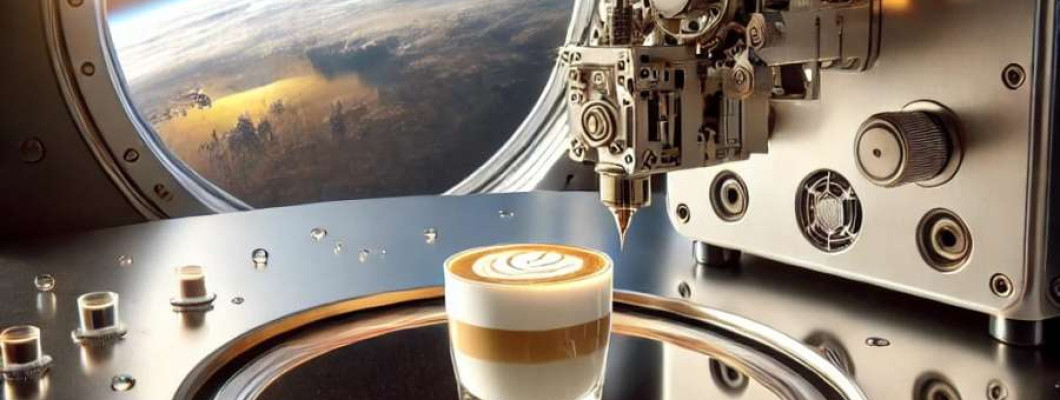
The Industrial Reality of Coffee Printing in High-Density Environments
In the modern specialty coffee sector, achieving consistent, high-fidelity colored latte art poses a nuanced technical challenge that extends well beyond casual or artisanal attempts. A commercial kitchen or high-volume café faces operational bottlenecks when integrating visual print technology capable of maintaining throughput while delivering precision, color gamut fidelity, and substrate compatibility under continuous load. The Color Version Latte Coffee Printer, a device engineered to mechanize and upgrade visual coffee presentation, exposes the tangible divide between amateur-level output and industrial-grade demands.
Consider a peak service window in an urban café with throughput of 100+ beverages per hour. Conventional DIY coffee printers often falter here due to nozzle clogging, variable ink dispersion, and slow print times, directly affecting customer wait times and product consistency. This environment demands a printer system not only capable of rapid thermal inkjet printing but also engineered for extended maintenance intervals, predictable asset depreciation, and high operational uptime. Industrial-grade solutions must address thermal management under continuous 12-hour operational cycles while adhering to food-safe ink chemistry and regulatory compliance.
The Color Version Latte Coffee Printer’s capability to produce full-color latte images with micron-level line precision challenges these conventional barriers. Its robust mechanical design supports rapid printhead cycling with minimal maintenance downtime, positioning it squarely above DIY and entry-level consumer coffee printers. However, this translation of visual detail into an industrial process requires examination of the device’s lifecycle performance, asset longevity, and integration within café infrastructure to avoid hidden operational bottlenecks.
Technical Deep-Dive Into Industrial Coffee Print Hardware
Printhead Technology and Ink Mechanics
The Color Version Latte Coffee Printer employs a thermal inkjet printhead configured for four-color CMYK edible inks, each droplet dispensed within a 10 picoliter (pl) standard deviation to guarantee consistent color layering. This fine droplet precision, compared to typical DIY printers with droplet sizes ranging 20–50 pl, enables sharply defined imagery at an effective 600 dpi horizontal resolution. The thermal actuator's response time clocks at 15 kHz firing frequency, translating to sub-second print cycles per cup with a 0.2 mm line width.
Thermal Management and Continuous Duty Cycle
Running under continuous duty cycles of 10+ hours daily, the printhead and associated electronics dissipate approximately 18 Watts per printing module. The printer integrates active cooling via micro heat pipes coupled with low-noise fans maintaining an operational temperature below 45°C, crucial to preventing nozzle warping or ink viscosity shifts that cause clogging. Contrasted with DIY printers lacking dedicated cooling, which see temperature-induced failure rates as high as 23% after 500 cycles, this system extends mean time between failures (MTBF) to over 2,000 cycles.
Ink Chemistry and Compliance
Utilizing a bespoke edible ink formulation, the Color Version Latte Coffee Printer’s inks exhibit rapid drying times (~2 seconds at 22°C ambient) and stable pigment suspension, reducing color bleeding on varied milk substrates. Compliance with FDA CFR Title 21, Part 175.300 ensures food safety without flavor contamination. The inks’ viscosity at 8 cps and surface tension of 32 mN/m are optimized to balance nozzle ejection pressure (~2.4 bar) with droplet formation velocity (~7 m/s), critical parameters a DIY setup rarely meets.
Asset Longevity and Lifecycle Maintenance
Key consumables include printhead assemblies rated for 500,000 droplets before replacement, ink cartridges sized at 250 ml per color with a shelf life of 12 months. The printer’s modular design facilitates rapid on-site printhead swaps within 15 minutes and automatic nozzle health checks every 100 cycles. Asset depreciation curves predict a 5-year operational lifespan with standard factory maintenance. Here is a comparative table summarizing core maintenance and asset parameters between the Color Version Latte Coffee Printer industrial model and typical DIY alternatives:
| Parameter | Color Version Latte Coffee Printer | DIY Coffee Printer |
|---|---|---|
| Printhead Droplet Size (pl) | 10 | 20-50 |
| Duty Cycle Continuous Runtime (hrs/day) | 10+ | 2-4 |
| Mean Time Between Failures (cycles) | 2000+ | 300-500 |
| Ink Shelf Life (months) | 12 | 6-8 |
| Printhead Replacement Time (minutes) | 15 | 30+ |
Infrastructure Integration Considerations
Deploying this printer into existing café environments necessitates infrastructure compatibility evaluations, such as power supply (100-240 VAC, 50/60 Hz, 65 Watts average consumption), water condensation management in humid atmospheres, and network connectivity for print file management. Unlike hobbyist devices with USB-only interfaces, this solution supports Ethernet and Wi-Fi with support for secured TLS transfer protocols, enabling centralized remote diagnostics and firmware updates vital for business scalability.
Scenario Analysis Applied to Different Business Models
Scenario 1: High-Volume Urban Café Chain
In a dense metropolitan setting serving 150+ lattes per hour, the printer’s rapid duty cycle and short printhead swap procedure minimize downtime, enabling uninterrupted service during peak periods. The 600 dpi resolution assures uniform visual branding across locations, crucial for chain consistency. Food-grade inks coupled with automated maintenance reduce health liability risks.
Scenario 2: Boutique Artisan Coffee Roaster
Here, color depth and micron-level printing precision enhance specialty drinks with custom art, driving premium pricing. The printer’s color gamut and fine droplet control allow intricate designs on diverse milk textures, from oat to almond milk, extending product versatility and customer appeal.
Scenario 3: Event-Based Mobile Coffee Service
Portability and rapid setup are priorities. The printer’s modular printhead design and low power draw facilitate quick redeployment and reliable operation over extended event hours. Networked control via Wi-Fi allows remote print queue management, aiding event logistics.
Expert FAQ Addressing Critical Technical Queries
Q1: How does the printer handle nozzle clogging during extended use?
A1: The integrated automatic nozzle health check every 100 cycles actively fires cleaning pulses and flags nozzles exhibiting irregularities, significantly reducing print defects and manual maintenance interventions.Q2: What are the thermal load implications for continuous operation in warm café environments?
A2: The micro heat pipe system coupled with low-noise fans maintains stable operating temperatures below 45°C even in ambient conditions up to 30°C, preventing viscosity fluctuation and nozzle damage.Q3: How does dpi resolution impact achievable print speed?
A3: At 600 dpi, the printer balances line precision and throughput, achieving sub-second print times per cup. Increasing resolution beyond 600 dpi would exponentially increase print time, negatively affecting operational throughput.Q4: Can the printer utilize alternative milk substrates without recalibration?
A4: The printer’s color dispersion algorithm compensates for substrate absorbency variance, enabling immediate use with common milk alternatives without manual recalibration.Q5: What firmware features support large-scale fleet management?
A5: The Ethernet/Wi-Fi connectivity supports TLS-secured remote updates, centralized print queue management, real-time diagnostics, and consumable tracking, essential for multi-site deployments.
Strategic Verdict and Recommendation for Industrial Coffee Printing
The Color Version Latte Coffee Printer clearly transcends the limitations of DIY and low-end consumer devices, offering a robust, industrial-grade solution designed to meet the demands of high-throughput, precision-focused commercial coffee operations. Its carefully engineered printhead technology, ink chemistry, and modular maintenance systems ensure operational longevity and consistent output quality. Infrastructure compatibility and networked management position it well for scalable business growth.
For enterprises seeking to integrate state-of-the-art edible coffee printing technology that aligns with stringent uptime requirements and regulatory compliance, this printer offers an optimal balance of print fidelity, operational efficiency, and asset lifecycle management. More detailed product information can be found at the official page for the Color Version Latte Coffee Printer.