
The Gap Between DIY and Industrial-Grade in Color Version Latte Coffee Printing for High-End Artisans
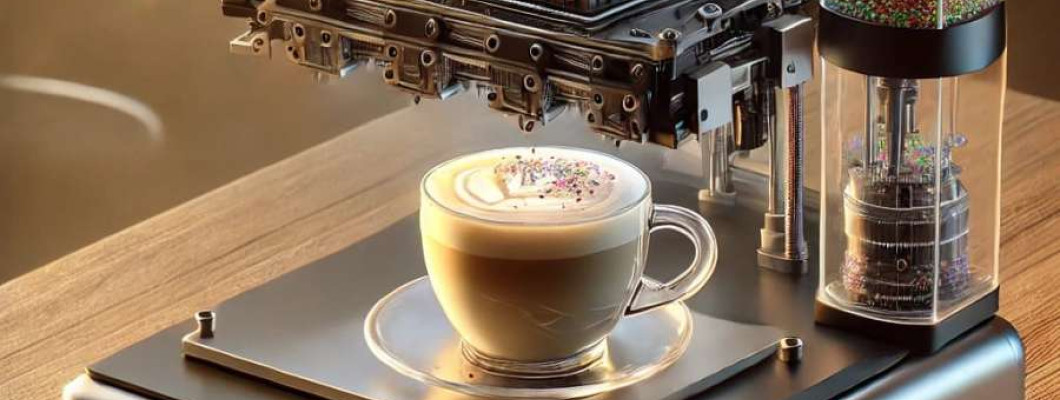
The Industrial Reality of High-Precision Coffee Printing
Artisanal coffee businesses seeking to differentiate themselves through precision image rendering face a notably technical challenge. The Color Version Latte Coffee Printer operates at the intersection of food-safe inkjet technology and micron-level output accuracy. Achieving consistent, vibrant color profiles on the delicate medium of foamed milk requires more than hobbyist-grade hardware. Variations in substrate texture, thermal fluctuations, and printhead reliability can drastically affect output quality and throughput.
Consider a specialty coffee shop attempting to reproduce complex color images atop lattes multiple times per hour. The printer must balance rapid printhead activation cycles with ink droplet volume control, typically in the range of 1 to 10 picoliters, to maintain color saturation without blending errors. Unlike conventional printing on flat paper substrates, foamed milk changes surface tension dynamically during operation, posing significant challenges in droplet placement precision.
At the industrial scale, operators must focus on avoiding common bottlenecks such as ink drying times, clogging caused by food-grade pigment sedimentation, and precise temperature control impacting both printhead longevity and ink rheology. These parameters delineate the gulf between do-it-yourself desktop devices and the demands of professional-grade coffee printers. Ensuring a reliable, repeatable process while managing these factors is paramount for scalable artistic output.
Technical Deep-Dive into Printhead and Ink Systems
Printhead Mechanics and Picoliter Control
The core of the Color Version Latte Coffee Printer is its piezoelectric printhead optimized for food-safe inks. The printhead’s nozzle diameter measures approximately 20 to 30 micrometers, enabling droplet volumes ranging from 2 to 8 picoliters. Applied voltage pulses induce displacement of the piezo element, ejecting ink droplets with sub-millisecond precision. The printer firmware adjusts pulse frequency up to 10 kHz for maintaining throughput rates exceeding 30 lattes per hour without losing resolution.
Ink Chemistry and Stability
The printer utilizes specialty edible inks formulated with stabilized colorants suspended in a water-based solvent matrix. The inks maintain viscosity between 2 and 5 centipoise at 25°C to ensure nozzle flow consistency and prevent settling. The pigment particle size averages 100-200 nanometers, a critical metric for avoiding nozzle clogging and preserving nozzle longevity beyond 1 million firing cycles. Color density is optimized around 10 Optical Density (OD) units at maximum saturation.
Thermal Management Considerations
Thermal regulation is essential to maintain ink viscosity and printhead function. The printer employs an active cooling system using a Peltier element capable of maintaining the printhead temperature within 20 ±1°C. Exceeding this range leads to ink evaporation or increased viscosity, affecting droplet ejection velocity and accuracy. The unit consumes roughly 60 Watts under peak operation.
Substrate Interaction and Surface Physics
Foamed milk’s high porosity and dynamic surface tension (~50 mN/m) challenge print accuracy. The printer compensates by employing a controlled droplet spread diameter of approximately 200 micrometers, factoring in ink absorption and capillary action. This ensures clear image edges with minimal bleed, critical for high-fidelity color rendition.
Comparative Hardware Analysis
| Specification | Color Version Latte Coffee Printer | Typical DIY Coffee Printer |
|---|---|---|
| Printhead Nozzle Diameter (µm) | 20-30 | 35-50 |
| Droplet Volume (pL) | 2-8 | 10-20 |
| Print Speed (Lattes/hour) | 30+ | 10-15 |
| Ink Viscosity (cP) | 2-5 | 5-10 |
| Operating Temperature Range (°C) | 20 ±1 | Variable, often >±5 |
| Pigment Particle Size (nm) | 100-200 | 250+ |
| Power Consumption (Watts) | 60 | 50 |
Scenario Analysis of Diverse Business Use Cases
Specialty Coffee Shop Seeking Premium Visual Differentiation
This scenario demands rapid printing of high-resolution, full-color imagery with micron accuracy on a steady substrate. The Color Version Latte Coffee Printer delivers repeatable droplet control and thermal regulation preventing printhead degradation during extended service periods, allowing throughput of 30+ prints per hour. The low droplet volumes provide nuanced color gradients critical for artistic designs and branding.
High-End Artisan with Versatile Substrate Requirements
Here, substrate variability ranges from standard foamed milk to plant-based milk alternatives with different surface tension profiles. The printer’s adaptive droplet spread and robust ink chemistry accommodate these changes without significant print quality loss. Precision piezoelectric nozzle control enables micron-level detail on textured surfaces, a feature many DIY units cannot reliably provide.
Event-Based Mobile Coffee Service with Rapid Setup
Mobile applications benefit from the printer’s stable thermal management and compact footprint. Despite fluctuating ambient temperatures and power supply variability, the printer maintains droplet volume consistency through built-in temperature sensors. This ensures image quality consistency across locations, reducing downtime and maintenance interventions typically encountered in less industrialized devices.
Expert FAQ Addressing Complex Technical Considerations
Q1 What prevents clogging during extended printing sessions?
Ink formulation with nanoparticle stabilization and auto-cleaning printhead cycles minimize deposition buildup. The printer initiates a purge sequence every 15 minutes to maintain nozzle integrity.
Q2 How does the printer adapt to substrate surface tension variations?
Firmware-controlled pulse amplitude modulation adjusts droplet volume and ejection velocity, effectively compensating for substrate absorption variability.
Q3 What limits the maximum throughput in continuous operation?
Thermal buildup and ink drying times constrain continuous printing speed. The active cooling system and optimized ink drying profiles allow peak throughput of 30+ lattes per hour without quality degradation.
Q4 How is color fidelity maintained across different ink batches?
Each ink batch undergoes calibrated optical density measurement, and the printer software applies color profile corrections based on embedded ICC profiles to ensure consistent output.
Q5 What maintenance cycles are necessary to sustain industrial operation?
Routine printhead cleaning every 8 hours, ink reservoir replenishment daily, and bi-weekly firmware updates ensure operational consistency and longevity.
Strategic Verdict and Recommendation for Industrial-Grade Artisan Coffee Printing
With its advanced piezoelectric printhead, finely tuned ink chemistry, and rigorous thermal management, the Color Version Latte Coffee Printer presents a robust solution bridging the clear gap between hobbyist devices and industrial-grade coffee art systems. Its capacity to sustain throughput above 30 lattes per hour without sacrificing color fidelity or micron-level precision positions it favorably for high-end artisan operators prioritizing image quality and substrate versatility.
Incorporating this printer into specialty coffee operations or mobile services enhances brand differentiation while controlling operational variability historically problematic in this niche. For businesses seeking scalable, consistent, and technically sound coffee printing hardware, the Color Version Latte Coffee Printer constitutes a definitive industrial-grade solution backed by rigorous engineering and design rationale.