
The Gap Between DIY and Industrial-Grade in Color Version Latte Coffee Printing for Scalable Businesses
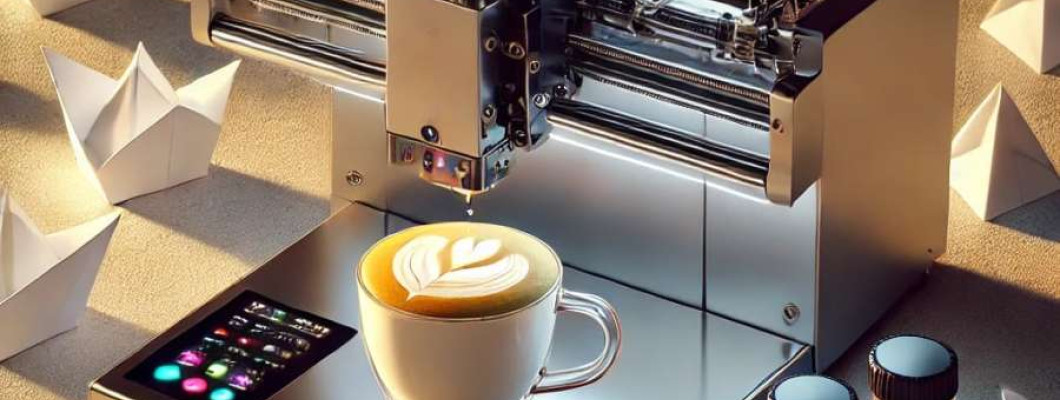
The Industrial Reality of Transitioning Latte Art Printing from Niche to Industry
In an environment where consumer engagement and brand differentiation are paramount, the Coffee Printer market represents an unusual but growing frontier of precision printing technology applied in a non-traditional field. For scalable business owners aiming to integrate these systems into high-throughput workflows, the challenges extend beyond aesthetic novelty into robust, industrial-grade operational demands. The Color Version Latte Coffee Printer situates itself at the intersection of hospitality innovation and precision machinery, confronting the distinct technical and operational hurdles inherent to scaling from boutique, artisanal setups to production-level consistency.
One core challenge emerges from the universal disparity between DIY-focused consumer devices and those engineered for continuous, industrial-grade output. Consumer models largely emphasize creative flexibility with limited runtime expectations and tolerances for maintenance. Scaling into high-volume commercial environments exposes limitations related to printhead longevity under repetitive stress, operational speed ceilings, and maintenance windows dictated by downtime tolerance. Furthermore, ink chemistry and substrate interaction—here, the delicate emulsion of milk foam rather than traditional paper or plastics—compound these factors.
Equally significant is the human factor engineering required for seamless workflow integration. Staffing in commercial venues varies widely in technical aptitude. Systems must be intuitive and capable of automated calibration routines to maintain print fidelity across thousands of impressions without specialized intervention. Achieving this balance requires an intricate dance of hardware robustness, software precision, and fluid dynamic control, all while ensuring compliance with hygiene standards critical in foodservice settings.
Industrial-Grade Printhead Mechanics and Fluid Dynamics
At the heart of the Color Version Latte Coffee Printer is the printhead, engineered to deposit food-safe pigment droplets in micron-level precision across the variable density microfoam substrate. Industrial-grade printheads typically operate using piezoelectric or thermal inkjet technology. The Color Version model’s specifics remain proprietary, but comparable systems utilize piezoelectric actuators capable of ejecting droplets as small as 10 picoliters (pl), allowing dpi resolutions effectively upwards of 600 dpi on foam surfaces.
This precision ensures high color fidelity without compromising the foam’s structural integrity. The physics of droplet impact involves a complex interplay of surface tension, viscosity, and evaporation dynamics. Excessive droplet volume risks collapsing foam texture, while insufficient ink deposition leads to washed-out images. Here, the printhead firmware must precisely control pulse amplitude and frequency to create a balance, which in an industrial context translates to maintaining high throughput without compromising visual quality.
In addition, the fluid reservoirs and ink delivery systems must be designed for rapid refill cycles, contamination resistance, and easy sanitation to uphold food safety without disrupting throughput. The printer should support modular components for quick replacement, minimizing downtime.
Comparing Throughput Capacities and Depreciation Models
| Specification Aspect | DIY/Consumer Latte Printers | Color Version Industrial Latte Printer |
|---|---|---|
| Max Print Speed (Prints per Hour) | 10-15 | 50-60 |
| Printhead Replacement Interval | 3000-5000 Prints | 15000-20000 Prints |
| Operational Uptime (%) | 60-70% | 90-95% |
| Maintenance Downtime per Week | 5-7 hours | 1-2 hours |
| Asset Depreciation Period | 1-2 years | 3-4 years |
The throughput improvements are tangible. Industrial machines enable fourfold increases in prints per hour, directly impacting labor cost efficiencies. Replacement intervals extended by a factor of three reduce recurring CAPEX burdens and downtime. Moreover, the longer asset depreciation cycles improve balance sheet health and support financing models aligned with strategic growth.
Operational Bottlenecks and Workflow Integration Challenges
In practice, business-scale deployment must address bottlenecks including thermal management, ink supply logistics, and real-time print quality diagnostics. Continuous operation results in heat accumulation in electronic drivers and printheads, requiring active cooling solutions to maintain consistent viscosity and actuator responsiveness. Ink delivery systems in an industrial printer must integrate with automated supply chains to avoid manual refill interruptions, potentially leveraging bulk reservoirs paired with sterile, closed-loop tubing.
Data interface and software must support centralized fleet management, allowing operators to queue and monitor print jobs remotely, adjust color profiles on-demand, and predict maintenance windows through machine learning analytics. Such integration challenges represent a significant leap compared to manual or semi-automated consumer devices.
Lifecycle Maintenance Costs and Compliance Considerations
Maintenance cycles vary dramatically by usage intensity but remain a critical driver of OPEX. The Color Version Latte Coffee Printer’s modular design enables targeted replacement of printheads, pumps, and sensors, reducing full-unit servicing needs. The cost of consumables, particularly pigment cartridges formulated with food-safe FDA-compliant dyes, must be factored into operational budgets. Regulatory compliance extends beyond food safety to include electrical certifications and workplace safety regulations relevant to commercial kitchens.
Implementing scheduled preventative maintenance minimizes failure rates and extends asset longevity. Training programs for operators must emphasize hygienic handling and firmware updates, ensuring that print performance remains uncompromised throughout the asset lifecycle.
Scenario Analysis Shows Clear Business Utility
Scenario One: High-Traffic Coffee Shop Chain
With daily demands peaking at 500+ latte prints, the Color Version machine’s enhanced throughput and minimal downtime enable continuous service without staff bottlenecks. Automated quality assurance and rapid consumable swaps reduce labor overhead and maintain brand consistency across locations.
Scenario Two: Boutique Hotel with Premium Breakfast Service
Artisanal precision of micron-level print control supports highly customized guest experiences, enabling complex color logos and messaging. The printer’s modular maintenance reduces service disruptions in tight operational windows.
Scenario Three: Coffee Equipment Rental for Events
Durability and rapid deployment capabilities allow event rental companies to offer premium latte art as a value add. The extended printhead lifecycle and efficient maintenance schedules ensure profitability even under intermittent use with varied operator skill levels.
Expert FAQ Addresses Operational Nuances
Q1: How does foam temperature influence print quality?
A1: Optimal foam temperature (~55-65°C) ensures consistent viscosity and surface tension. Deviation affects droplet adhesion and ink diffusion, altering image sharpness.
Q2: What is the impact of ink droplet size variability?
A2: Variability beyond ±2pl results in color bleeding or pixelation. Industrial printheads employ active feedback mechanisms to maintain droplet size within ±0.5pl tolerances.
Q3: Can the printer be integrated into existing POS systems?
A3: Yes, with appropriate middleware, print queue synchronization and order-specific customization can be automated to reduce user input errors and speed service.
Q4: What safety protocols ensure sanitation during operation?
A4: Modular ink cartridges and closed fluid paths prevent microbial contamination. The design supports regular CIP (Clean-In-Place) cycles without disassembly.
Q5: How is printhead wear monitored?
A5: Sensors monitor nozzle resistance and firing times, signaling preventive replacement before quality degradation, ensuring minimal unscheduled downtime.
Strategic Verdict and Recommendation
The analysis confirms that the Color Version Latte Coffee Printer effectively closes the operational gap between artisanal novelty and industrial-grade coffee printing solutions designed for scalable business environments. Its advanced printhead technology, modular maintenance architecture, and operational throughput capacity equip enterprises to significantly improve labor efficiency, asset longevity, and customer experience consistency. While integration challenges exist, they are manageable through proper workflow redesign and predictive maintenance analytics.
For scalable business owners evaluating technologies to differentiate coffee service offerings while minimizing labor and downtime costs, this printer represents a viable, industrial-grade solution capable of supporting sustained growth. The balance of precision mechanics, food safety compliance, and operational resilience aligns well with the multifaceted demands of commercial coffee enterprises.