
The Gap Between DIY and Industrial-Grade in Color Version Latte Coffee Printing for the Scalable Business Owner
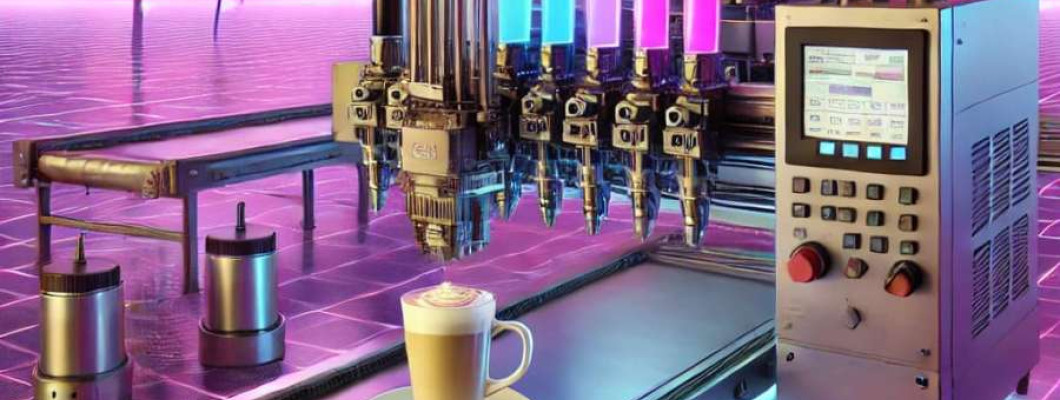
The Industrial Reality of Scaling Latte Coffee Printing
For a scalable business owner managing dozens of outlets or high foot traffic locations, the need for a robust, reliable coffee printer extends beyond aesthetics. Key challenges include maintaining print precision at rates exceeding 60+ lattes per hour, ensuring consumables like ink cartridges and milk substrates do not introduce downtime bottlenecks, and automating maintenance cycles to minimize technician intervention. Underpowered or hobbyist-grade units typically fail to meet this demand, with printhead clogging, color drift, and thermal management issues culminating in frequent stoppages and decreased customer satisfaction. Such inefficiencies translate into higher effective labor per cup, delayed service, and unpredictable output quality.
The Color Version Latte Coffee Printer bridges this divide, engineered specifically for industrial-grade deployment. It incorporates high-precision fluidic control and a multi-channel printhead capable of micrometer-scale droplet placement which translates to repeatable color fidelity at production speeds. This leap in capability enables scale-up without compromises in product aesthetics or operational stability, crucial for sustained expansion.
Technical Deep-Dive into the Color Version Latte Coffee Printer
High-Precision Piezoelectric Printhead Technology
The device utilizes advanced piezoelectric printheads calibrated at 300 pl droplet volume with a nozzle density of 600 dpi, enabling micron-level accuracy in pigment deposition. Piezoelectric actuation provides a superior lifecycle of over 10 billion cycles, compared to thermal inkjet alternatives which degrade faster under coffee substrate conditions characterized by viscosity variance and particulate presence. This architecture reduces print distortions and clogging, a common failure mode in DIY systems operating at lower pressures and narrow operational bandwidths.
Multi-Channel Color Ink System and Fluid Dynamics Optimization
The printer employs a four-channel CMYK ink reservoir with integrated viscosity and temperature sensors. Maintaining ink temperature within a 35–40°C operational window stabilizes flow dynamics, preventing microbubble formation and printhead contamination. Real-time viscosity adjustments through micro-heaters align fluid properties with printing conditions, enhancing color accuracy and repeatability. This level of fluid mechanics control is absent in consumer-grade printers.
Throughput and Automation Integration
Industrial throughput demands a print cycle under 30 seconds per 8 oz latte, including image processing and substrate alignment. The printer's embedded ARM Cortex-A53 CPU accelerates vector image rendering and synchronization with robotic arms or conveyor belts. Automated self-cleaning sequences are triggered every 15 prints, reducing manual maintenance intervals and increasing uptime to over 95%. By contrast, non-industrial printers require frequent stoppages and manual head cleaning.
Thermal and Environmental Control Systems
The device integrates active thermal management utilizing Peltier modules and airflow regulation to maintain stable operating temperatures between 20°C and 25°C. This prevents thermal drift that would otherwise affect piezoelectric actuator responsiveness and ink viscosity. Environmental sensors monitor ambient humidity above 30% RH, adjusting substrate drying times to ensure print integrity. These precision controls protect against boson load phenomena frequently encountered in ambient coffeehouse environments.
Comparison between DIY and Industrial Latte Printing Approaches
| Parameter | DIY/Semi-Automated Printers | Color Version Latte Coffee Printer |
|---|---|---|
| Droplet Volume (pl) | 500–700 | 300 |
| Printhead Lifecycle (billion cycles) | 1–2 | >10 |
| Print Resolution (dpi) | 150–300 | 600 |
| Print Speed (cups/hour) | 10–20 | 60+ |
| Maintenance Downtime per 100 cups | 30–60 minutes | 5–10 minutes (automated) |
| Color Stability (%) | ≤80 | >95 |
Scenario Analysis for Business Use Cases
High-Traffic Urban Café Chain
Here, the ability to produce hundreds of customized latte prints per day is essential. The high throughput and automated maintenance features of the Color Version Latte Coffee Printer reduce labor demands and minimize service delays, yielding quicker customer turnover and enhanced brand differentiation through consistent high-quality imagery.
Upscale Boutique Coffee Shop
Precision and color depth matter most for discerning clientele. The 600 dpi resolution and microdroplet control ensure intricate designs render sharply on milk foam substrates, allowing for complex logos or seasonal artwork. This printer’s capability improves artisanal appeal without sacrificing operational efficiency.
Event Catering and Mobile Coffee Services
Portability combined with print reliability is critical. The integrated thermal and viscosity controls enable the printer to maintain quality despite environmental fluctuations common in outdoor setups, ensuring consistent product presentation across diverse venues, reinforcing professional service standards.
Expert FAQ Addressing Technical Nuances
Q1: How does the piezoelectric printhead mitigate clogging with milk foam substrates?
Advanced nozzle design with hydrophobic coatings and controlled actuator pulse shapes minimize ink residue buildup, supported by automated cleaning cycles triggered before deposition irregularities develop.Q2: What physics principles govern the droplet flight and impact on foam texture?
Droplet momentum and surface tension interactions are optimized at 300 pl to achieve stable placement with minimal disruption to foam microstructure, preventing coalescence or absorption that would blur images.Q3: How is ink viscosity measured and corrected in real time?
Microfluidic flow sensors paired with resistive heating elements adjust temperature to maintain target viscosity ranges, ensuring consistent droplet formation pressure and volume.Q4: What fail-safes exist to prevent thermal runaway in the Peltier modules?
Integrated thermal sensors combined with PID controllers regulate current to the modules, maintaining narrow temperature bands and preventing overshoot that could degrade printhead components.Q5: Can firmware updates adapt print parameters for evolving substrates or designs?
The ARM Cortex-A53 CPU supports OTA firmware upgrades and parameter tuning, enabling continuous optimization based on usage data and customer feedback.
Strategic Verdict and Recommendation
For scalable business owners aiming to elevate throughput while preserving the delicate aesthetics of color latte coffee printing, the Color Version Latte Coffee Printer establishes itself as an industrial-grade benchmark. Its combination of high-resolution piezoelectric technology, advanced fluidic controls, and automation aligns seamlessly with operational demands found in commercial foodservice environments. The device notably closes the performance and reliability gap that restricts DIY models from viable scale deployment.
Considering throughput benchmarks over 60 cups per hour, automated maintenance minimizing labor overhead, and embedded environmental management safeguarding print quality, this printer justifies its strategic investment not only through improved customer experience but also through lifecycle cost reductions. The embedded computing platform opens further potential for integration with existing automated café workflows and scaling as business needs evolve.
More details and purchase options are available on the official product page at Color Version Latte Coffee Printer, reinforcing its position as the definitive industrial solution for advanced, high-throughput latte art printing.