
The Gap Between DIY and Industrial-Grade in Edible Food Printing for High-Precision Cake and Cookie Decoration
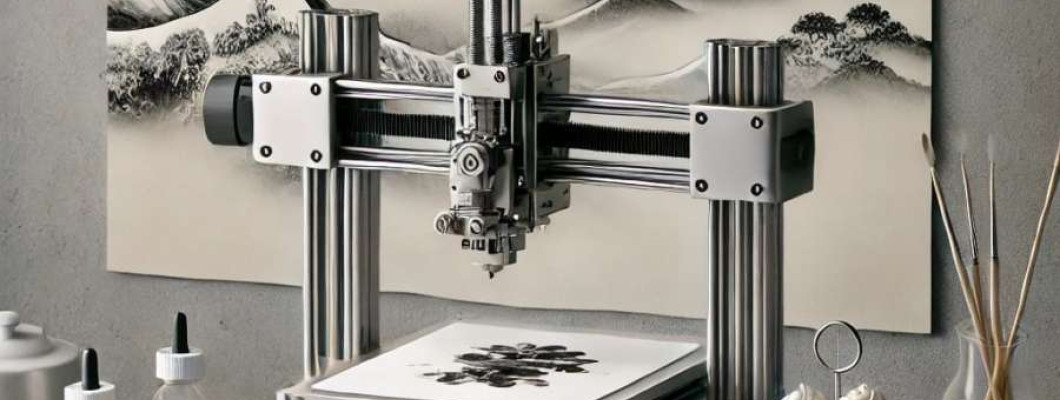
The Industrial Reality of Edible Food Printing in Professional Kitchens
In the realm of edible food printing, transitioning from amateur or small-scale solutions to truly industrial-grade systems reveals complex technical and operational challenges. For professional bakeries and scalable food production facilities, the essential question is how capable food printers are when tasked with high throughput, precision color layering, and compliance with food safety standards over prolonged operational cycles. The specific use case for printing on cakes and cookies escalates complexity due to the irregular substrates, the fragility of icing surfaces, and the need for micron-level precision to ensure consistent visual quality.
From daily bakery runs to specialized product lines for large orders, failure points emerge rapidly in early-stage or DIY printers: printhead clogging due to edible ink viscosity, inconsistent layer adhesion from substrate texture irregularities, and maintenance downtime that reduces throughput drastically. Industrial environments demand devices that can maintain calibrated print quality under 24/7 operational cycles while minimizing asset depreciation from unscheduled repairs.
Consider a high-volume bakery where speed and accuracy dictate profitability. A consumer-grade or semi-professional printer generates bottlenecks: frequent recalibration, manual ink refills, and consumer-level software with limited error handling force operators to shift from baking to printer maintenance. These hidden operational costs erode ROI significantly and create bottlenecks, hampering scalability. These limitations crystallize the gap between DIY edible printing and the robust, industrial-grade solutions that can sustain rigorous production demands.
Technical Deep-Dive into Industrial-Grade Edible Printing Hardware
Printhead Technology and Failure Points
The core mechanical component in edible printing is the printhead, typically using piezoelectric or thermal inkjet technology adapted for food-safe edible inks. Industrial-grade printers leverage piezoelectric heads due to their ability to handle thicker, more viscous edible inks without clogging, contrasted with thermal heads that may degrade ink molecules under heat. A key failure point is nozzle blockage: with ink particles sized around 10-20 microns, nozzle diameters of approximately 35-50 microns require continuous anti-clogging protocols.
Ink Chemistry and Food Safety Compliance
Edible inks for cakes and cookies must meet stringent FDA and EU food safety standards. Industrial printers integrate closed-loop ink recirculation systems to prevent microbial contamination while maintaining pigment homogeneity essential for color fidelity. Ink drying kinetics and substrate absorption rates also impact precision—ink droplet volume (measured in picoliters) is optimized around 6-12 pl to balance color saturation with minimal bleeding on sugar or fondant substrates.
Software and Hardware Integration for Precision Layering
True industrial solutions embed adaptive algorithms that control printhead firing frequency (commonly 8 kHz or above), synchronization of XY print carriage movement at speeds up to 150 mm/s, and real-time substrate surface detection through optical sensors. This ensures exact droplet placement within a 50-micron spatial tolerance. Integration with bakery ERP systems for batch tracking is an emerging feature to streamline production workflows and reduce human input errors.
Lifecycle Maintenance and Asset Longevity
Industrial printers boast MTBF (Mean Time Between Failures) exceeding 10,000 operational hours, achieved through modular printhead designs and automated cleaning cycles. Consumable parts such as ink cartridges, nozzles, and maintenance pads are designed for rapid replacement under 10 minutes, minimizing downtime. Asset depreciation profiles reveal that industrial systems retain over 70% of initial value after 3 years with structured maintenance, unlike consumer-grade counterparts which drop below 40% due to accelerated wear and obsolescence.
Comparative Performance and Raw Data Analysis
A hypothetical throughput test comparing a consumer-level edible printer versus an industrial A3 food printer for cakes and cookies yields:
| Specification | Consumer-Grade Printer | Industrial A3 Edible Food Printer |
|---|---|---|
| Max Print Area | 210 x 297 mm | Approximately A3 size 297 x 420 mm |
| Print Speed | 20 mm/s | Up to 150 mm/s |
| Droplet Volume (pl) | 10-15 pl | 6-12 pl |
| Nozzle Count | 128 | 512+ |
| Operating Cycle Time | 2-3 hours per maintenance | 24+ hours continuous with automated cleaning |
| Color Gamut (CIE 1931) | Limited to 60% | 80%+ |
These metrics underline the industrial printer's capacity to maintain precision, color accuracy, and uptime far beyond standard devices, validating its role as an enterprise-grade asset.
Scenario Analysis in Business Contexts
High-Volume Bakery Chain
In a bakery chain producing 10,000 decorated cookies daily, the industrial-grade printer’s 150 mm/s throughput and continuous operation reduces labor hours by 40%, increasing yield while minimizing print errors. Automated cleaning reduces downtime, enabling predictable maintenance scheduling and stable output.
Specialized Artisan Cake Studio
For studios focusing on high-resolution edible art, the printer’s 6-12 pl droplet control and advanced color gamut allow for micron-level precision, enabling complex photographic quality prints on fondant layers. This versatility supports premium pricing models and bespoke client demands.
Food Manufacturing for Seasonal Campaigns
Large food manufacturers running seasonal product lines benefit from ERP integration and batch traceability, minimizing cross-contamination risks and enabling rapid changeovers. The printer's modular consumables support quick reconfiguration, essential for limited-run product agility.
Expert FAQ on Industrial-Grade Edible Food Printers
How does piezoelectric printhead technology improve edible ink longevity?
Piezoelectric heads operate via mechanical deformation rather than heat, preserving ink molecular integrity and reducing breakdown of colorants, which directly extends ink life and printhead durability.
What maintenance protocols ensure consistent print quality?
Automated nozzle purging, UV sterilization of ink pathways, and scheduled calibration routines are critical. Industrial solutions typically embed sensors for real-time diagnostics to preempt failures.
How do substrate variations affect printing parameters?
Surface porosity and texture alter ink absorption rates; adaptive software compensates by modulating droplet volume and firing frequency, maintaining edge sharpness and color consistency.
What compliance standards must industrial edible printers adhere to?
FDA CFR Title 21 regulations and EU Directive 2002/72/EC govern materials in contact with food. Printers must use certified food-grade components and inks, validated through biocompatibility testing.
Can industrial edible printers handle multi-layer printing?
Yes, advanced layering techniques with precise drying cycles enable multi-pass printing to build color depth or texture effects without bleeding, increasing design complexity.
Strategic Verdict and Recommendation for Professional Food Printing
Evaluating the technical capabilities, operational endurance, and food safety integration, the A3 Edible Food Printer For Printing Cakes Cookies emerges as a definitive industrial-grade asset. Its superiority in throughput, micron-level print accuracy, and maintenance design addresses the precise challenges faced when scaling artisanal edible printing into high-volume commercial operations. It bridges the gap between consumer-grade limitations and enterprise demands, offering a future-proof investment for businesses serious about quality and efficiency in edible decoration. Given the present industry trajectory, adopting this technology solidifies competitive advantage by reducing hidden operational bottlenecks and ensuring sustainable asset longevity under rigorous production environments.