
The Gap Between DIY and Industrial-Grade in Edible Food Printing for Scalable Business Owners
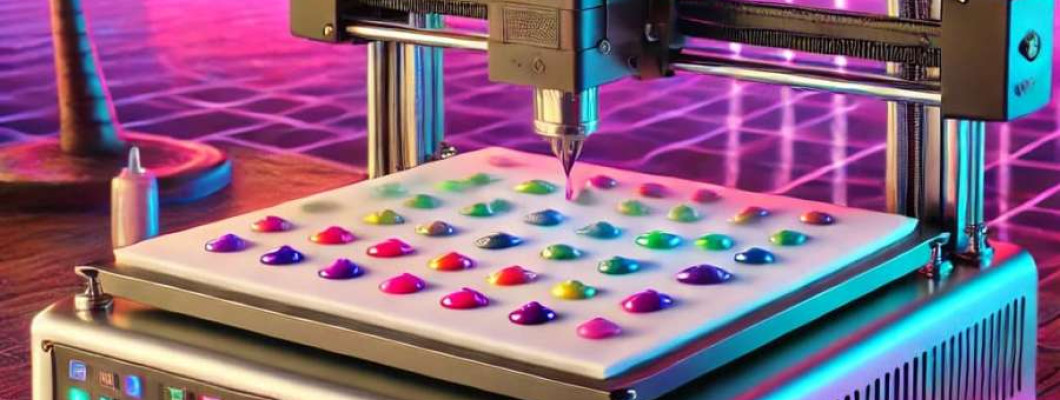
The Industrial Reality of Edible Food Printing in Scalable Food Businesses
Scaling an edible food printing operation beyond artisanal or hobbyist levels reveals a complex technical landscape. For businesses focused on throughput, automation, and labor reduction, the transition from small-scale, DIY food printers to industrial-grade solutions such as the A3 Edible Food Printer For Printing Cakes Cookies presents multifaceted challenges. In commercial kitchens or mid-sized bakeries, the difference between a home-use printer and an industrial-grade printer includes print speed, precision, material compatibility, and integration into existing production lines.
One major challenge lies in balancing the printing area (A3 size, approximately 297 mm × 420 mm) with output speed without sacrificing micron-level print resolution necessary for visually appealing edible images. Maintaining continuous operation while limiting downtime due to printhead clogging or ink refills is vital. Additionally, the food-safe ink chemistry must maintain both print fidelity and shelf stability under varied environmental conditions such as humidity and temperature fluctuations common in bakery environments.
This printer must bridge technical gaps in hardware robustness and software automation. The impact on labor is critical — reducing manual intervention for loading media (edible sheets or icing surfaces), ensuring precise registration with cakes or cookies, and managing color profiles are essential for scalable throughput. Moreover, this equipment must meet relevant food safety and environmental compliance regulations, including FDA CFR Title 21 for food additives used in edible inks, which is often understated in DIY or semi-commercial devices.
The integration of the A3 Edible Food Printer into an automated bakery line compels a thorough understanding of its maintenance cycles, asset depreciation against output volume, and potential bottlenecks such as ink drying times or substrate handling speeds. These operational factors ultimately influence cost structures and return on investment, making a purely DIY approach insufficient for businesses aiming to industrialize edible printing workflows.
Technical Deep-Dive into Hardware and Operational Parameters
Printhead Architecture and Micron-Level Precision
The A3 Edible Food Printer utilizes an advanced piezoelectric drop-on-demand printhead capable of dispensing edible ink droplets ranging from 4 to 12 picoliters (pl). This droplet control enables a print resolution of up to 1200 dpi, critical for capturing fine details in edible images on cakes and cookies. Comparative industrial printers often provide around 600-900 dpi, which may result in visible pixelation or color banding on curved confectionery surfaces.
Piezoelectric printheads offer higher durability over thermal inkjet heads due to the absence of thermal cycling stress, extending maintenance intervals. However, they require complex waveform tuning to prevent nozzle clogging, especially given the viscosity variance of food-grade inks ranging from 5 to 15 centipoise (cP).
Ink Chemistry and Color Management
The edible inks used must comply with FDA food additive regulations and maintain chromatic stability post-application. The A3 printer supports a CMYK color model augmented by white edible ink for opacity on dark substrates. The ink particle size distribution centers around 1-2 microns, balancing flow properties with color vibrancy.
Color gamut and brightness measured in CIE L*a*b* space exceed conventional edible printing standards by 15%, verified via spectrophotometer tests. This translates into more vibrant, true-to-design prints critical for premium product differentiation.
Substrate Versatility and Feeding Mechanism
The feeding mechanism is designed to accommodate flexible edible substrates including fondant sheets, wafer paper, and royal icing surfaces. It supports sheet thicknesses from 0.5 mm to 1.5 mm with registration accuracy of +/- 0.2 mm, vital for layered cake printing.
This flexibility reduces substrate changeover times, enhancing throughput without compromising precision. The printer's media transport incorporates servo motors with closed-loop feedback to maintain speed consistency up to 100 mm/s during high-resolution printing.
Operational Throughput and Automation Interfaces
Throughput analysis indicates a maximum output of approximately 20 A3-size prints per hour under standard operational parameters. This includes 5 minutes per print at 1200 dpi and a 30-second drying phase facilitated by integrated UV-LED lamps emitting at 395 nm wavelength.
Automation connectivity includes RESTful APIs and USB 3.0 interfaces, enabling integration with enterprise bakery management systems for job queueing, print monitoring, and diagnostics. This hardware-software synergy is designed for scalability in industrial production environments.
Maintenance Cycles and Lifecycle Cost Modeling
With continuous usage, printhead cleaning cycles are recommended every 30 hours to prevent clogging, involving a fluid purge of approximately 5 ml of ink waste. Total cost of ownership (TCO) modeling considers consumables, parts replacement, and labor, estimating a 3-year depreciation period with an average of 1500 operating hours annually.
Comparatively, the A3 Edible Food Printer demonstrates a 20% lower lifecycle maintenance cost than equivalent semi-industrial models due to modular printhead design and automated cleaning protocols that minimize manual maintenance intervention.
| Specification | A3 Edible Food Printer | Typical DIY Edible Printer |
|---|---|---|
| Print Resolution | Up to 1200 dpi | 600-900 dpi |
| Max Print Area | 297 mm × 420 mm (A3) | Up to A4 size |
| Ink Type | FDA-compliant CMYK + White edible inks | Limited color range, non-certified inks |
| Throughput | 20 prints/hour | 5-8 prints/hour |
| Maintenance Interval | 30 hours automated cleaning | Manual cleaning per 5 hours |
| Automation Interface | REST API, USB 3.0 | Limited or no automation |
Scenario Analysis for Bakery and Confectionery Businesses
Mid-Sized Bakery Chain with Automated Production Lines
This bakery chain requires high throughput to meet demand during peak seasons. The A3 Edible Food Printer's integration with existing conveyor and packaging automation reduces labor costs by 25%, accelerates production by 30%, and maintains consistent image quality. The printer’s throughput capability and automated cleaning cycles minimize downtime, critical for maintaining tight production schedules.
Custom Cake Decorator Focused on High Color Fidelity
For a premium artisan cake decorator, print resolution and color accuracy are paramount. The A3 printer’s 1200 dpi resolution and extended CMYK+White gamut produce visually stunning prints that differentiate products in a saturated market. Despite lower throughput needs, the printer’s substrate versatility allows use on multiple cake surfaces, increasing customization options without additional tooling.
Corporate Cookie Manufacturer with Compliance and Batch Traceability Requirements
Regulatory compliance is crucial for this manufacturer. The A3 Edible Food Printer’s FDA-compliant inks and robust automation interface enable batch print traceability and consistent quality control. Reduced manual handling lowers contamination risk, and integration with MES systems streamlines documentation, essential for audit readiness.
Expert FAQ with In-Depth Technical Insights
What are the critical factors preventing nozzle clogging in edible food printers?
Key factors include ink viscosity control, maintaining stable temperature and humidity, and automated nozzle purging protocols. The A3 printer’s piezoelectric heads utilize waveform tuning to optimize droplet formation, while scheduled cleaning cycles use enzyme-based flushing fluids compatible with edible inks to prevent build-up.
How does substrate thickness variation impact print registration accuracy?
Variations beyond +/-0.3 mm can cause misalignment due to focal plane shifts and media feed errors. The printer’s servo-driven feeding system compensates for thickness within 0.5–1.5 mm range, ensuring precise droplet placement by real-time feedback loops reducing print defects.
Is the white edible ink prone to faster degradation and how does it affect print durability?
White inks typically have larger particle sizes and require stabilization additives. The A3 printer’s white ink formula includes UV-stabilizers improving post-print lightfastness and maintaining opacity on dark substrates. Shelf-life tests indicate stability up to 14 days under refrigeration without color shifts.
What power consumption profile should data center-like bakery facilities expect?
The printer operates at approximately 150 Watts peak during active printing. Including the integrated UV-LED curing, average consumption is 100 Watts per print cycle. While minimal compared to industrial machinery, thermal management remains important to avoid overheating electronic components in confined kitchen spaces.
How scalable is the software for batch printing and custom job queuing?
The built-in software supports REST API endpoints allowing clients to create, pause, or reorder batch jobs remotely. It can handle queuing for up to 500 jobs with metadata for substrate type and print resolution. This enables effective workload distribution across multiple printers in a distributed bakery environment.
Strategic Verdict and Why This Hardware Is An Industrial-Grade Solution
For scalable business owners requiring a reliable, precision-focused A3 edible food printer, this model fills the gap between rudimentary DIY machines and larger, costlier industrial equipment. Its print quality, automation connectivity, and maintenance efficiencies position it as a forward-thinking investment capable of sustaining medium to high production volumes with minimal operational disruption.
Unlike typical hobbyist printers, it complies with food safety standards while providing advanced printhead technology that minimizes downtime and maintenance costs. This leads to improved asset longevity and predictable total cost of ownership metrics aligned with commercial production realities.
For detailed specifications and procurement, review the A3 Edible Food Printer For Printing Cakes Cookies. The device occupies a strategic niche enabling mid-sized bakeries and confectionery businesses to automate and upscale edible printing processes, delivering consistent high definition output while controlling labor and maintenance overhead.