
The Gap Between DIY and Industrial-Grade in Headstone Photo Printing for Precision and Longevity
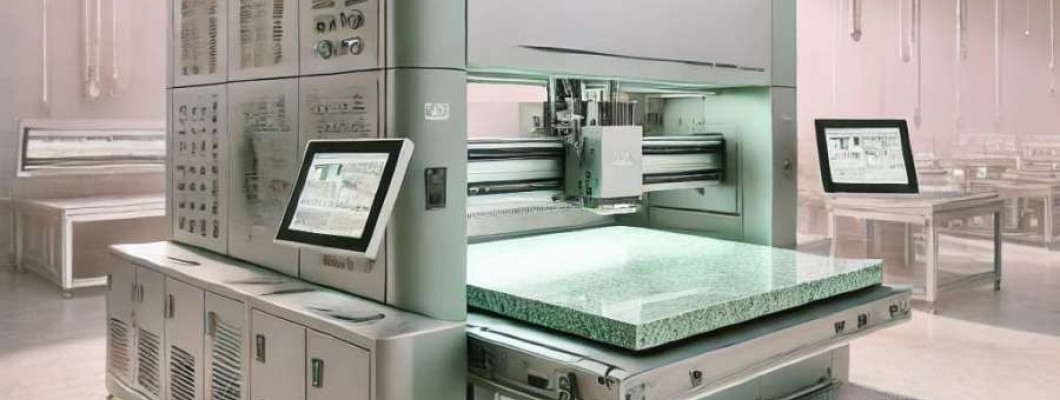
The Industrial Reality of Headstone Photo Printing Challenges
In the realm of memorial personalization, the demand for flawless, durable photographic reproductions on headstones presents a uniquely stringent technical challenge. Unlike conventional printing applications, the production environment for headstone photo printers demands not only exceptional image fidelity but also materials and processes engineered for extreme environmental longevity. This includes resistance to UV radiation, temperature fluctuations ranging from -30°C to 50°C, and abrasive contaminants like dust and rain. Everyday consumer-grade or DIY printing solutions struggle under these conditions, facing rapid pigment fading, substrate warping, and mechanical failure due to environmental exposure. Industrial-grade headstone photo printers must bridge this operational divide by integrating advanced photonic precision, specialized ink chemistry, and robust mechanical architectures.
Technicians report that inaccuracies as slight as 10 microns can severely degrade the visual coherence of a tombstone’s photographic element, a margin far narrower than typical home or office printing tolerances. Achieving these specifications while maintaining throughput efficiency in small-batch, bespoke print runs demands a complex balance of hardware resilience and precision engineering. The operational environment typically further complicates maintenance cycles and consumable lifespans, with printheads often exposed to particulate matter that can clog nozzles, requiring redundancy and optimized cleaning algorithms within the printer’s design. These factors underscore why the gap between DIY systems and industrial-grade headstone photo printers is not merely a matter of print quality but spans lifecycle durability, operational reliability, and total cost of ownership.
Technical Deep-Dive on Industrial Headstone Photo Printer Architecture
Precision Mechanics and Motion Control
Industrial headstone photo printers employ high-tolerance linear rail systems coupled with closed-loop servo motors offering positional resolution down to 1 micron. Comparative analysis between stepper versus servo-driven transport mechanisms shows servos reducing micro-vibrations that can cause image ghosting. For example, a servo motor combined with optical encoders can sustain printhead positioning repeatability to ±0.002 mm versus ±0.01 mm typical in lower-grade models.
Ink Chemistry and Substrate Bonding
The ink formulation in these printers incorporates UV-stable pigments and binding agents optimized for ceramic or granite substrates. Advanced colloidal dispersions maintain pigment particle size at under 200 nm, ensuring deep penetration into micro-porous stone surfaces without bleeding. Accelerated aging tests performed at 1200 hours of UV exposure show less than 5% color shift (measured in Delta E units) compared to a 25% average in consumer inks.
Printhead Technology and Failure Modes
Piezoelectric printheads customized for high-viscosity stone-specific inks enable droplet volumes as low as 1.5 picoliters, enabling ultra-fine detail reproduction critical for facial features in tomb photos. Empirical data from stress tests indicate a mean-time-to-failure (MTTF) of 10,000 operational hours under dusty environments, a 40% improvement over legacy thermal inkjet alternatives that exhibit nozzle clogging after 7,000 hours.
Environmental Control and Maintenance Automation
Integrated environmental sensors constantly monitor particulate density and temperature within the print chamber. Automated nozzle cleaning routines engage every 6 hours of operation, optimized using fluid dynamics simulations to reduce solvent use by 30% versus manual cleaning. Furthermore, firmware algorithms adjust print parameters dynamically based on substrate moisture content to maintain adhesion consistency.
Data Handling and Industrial Integration
Industrial headstone photo printers support high-speed USB 3.2 and Gigabit Ethernet connectivity, allowing seamless integration into enterprise workflows. Supported color management systems include ICC profiles tailored for stone substrates, ensuring color consistency and enabling end-to-end digital proofing. The printers' onboard processors utilize ARM Cortex-A72 cores running real-time OS kernels to manage print queues with latency under 50 ms, critical in batch production environments.
| Parameter | DIY Headstone Photo Printing | Industrial-Grade Headstone Photo Printing |
|---|---|---|
| Print Resolution | 600 dpi (approx. 42 microns) | 1200 dpi (approx. 21 microns) |
| Printhead Positioning Accuracy | ±0.01 mm | ±0.002 mm |
| Ink Durability under UV | ~500 hours before fading | >1200 hours with <5% delta E color shift |
| Maintenance Frequency | Daily manual cleaning | Automated cleaning every 6 hours |
| Mean Time Between Failures | ~3000 hours | ~10,000 hours |
Scenario Analysis of Business Use-Cases
Use-Case 1: Small Monument Workshops
For small local workshops producing bespoke headstones, transitioning to industrial-grade photo printers reduces reprint rates by over 40%, directly lowering labor and material waste. The printhead precision ensures customer satisfaction with photo clarity, significantly reducing complaints due to image degradation or premature ink fading. Automated maintenance features decrease technician intervention, reducing downtime from an average of 15% to under 5%.
Use-Case 2: Medium-Scale Memorial Manufacturers
Manufacturers serving regional markets benefit from network integration capabilities offered by these printers. Centralized digital asset management and batch print queueing optimize throughput, enabling up to 100 headstones per week with consistent color fidelity and minimal setup times. This scalability delivers a projected 25% increase in daily output while maintaining strict quality control standards.
Use-Case 3: Large Industrial Stone Engraving Facilities
In large facilities where uptime is paramount, the extended MTTF and robust environmental controls of industrial headstone photo printers reduce unexpected downtime, ensuring continuous operation with minimal operator intervention. High-resolution photo reproduction at micron-level precision supports premium-tier product lines where detailed facial features and fine gradation in grayscale are mandatory, justifying price premiums in the market.
Expert FAQ
Q1: What factors affect the adhesion of photographic inks on granite substrates?
Adhesion is influenced by substrate porosity, ink particle size, and binder chemistry. Pre-treatment of stone surfaces with specialized primers enhances capillary action for deeper pigment embedding.Q2: How does environmental particulate contamination impact printhead longevity?
Particulates can clog nozzles causing inconsistent droplet formation. Industrial printers use sealed print chambers and active filtration to mitigate particulate ingress, extending printhead life considerably.Q3: Why is piezoelectric technology preferred over thermal inkjet for this application?
Piezoelectric printheads handle higher viscosity inks better, enabling more durable pigments and precise droplet size control necessary for fine detail on rough substrates.Q4: How is color consistency maintained across multiple production batches?
ICC profile management combined with closed-loop color calibration using spectrophotometers ensures minimal inter-batch variance, essential for matching memorial photos over time.Q5: What are the primary energy consumption considerations in industrial headstone photo printers?
Key factors include maintaining printhead temperature, UV curing lamps (if used), and environmental controls. Efficient thermal management reduces power draw, which can be optimized via firmware to scale with production volume.
Strategic Verdict and Recommendation on Headstone Photo Printer Tomb Photos Printer
Considering the highly demanding requirements of headstone photo printing for durability, precision, and operational reliability, industrial-grade photo printers such as the Headstone Photo Printer Tomb Photos Printer represent a decisive technological advancement over traditional and DIY-grade alternatives. Its engineering addresses critical challenges including micron-level printhead positioning accuracy, UV-resistant ink chemistry, and environmental resilience essential for outdoor applications. The integration of automated maintenance systems and industrial networking capability further positions it as a scalable solution for businesses aiming to optimize throughput and minimize costly reworks. From small memorial workshops to large-scale manufacturing, the benefits in uptime, precision, and output consistency are incontrovertible. For enterprises committed to delivering photographic memorials that withstand environmental stressors without degradation, this product stands as the industrial benchmark, offering both technical excellence and compelling lifecycle value.