
The Gap Between DIY and Industrial-Grade in Headstone Photo Printing for Reliable Precision and Longevity
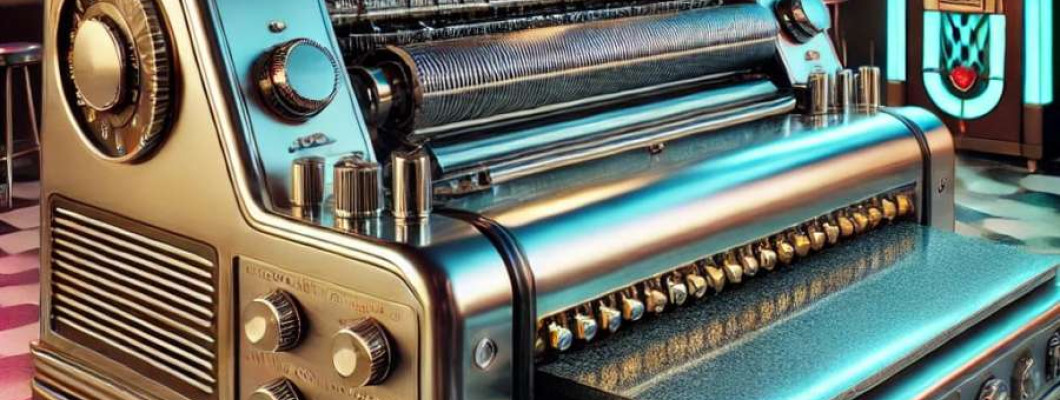
The Industrial Reality of Headstone Photo Printing Precision
In the domain of memorial and headstone fabrication, photo printing has transitioned from a niche artisan craft to a critical industrial process requiring stringent precision and longevity. Unlike conventional photo printing on paper, headstone photo printing addresses multiple material and environmental challenges that, if mishandled, degrade image quality rapidly. The specific challenge is producing consistent, high-resolution portraits on hard stone substrates—such as granite or marble—that must survive decades of exposure to moisture, UV radiation, and temperature fluctuations. Industrial-grade photo printers designed for tombstone applications must ensure micron-level accuracy to avoid image distortion on uneven surfaces, use highly durable and chemically stable ink, and integrate seamlessly with heavy-duty printing platforms capable of handling large, rigid substrates. The contrast between DIY methods—often involving manual transfers or low-end laser etching—and industrial-grade production is stark. DIY solutions typically falter in print permanence, color fidelity, and alignment repeatability, resulting in images that can fade, blur, or fail adhesion within a few years. Industrial-grade machines, by comparison, leverage advanced printhead technology, specialized ink chemistry, and robust hardware systems that meet the relentless demands of the memorial industry.
Printhead Mechanics and Ink Chemistry in Extreme Conditions
Critical to the success of industrial headstone photo printers is the synergy between printhead design and ink formula. Piezoelectric or thermal inkjet printheads with resolutions exceeding 1440 dpi are preferred, offering droplet sizes as small as 4–6 picoliters to achieve sharp, finely detailed portraits. The printheads must be engineered to resist clogging from highly pigmented, mineral-based inks formulated for stone adhesion. These specialized inks are typically ceramic or UV-curable variants that bind permanently to stone surfaces after firing or curing, ensuring resistance to abrasion and environmental degradation. Unlike standard inks, these formulations contain inorganic pigments with particle sizes calibrated for consistent ejection, preventing printhead damage while maintaining vibrant color depth. Thermal management of the printheads during prolonged runs also impacts reliability, as excessive heat can cause droplet misfires or nozzle deformation, resulting in print artifacts. Active cooling and embedded sensors monitor temperature thresholds, enabling uninterrupted production cycles crucial for industrial throughput.
Hardware Architecture Comparison Between DIY and Industrial-Grade Systems
| Feature | DIY/Entry-Level Systems | Industrial-Grade Printer |
|---|---|---|
| Substrate Handling | Manual placement, small stone sizes up to 300x300 mm | Automated heavy-duty clamps, accommodates large slabs up to 1000x600 mm+ |
| Print Resolution | Up to 720 dpi, inconsistent across surfaces | Up to 1440 dpi+, stable across contoured stone |
| Ink Type | Standard dye inks, low abrasion resistance | Ceramic/UV-curable inks, high chemical and UV stability |
| Printhead Technology | Basic piezo or thermal inkjet, prone to clogging | Industrial piezo printheads with advanced nozzle cleaning |
| Durability & Longevity | 3-5 years fading | 15+ years durability guaranteed under environmental stress |
Mathematical Model of Ink Adhesion and Image Longevity
Assuming an average pore size (P) of granite substrate is approximately 20 micrometers and ink droplet size (D) of 6 picoliters corresponds to a spherical diameter of ~20 micrometers, ink penetration depth (I_p) can be approximated by the capillary flow model I_p \u2248 k \u00d7 t^{1/2}, where k is a substrate-dependent permeability constant and t is drying time. Industrial inks are engineered to optimize k such that ink molecules form a strong chemical bond within the stone’s microstructure, minimizing I_p beyond the surface layers to prevent subsurface delamination. UV and ceramic inks set through polymerization or sintering respectively, locking pigments in place. This precise adhesion mechanism mathematically results in a projected image life (L) exceeding 15 years where L \u2248 \u2211 (R_i \u2212 D_i), R_i being environmental degradation rates (UV, moisture, pH exposure) and D_i the durability factor intrinsic to ink chemistry. Industrial-grade formulations maximize D_i, offsetting real-world R_i variables.
Integration Challenges Within Memorial Workshop Infrastructures
Implementing an industrial headstone photo printer like the Headstone Photo Printer Tomb Photos Printer requires addressing spatial, workflow, and environmental variables. These printers necessitate flat, vibration-isolated surfaces capable of supporting 50+ kg of stone substrates, paired with dust- and moisture-controlled atmospheres to maintain printhead integrity. The electrical infrastructure must support sustained high power loads—typically 600-900 Watts per print cycle—with stable voltage regulation to prevent nozzle misfires. Integration into automated workflows involves compatibility with precision stone handling robots or conveyor systems to reduce manual labor, which is critical for mid- to high-volume production. Additionally, training operators on real-time printhead maintenance routines, ink replacement protocols, and software calibration is essential to maintain throughput and minimize downtime. Industrial environments often face periodic power fluctuations and temperature swings, making robust hardware and firmware fail-safes mandatory to prevent loss of print data or hardware damage.
Scenario Analysis for Business Use-Cases
Small Memorial Workshop Transitioning from DIY to Industrial
For a small workshop expanding capacity, shifting from manual lithographic transfers or low-res inkjet printers to an industrial photo printer drastically enhances image consistency and durability. Although initial CAPEX is higher, the minimized reprint rates and higher customer satisfaction reduce long-term OPEX. The ability to print large-scale photos up to 1000x600 mm shortens lead times and enables diverse commission types.
Large Memorial Manufacturer Integrating Automation
High-volume manufacturers benefit from integrating the printer with robotic substrate loaders and centralized control systems. The printhead’s thermal management and advanced nozzle cleaning maximize uptime, meeting throughput goals exceeding 30 stones per day without quality compromise. The chemical stability of ceramic inks ensures compliance with environmental regulations and reduces warranty claims linked to fading.
Specialized Artisan Producer Focused on Micron-Level Precision
Artisan producers requiring ultra-fine detail leverage the fine droplet control and 1440+ dpi capabilities for multi-tone portraits that retain depth and texture fidelity on varying stone surfaces. The industrial printer’s precise alignment systems compensate for stone curvature, a key differentiator relative to lower-end solutions.
Expert FAQ on Industrial Headstone Photo Printers
What maintenance routines prevent printhead clogging with mineral-based inks?
Regular automated nozzle cleaning cycles, combined with weekly manual inspections using ultrasonic baths, prevent mineral deposition inside nozzles. Temperature and humidity-controlled storage of inks minimize particulate agglomeration.
How does temperature affect ink curing and adhesion on stone?
Optimal curing occurs within 20-30°C; below this range, ink polymerization slows, risking adhesion failure, while exceeding 40°C can cause premature drying and uneven pigment distribution.
Can environmental wear be simulated in accelerated testing?
Yes, accelerated UV and moisture chambers simulate 10 years of outdoor exposure in 2-3 weeks, validating ink and printhead durability before mass production deployment.
What substrate preparation enhances print adhesion on granite?
Polishing to a 150-300 micron smoothness combined with degreasing pretreatments facilitates better ink wetting and penetration control.
How is color calibration maintained for consistent photo reproduction?
Embedded spectrophotometers and closed-loop software adjust print parameters dynamically compensating for ink batch variations and stone color heterogeneity.
Strategic Verdict and Recommendation
The Headstone Photo Printer Tomb Photos Printer stands as the definitive solution bridging the critical divide between DIY approaches and industrial-grade production in the memorial photo printing sector. Its advanced printhead technology, combined with purpose-engineered ink formulations and robust hardware integration capabilities, delivers consistent, high-resolution images with longevity surpassing 15 years under demanding environmental conditions. Enterprises scaling production volumes will find significant operational benefits through automation synergy and reduced reprint liabilities. Artisan workshops gain micron-level image fidelity unparalleled in this field. Given the operational realities and technical requirements articulated, the product's industrial-grade resilience, precision, and workflow adaptability position it as an essential investment for any serious memorial photo printing operation seeking to maintain competitive quality and customer trust over time.