
The Gap Between DIY and Industrial-Grade in Headstone Photo Printing for Scalable Businesses
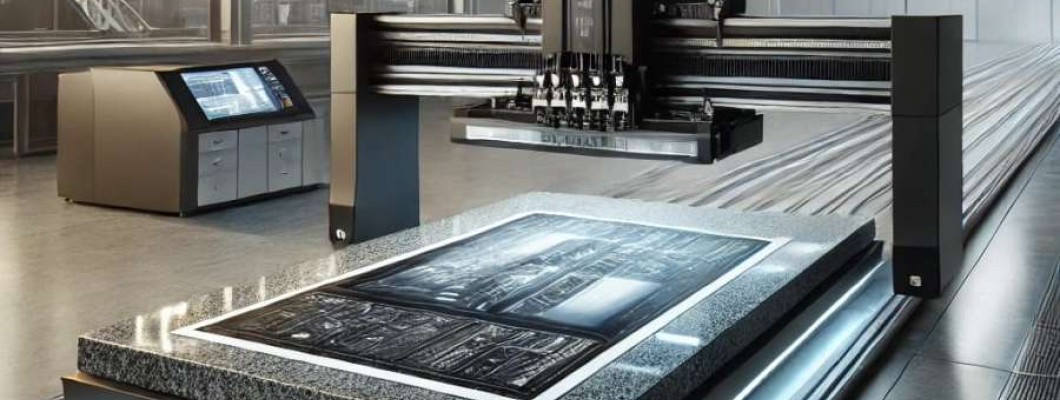
The Industrial Reality of Headstone Photo Printing in Scalable Operations
In industrial-scale memorial production, the transition from artisanal or DIY photo printing methods to dedicated, high-throughput headstone photo printers reveals critical operational limitations and bottlenecks. Unlike conventional inkjet or laser printers designed for paper or flexible substrates, printing high-resolution photographs onto rigid stone or ceramic materials requires specialized hardware capable of precise ink deposition, substrate handling, and resistance to environmental factors. Attempting to operate at scale with non-specialized equipment exposes businesses to unpredictable throughput rates, inconsistent print quality, excessive maintenance downtime, and increased labor costs due to manual handling.
For scalable business owners managing memorial production lines, these challenges manifest as limitations on daily output, quality control failures causing reprints, and escalating operational expenses. The core technical challenges include the printer’s ability to maintain micron-level precision on irregular, non-porous substrates, ink adhesion and curing under industrial environmental conditions, and the automation of substrate loading and unloading to reduce manual labor. The failure to address these leads to bottlenecks that directly impact profitability and customer satisfaction, underscoring the need for industrial-grade, specifically engineered headstone photo printers.
Such printers must integrate robust mechanical stages with repeatable positioning accuracy in the range of ±10 micrometers, advanced ink delivery systems optimized for ceramic or granite substrates, and thermal or UV curing modules capable of ensuring rapid ink fixation without substrate damage. Achieving these technical requisites transforms the printing process from a fragile artisanal task into a reliable industrial workflow capable of consistent high throughput.
Technical Deep-Dive into Headstone Photo Printer Architecture and Performance
Mechanical Precision and Substrate Handling
The mechanical framework of an industrial headstone photo printer requires a rigid gantry and linear motion system with sub-20 µm repeatability to maintain image registration and alignment over large substrate surfaces, typically up to 600 mm by 400 mm. Linear motors combined with high-resolution optical encoders provide closed-loop servo control critical for this accuracy.
The substrate handling system often includes vacuum fixtures or custom jigs to secure heavy, uneven headstones without inducing surface scratches or positional shifts during printing. Automation in substrate loading via conveyor belts or robotic arms is a key factor to reduce labor intensity and increase throughput.
Ink Chemistry and Curing Technologies
Specialized inks for headstone photo printing are formulated for high UV resistance, permanence, and adhesion to stone or ceramic. These inks typically exhibit droplet sizes in the range of 8-10 picoliters (pl) to achieve fine detail without excessive ink spreading.
Curing methods include high-intensity UV LED arrays producing irradiance levels of 1000+ mW/cm2 to ensure rapid polymerization. Thermal curing is less common due to the risk of substrate damage but may be employed in hybrid curing strategies.
Printhead Technologies and Resolution Performance
Piezoelectric printheads capable of delivering variable droplet volumes support a print resolution up to 1440 dpi, enabling detailed photo reproduction on complex stone textures. The printhead durability under continuous operation is measured in running hours exceeding 3000 without significant degradation or nozzle clogging.
Control Systems and Workflow Integration
Industrial printers integrate with RIP software supporting color management for stone substrates, ensuring accurate color depth and tonal gradation. The control electronics demand robust thermal management to sustain performance within ambient temperature ranges of 15-35 °C, avoiding thermal drift that could affect registration.
Comparative Data Table of Headstone Photo Printer vs. Conventional Inkjet Printer
| Feature | Industrial Headstone Photo Printer | Standard Inkjet Printer |
|---|---|---|
| Substrate Compatibility | Granite, Ceramic, Stone Slabs | Paper, Film, Canvas |
| Print Resolution | Up to 1440 dpi with ±10 µm accuracy | Up to 1200 dpi with ±100 µm accuracy |
| Ink Chemistry | UV-curable, Stone Adhesion Optimized | Dye/Solvent-based, Paper Adhesion |
| Throughput (Print Area / Hour) | Up to 15 m2/hour | Up to 25 m2/hour (on paper) |
| Substrate Handling | Automated fixtures for heavy slabs | Manual or light automated feeding |
| Maintenance Interval | Every 3000 operational hours | Every 500 operational hours |
Scenario Analysis of Business Use-Cases
1. Medium Scale Monument Production Facility
In a medium-sized facility producing 50-100 headstones weekly, the ability to automate substrate loading and maintain consistent print quality eliminates costly reworks and reduces labor costs by up to 30%. The industrial printer’s high throughput aligns well with batch production runs, allowing flexible scheduling without sacrificing image fidelity.
2. Artisan Memorial Shop Transitioning to Industrial Scale
An artisan shop seeking to increase output must overcome the limitations of manual positioning and inconsistent ink curing. The industrial printer provides micron-level accuracy and automated curing, directly impacting the quality consistency critical for high customer satisfaction, enabling scalable growth without quality compromise.
3. Enterprise-Level Memorial Manufacturer
At enterprise scale, the integration of the printer with ERP and workflow software enables seamless order management and print job scheduling. High uptime and predictive maintenance reduce downtime risk, enabling continuous production lines to meet strict delivery deadlines.
Expert FAQ Addressing Advanced Technical Concerns
Q1: How does substrate roughness affect print quality and what compensation mechanisms exist?
Substrate roughness greater than 50 µm peak-to-valley can cause ink pooling and color shifts. High-end printers employ laser height mapping and real-time Z-axis printhead adjustment to maintain optimal nozzle-substrate distance, minimizing ink spread and ensuring sharp edges.
Q2: What are failure modes of the printhead in extended industrial operation?
Nozzle clogging due to ink sedimentation is the primary failure mode. Automated cleaning cycles and ink recirculation systems reduce this risk. Additionally, piezoelectric element fatigue after 3000 hours requires scheduled replacement to avoid print artifacts.
Q3: How is color calibration maintained across different stone materials?
Color profiles are created using spectrophotometric measurements on representative substrate batches, incorporated into the RIP software. Dynamic color adjustment compensates for absorption and scattering differences among granite, marble, and ceramic substrates.
Q4: Can UV curing damage sensitive ornamental coatings on headstones?
Industrial printers calibrate UV intensity and exposure time to achieve a balance between ink polymerization and substrate preservation. Some coatings require lower intensity and extended curing cycles to prevent discoloration or brittleness.
Q5: What environmental factors impact printer performance and how are they mitigated?
Humidity and temperature fluctuations affect ink viscosity and drying. Industrial printers often include climate-controlled enclosures maintaining 40-60% relative humidity and 20-25 °C ambient temperature to stabilize printing conditions.
Strategic Verdict and Recommendation
The Headstone Photo Printer Tomb Photos Printer presents a robust, industrial-grade solution bridging the substantial gap between traditional DIY approaches and scalable industrial production. Its engineered precision, specialized ink chemistry, and automation capabilities address key challenges limiting throughput, quality, and operational cost-efficiency in memorial photo printing.
For scalable business owners focused on throughput and automated workflows, this product minimizes manual bottlenecks and delivers repeatable, high-fidelity photo reproduction on rigid stone substrates. Given its advanced mechanical design, printhead durability, and integrated curing technology, it stands as a technically sophisticated platform capable of sustaining industrial production schedules with a strong ROI justification.
In conclusion, adopting this specialized printer will not only elevate image quality and throughput but also significantly reduce lifecycle maintenance burdens and operational bottlenecks, making it the definitive choice for enterprises scaling headstone photo printing operations.