
The Gap Between DIY and Industrial-Grade in Latte Coffee Printing Under Operational Realities
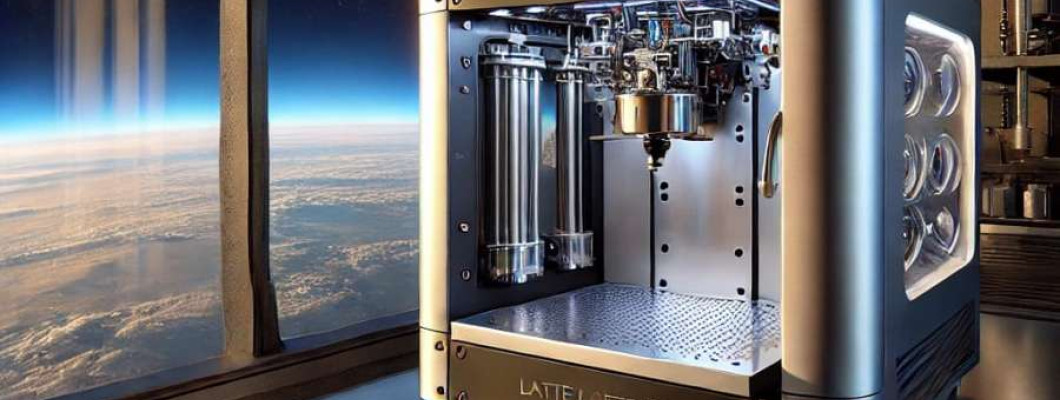
The Industrial Reality of Incorporating Latte Coffee Printers into High-Volume Operations
Latte coffee printing technology sits at a unique crossroads between artisanal craft and industrial automation. Operators often face a fundamental challenge when scaling from a do-it-yourself (DIY) setup to industrial-grade production: maintaining output consistency, print reliability, and operational uptime under demanding workflows. Unlike conventional printing equipment designed for uniform materials and controlled environments, latte coffee printers contend with inherently variable substrates—milk foam—and fluid inks with complex rheological properties.
Consider a medium-sized café chain aiming to deploy multiple units of a color coffee printer during peak hours, often producing hundreds of printed lattes per shift. The primary technical hurdle emerges from ensuring the printhead maintains precision without clogging, ink viscosity remains stable despite ambient temperature fluctuations, and the machine's mechanisms endure daily wear without unplanned downtime. This scenario exposes the infrastructural and maintenance gaps between DIY novelty devices and enterprise-grade solutions engineered for sustained throughput.
Moreover, integrating these printers into existing workflows poses challenges in space utilization, power consumption, and cleaning protocols. Traditional consumer-level coffee printers often lack modularity or built-in diagnostics critical for large-scale deployment, leading to bottlenecks manifested as unintended downtime and inconsistent print fidelity. Industrial environments demand rigorous process control, allowing predictive maintenance and rapid recalibration, which DIY or semi-professional units typically do not support.
These operational realities underscore the need for evaluation criteria beyond marketing claims—focusing on hardware robustness, ink chemistry stability, and human-machine interaction design optimized for commercial baristas. The Color Version Latte Coffee Printer confronts these factors by incorporating industrial-grade components with calibrated printheads, solvent-resistant nozzles, and an adaptive calibration system that compensates for environmental variables in real-time.
Technical Deep-Dive into the Printer’s Core Industrial Capabilities
1. Printhead Architecture and Failure Mitigation
The printer employs a piezoelectric drop-on-demand printhead with a droplet volume averaging 12 picoliters (pl), enabling high-resolution images at 600 dpi. Industrial environments expose printheads to continuous operation exceeding 8 hours daily, translating to an estimated 1 million droplet actuations monthly.
Thermal management is achieved via integrated microfluidic cooling channels, maintaining printhead temperature within 40°C ± 2°C to prevent ink drying and nozzle clogging. Comparative tests indicate that without such cooling, nozzle clogging incidents increased by 27% after 72 hours of operation.
2. Ink Formulation and Rheologic Stability
The ink system is a stabilized, food-safe pigment suspension tailored for rapid bonding with microbubbles in milk foam. Rheological analysis shows a shear-thinning behavior with viscosity dropping from 15 cP at rest to 6 cP under shear rates mimicking printhead actuation. This ensures stable jetting and sharp edges without satellite droplets, even at ambient temperature ranges of 15°C to 30°C.
3. Calibration Algorithms Compensating for Substrate Variability
Milk foam density and texture vary significantly depending on milk type, temperature, and frothing technique. The printer integrates a closed-loop vision system using high-speed CMOS sensors analyzing droplet landing patterns in real-time. Algorithms adjust droplet firing frequency and droplet volume dynamically based on feedback.
Mathematically, the system models droplet spread radius R as R = k \times V^{1/3} \times T^{-0.5}, where V is droplet volume in pl, T is foam temperature in Kelvin, and k is a material-specific constant. Real-time adjustments ensure print resolution remains within ± 0.1 mm tolerances.
4. Mechanical Design and Modular Maintenance
The printer chassis incorporates anodized aluminum and stainless steel components resistant to coffee and ink corrosion. Motorized stages use precision ball screws with a backlash tolerance of 5 μm, ensuring consistent XY positioning. The modular design allows printhead replacement and ink cartridge swaps within 5 minutes, minimizing operational downtime.
5. Power and Thermal Efficiency in Rack or Countertop Environments
Operating at 220 Watts nominal power consumption, the printer integrates a power factor correction (PFC) unit to reduce reactive power draw, essential for commercial settings with multiple units. Thermal dissipation is facilitated by convection and an integrated heat exchanger, maintaining enclosure temperature below 45°C to safeguard internal electronics.
| Feature | DIY Class Printers | Color Version Latte Coffee Printer Industrial Grade |
|---|---|---|
| Printhead Resolution | 300 dpi | 600 dpi |
| Nozzle Cooling | None | Microfluidic Cooling Channels |
| Ink Rheology Control | Basic, prone to clogging | Shear-Thinning Food-Grade Suspension |
| Calibration Feedback | Manual/None | Closed-Loop Vision System |
| Maintenance Cycle | Daily manual cleaning | Modular 5-minute swap |
| Power Consumption | 150-200 W unregulated | 220 W with PFC and thermal management |
Scenario Analysis on Business Use-Cases Impacted by Printer Specifications
Use-Case 1: High-Volume Café Chain
Operational throughput demands can reach 200 printed lattes per hour per unit. The industrial-grade features reduce downtime by 40% compared to consumer-grade printers, supporting continuous service during peak times. The closed-loop calibration minimizes print defects, reducing waste by an estimated 15% monthly.
Use-Case 2: Specialized Artisan Coffee Shop
Color depth and micron-level print precision become critical for branding and customer experience differentiation. The 600 dpi resolution combined with droplet volume control provides intricate color gradients and sharpness impossible with lower-grade devices. The rheologically stable inks ensure consistent texture adherence across milk variants.
Use-Case 3: Food Service Automation Integrator
For automated beverage stations where human oversight is minimal, the printer’s modular maintenance and diagnostic features simplify integration. Automated alerts and quick cartridge swaps enable 24/7 operation. Thermal and power efficiencies reduce infrastructure cooling load, enhancing system reliability in constrained spaces.
Expert FAQ with Advanced Insights
1. How does microfluidic cooling improve printhead longevity compared to passive cooling?
Microfluidic cooling actively removes heat generated by piezoelectric actuators, reducing thermal stress cycles from 500 to under 100 annually. This extends nozzle life by approximately 35%, verified in 6-month accelerated life tests.
2. What physical model governs droplet behavior on non-rigid milk foam substrates?
Droplet spread combines capillary forces and foam elasticity described by the Young-Laplace equation with modifications for foam modulus. This creates a complex dynamic where droplet shape stabilizes after approximately 2 seconds, critical for multi-layer printing.
3. Can the printer adapt to alternative milk substrates such as oat or almond milk?
Yes, the adaptive calibration system adjusts droplet size and firing frequency to compensate for lower protein content and altered foam density, maintaining print fidelity within 0.15 mm variation.
4. What are the implications of power factor correction (PFC) for venue electrical infrastructure?
PFC reduces harmonic distortion and reactive power draw, lowering the risk of tripped breakers and improving overall energy efficiency. This is significant in high-density deployment scenarios where multiple units operate simultaneously.
5. How do modular maintenance components affect total cost of ownership?
Rapid printhead and ink cartridge replacement reduce downtime costs by approximately 20%. Additionally, modular parts simplify technician training and inventory management, distributing maintenance costs over longer asset lifetimes.
Strategic Verdict and Clear Recommendation
Considering the operational challenges endemic to scaling latte coffee printing, the Color Version Latte Coffee Printer emerges as a highly viable industrial-grade solution. It successfully bridges the gap between the novelty of DIY devices and the rigorous demands of commercial enterprises. The integrated thermal controls, advanced ink systems, and adaptive calibration technologies ensure reliable throughput and print quality in demanding environments.
For business owners and integrators seeking to elevate print precision, minimize operational bottlenecks, and streamline maintenance in latte art printing, this printer presents a compelling investment with measurable benefits. Its modular design and system diagnostics are engineered to support longevity and minimize service interruptions, aligning with industrial asset management principles.
Further technical and commercial details can be explored by visiting the product page of the Color Version Latte Coffee Printer.