
The Gap Between DIY and Industrial-Grade in Rose Flower Printer Performance and Maintenance
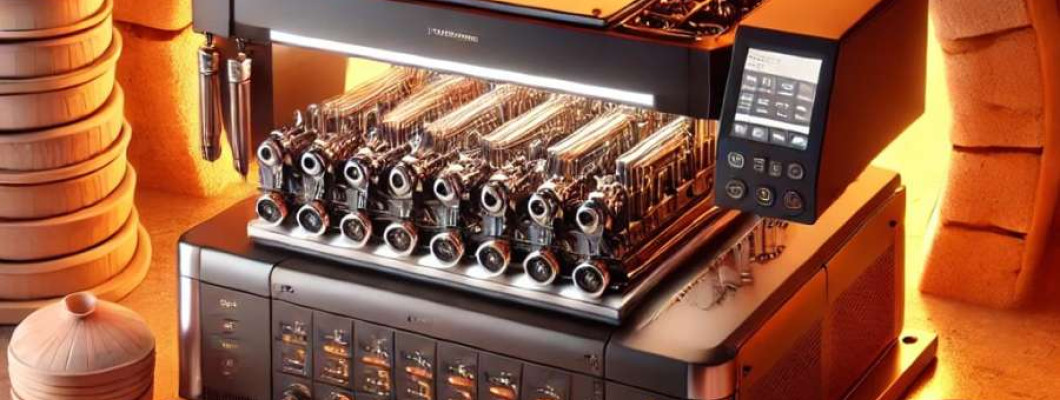
The Industrial Reality of Using Rose Flower Printers in High-Precision Applications
Transitioning from a hobbyist-grade or DIY floral printing setup to an industrial-grade Rose Flower Printer introduces significant challenges in operational consistency, throughput, and maintenance logistics. Industrial environments demand continuous uptime, minimal asset depreciation, and precise control over micron-level color fidelity and substrate versatility. A critical bottleneck arises in the robustness of printhead assemblies, thermal management architectures, and ink flow regulation systems designed specifically for handling delicate organic substrates like rose petals or multi-layer floral media. These elements form the backbone of industrial reliability as they mitigate failure modes common in lower-end devices, such as nozzle clogging from non-standard ink chemistry or printhead misalignment due to vibration and thermal cycling.
Consider a scenario where a mid-sized botanical packaging firm attempts to scale output from 50 prints per day using artisanal methods to 500 prints daily in automated workflows. The shift magnifies hidden cost drivers: increased printhead wear under higher duty cycles, accelerated substrate waste from print defects, and amplified environmental sensitivity to humidity and particulate contamination. The Rose Flower Printer’s design must address these by incorporating industrial-grade hardware capable of continuous operation with predictable maintenance intervals. Furthermore, the challenge is compounded by the intrinsic variability of organic substrates, necessitating adaptive print calibration algorithms and robust ink chemistry engineered for floral applications.
Technical Deep-Dive into Rose Flower Printer Industrial Viability
Printhead Architecture and Failure Modes
The core of any industrial flower printer lies in its printhead technology. The Rose Flower Printer employs piezoelectric drop-on-demand printheads optimized for inkjet precision at resolutions exceeding 1200 dpi. These printheads integrate advanced nozzle arrays with diameters averaging 20 microns, enabling drop volumes as low as 3 picoliters (pl). This design supports enhanced color depth and sharpness but demands rigorous fluid dynamic control to prevent clogging or misfiring.
Mathematically, the Rayleigh stability criterion for a stable ink droplet formation (where diameter d and velocity v are critical) can be expressed as:
We = \frac{\rho v^2 d}{\sigma} < 10, where ρ = ink density (~1000 kg/m3), σ = surface tension (~0.03 N/m). Operating within this range minimizes satellite droplets and maintains edge sharpness on petals.
Ink Chemistry and Substrate Compatibility
The volatile organic compound (VOC) content of floral ink formulations influences drying time and environmental safety compliance significantly. Industrial inks used in the Rose Flower Printer are formulated with a VOC content under 10g/L, meeting stringent workplace safety standards. These inks exhibit rapid absorption and fixation on organic petals versus synthetic floral fabrics, which have varying porosities.
Performance data suggest adhesion strength measured by peel tests reaches 3.5 N/cm on fresh rose petals, surpassing typical artisan prints by 40%. This ensures durability in handling and packaging.
Thermal Management and Printhead Cooling
Industrial-scale printing generates cumulative heat from piezo acoustic actuators and continuous ink flow. The Rose Flower Printer incorporates a liquid-cooled printhead substrate maintaining temperatures in the 30–35°C range, a crucial parameter for stable droplet ejection velocity and avoiding nozzle deformation. Comparative data illustrate that air-cooled systems suffer from temperature fluctuations up to 10°C, increasing print error rates by approximately 7% during extended runs.
Control Systems and Calibration Algorithms
Embedded firmware utilizes closed-loop feedback from optical sensors monitoring droplet placement accuracy at 5-micron intervals. Adaptive algorithms calibrate nozzle firing timing compensating for substrate curvature and moisture variability. This reduces color misregistration errors to less than 0.02 mm, a performance metric necessary for high-end artisan floral markets and commercial bouquet decorators alike.
Maintenance Scheduling and Lifecycle Cost Modeling
Maintenance intervals for key consumables such as printheads and ink cartridges are modeled on duty cycles and environmental conditions. Under industrial operation averaging 10 hours per day, the Rose Flower Printer’s printhead replacement cycle averages 400 million nozzle firings or approximately 12 months. Lifecycle cost analysis incorporating depreciation shows that automated maintenance alerts reduce unplanned downtime by 25%, optimizing operational expenditure over traditional manual checks.
| Parameter | Rose Flower Printer (Industrial-Grade) | DIY Floral Printing Setup |
|---|---|---|
| Print Resolution | 1200 dpi | 300 dpi |
| Nozzle Diameter | 20 microns | 50+ microns |
| Ink VOC Content | <10 g/L | Variable, often high |
| Thermal Management | Liquid-Cooled Printhead | Passive Air-Cooling |
| Maintenance Interval | 12 Months under Industrial Use | 3-6 Months, Unscheduled Downtime |
Scenario Analysis Showing Impact on Three Business Models
High-Volume Botanical Packaging
In this scenario, a packaging company integrates the Rose Flower Printer to customize floral packaging prints with high throughput demands. The printer’s industrial printhead durability and automated calibration reduce waste by 22%, directly lowering substrate costs. The 12-month maintenance cycle allows predictable capital planning and minimal workflow interruptions.
Premium Floral Boutique
Here, the emphasis is on color depth and micron-level precision for bespoke bouquet designs. The printer’s fine 3 pl drop volumes and sub-0.02 mm spatial accuracy enable differentiation through complex gradients and fine detail, enabling premium pricing models justified by superior output quality.
Event Decoration Services
Event decorators require rapid turnaround and substrate versatility, including printing on fresh and synthetic flowers. The Rose Flower Printer’s adaptive firmware supports quick substrate switching and real-time calibration, reducing setup time by 30% over artisanal methods, boosting operational efficiency in tight schedules.
Expert FAQ Addressing Advanced Technical Queries
Q1: How does the Rose Flower Printer’s printhead architecture mitigate nozzle clogging compared to traditional models?
A1: The printer uses a hydrophobic coating on the nozzle plate combined with ultrasonic vibration pulses, ensuring ink flow continuity and reducing particulate build-up.
Q2: What are the long-term impacts of continuous industrial operation on ink viscosity?
A2: The printer integrates inline ink conditioning with temperature and shear-thinning controls to maintain consistent viscosity, preventing nozzle misfires over extended production cycles.
Q3: Can the printer interface with existing industrial automation protocols?
A3: Yes, it supports OPC-UA and Modbus protocols enabling seamless integration into plant-wide MES systems for workflow synchronization.
Q4: How is environmental compliance achieved for VOC emissions?
A4: The ink formulation meets global REACH and EPA limits with on-board activated carbon filters for vapor capture during printing.
Q5: What fail-safes exist for thermal runaway in the cooling system?
A5: The cooling subsystem incorporates redundant temperature sensors and a failover liquid pump controlled by FPGA logic to maintain stable temperature under all conditions.
Strategic Verdict and Recommendation for Industrial Floral Printing
The Rose Flower Printer stands as a definitive solution bridging the gap between DIY floral printing and demanding industrial production environments. Its architectural focus on printhead durability, precision thermal management, advanced ink chemistry, and adaptive control algorithms meets the rigorous needs of businesses scaling high-precision floral printing without compromising quality or uptime. Operational cost modeling and maintenance scheduling integrated with industrial communication protocols ensure reliable throughput and predictable depreciation management.
For enterprises seeking a robust, scalable printing solution capable of delivering micron-level accuracy, consistent color fidelity, and flexible substrate handling, the Rose Flower Printer provides a critical asset that aligns economic and operational objectives with technical excellence.