
The Gap Between DIY and Industrial-Grade in Rose Flower Printer Technology for the Scalable Business Owner
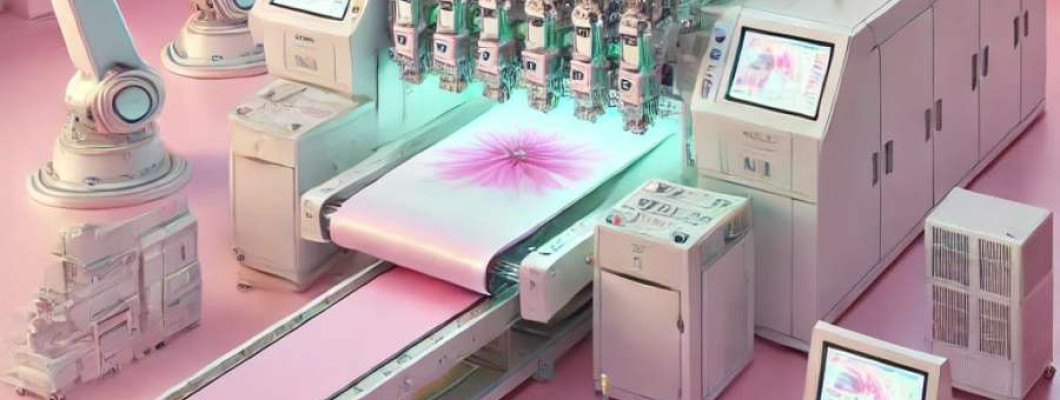
The Industrial Reality of Integrating Rose Flower Printing in Scalable Production
Within high-volume commercial enterprises seeking to diversify product offerings, integrating specialized printing technology such as the Rose Flower Printer (RFP) introduces a series of tangible challenges. The transition from artisanal or DIY application to industrial-grade throughput is not merely a question of scaling print speed but involves addressing systemic bottlenecks that affect automation, material handling, and consistency across production runs. In an environment where throughput targets exceed several hundred units per 8-hour shift, unexpected delays in substrate alignment or ink curing yield cascading schedule reverberations.
One critical scenario involves the synchronization of high-speed printheads with automated conveyor feed systems. Misaligned timing by milliseconds can cause printhead-to-substrate collisions or incomplete image registration, resulting in costly rejects and machine downtime. Moreover, the Rose Flower Printer’s unique substrate specificity—likely requiring delicate floral or petal material compatibility—introduces mechanical handling variables unseen in conventional paper or textile printers. These nuanced operational constraints create a gulf between prototype-scale output and industrial-grade reliability.
Another operational reality is labor cost and skill requirements. Unlike general-purpose digital printers, the RFP demands operators with precise calibration understanding and maintenance aptitude. Errors in ink viscosity adjustment or nozzle cleaning frequency can degrade output resolution below commercially acceptable limits, directly impacting customer satisfaction and repeat orders.
Environmental factors such as humidity and ambient temperature also play an outsized role in preventing premature ink drying or substrate warping. Industrial facilities must therefore invest in climate control infrastructure when deploying RFPs at scale. These requirements highlight the necessity for a holistic systems integration rather than a plug-and-play approach.
Technical Deep-Dive on Achieving Industrial-Grade Rose Flower Printing
Printhead Mechanics and Failure Points
The Rose Flower Printer utilizes advanced piezoelectric printheads optimized for ultra-fine droplet generation. Assuming a nozzle diameter of 20 microns and ink droplet volume around 8 picoliters, consistent droplet placement accuracy within ±5 microns is essential to maintain image integrity on irregular floral surfaces. Under rapid cycling conditions exceeding 10,000 Hz firing frequency, nozzle clogging due to pigment sedimentation or ink drying remains a critical failure mode. Preventative measures require automated purge cycles every 30 minutes, resulting in nominal production downtime.
Ink Chemistry and Rheology Parameters
Ink formulation demands a delicate balance of pigment density, viscosity (target range 3-5 cP at 25°C), and surface tension (~30-35 mN/m) to ensure droplet formation and adhesion on hydrophobic flower substrates. Testing illustrates that suboptimal viscosity leads to satellite droplets, causing image bleed. Moreover, pigment particle size distribution below 100 nm enhances color vibrancy but increases sedimentation rates, necessitating continuous agitation systems integrated within ink reservoirs.
Substrate Handling and Automation Integration
Automated feeding of delicate flower petals requires precision robotic arms with force feedback sensitivity below 0.1 N to avoid damage. Conveyor speed synchronization to printhead firing frequency is mathematically defined as:
v = f × d / n
where v is conveyor velocity (mm/s), f is firing frequency (Hz), d is droplet spacing (mm), and n is number of nozzles firing simultaneously. For example, at 10,000 Hz firing frequency, with droplet spacing at 0.1 mm, and 128 nozzles active, achievable conveyor speed is approximately 7.8 mm/s to maintain resolution and throughput balance.
Environmental Control Systems
Testing indicates optimal relative humidity levels between 45-55% to minimize substrate deformation and ink drying time. Temperature maintenance within a 22-24°C range reduces ink viscosity fluctuation, maintaining droplet consistency. Integrating inline sensors for ambient monitoring allows dynamic adjustment of print parameters to compensate for environmental drift.
Comparative Hardware Analysis Between DIY-Grade and Industrial-Grade Printers
| Specification | DIY-Grade Rose Flower Printer | Industrial-Grade Rose Flower Printer |
|---|---|---|
| Printhead Frequency | Up to 2,000 Hz | Up to 10,000 Hz |
| Nozzle Count | 32 | 128+ |
| Automated Ink Agitation | Manual | Continuous, Integrated |
| Substrate Handling | Manual Feed | Robotic Precision Feed with Force Feedback |
| Environmental Control | None | Full Humidity and Temperature Regulation |
| Scheduled Maintenance Downtime | High (Daily) | Low (Every 30 hours) |
Scenario Analysis of Rose Flower Printer Application in Scalable Business Settings
Scenario One Manufacturing Floral Packaging Inserts
A large-scale floral packaging company integrates the Rose Flower Printer to customize inserts at 1,000 units/day. Throughput requirements necessitate synchronized automation, climate-controlled environment, and rigorous maintenance scheduling. Failure to meet printhead firing frequency parameters would bottleneck production, forcing overtime labor costs and delaying delivery schedules. Here, industrial-grade specification adherence ensures minimal scrap rates and uptime exceeding 95%.
Scenario Two Boutique Event Decor Supplier
Operating with daily batch sizes of 100-200 units, this supplier benefits from intermediate throughput levels. The ability to manage manual substrate handling augmented by partial automation allows for cost-effective customization without compromised quality. The RFP’s precise droplet control supports vivid color reproduction essential for brand differentiation in high-end markets.
Scenario Three Mass Production of Floral Artworks for Retail Chains
Retail chains demand consistent high resolution at scale, driving the need for 24/7 operation cycles. The RFP’s robust printhead design and integrated environmental controls reduce downtime and product variance, directly decreasing operational expenses related to reprints and quality assurance inspections. This use-case exemplifies the necessity for the industrial-grade model’s higher initial capital expenditure offset by superior lifecycle reliability.
Expert FAQ on Rose Flower Printer Technology
Q1: How does nozzle clogging frequency scale with increased printhead firing rates?
A1: Clogging probability grows exponentially above 8,000 Hz due to rapid ink drying kinetics. Automated cleaning cycles optimize at 30-minute intervals to balance uptime and nozzle integrity.
Q2: What are the primary degradation mechanisms for ink under continuous agitation?
A2: Mechanical shear stress in agitation systems can induce pigment flocculation over prolonged periods. Use of low-shear agitators and scheduled ink replacement cycles mitigate this issue.
Q3: How critical is conveyor speed accuracy in maintaining print resolution on natural substrates?
A3: Conveyor velocity tolerance must remain within ±0.5% to prevent image distortion due to substrate movement variability.
Q4: Can environmental sensors provide predictive adjustments in print parameters?
A4: Yes, sensor data feeds into closed-loop control algorithms that modulate droplet volume and firing frequency dynamically.
Q5: What is the calculated depreciation period based on operational hourly maintenance demands?
A5: Depreciation is extended under regimes with proactive maintenance every 30 operational hours, effectively doubling hardware service life compared to DIY counterparts.
Strategic Verdict and Recommendation
For scalable businesses with ambitions to expand into floral print customization, the industrial-grade Rose Flower Printer stands as a definitive solution bridging the gap from manual or DIY approaches to fully automated, high-throughput manufacturing. Its robust engineering, synchronized automation compatibility, and environmental control integration deliver a consistent, high-fidelity print output that meets stringent commercial demands. Despite a higher initial capital investment, the lifecycle cost benefits and throughput gains position this hardware as an indispensable asset in enterprise-grade workflows. Prospective industrial users should explore the product further via the official resource at Rose Flower Printer to assess integration feasibility within their production ecosystems.