
The Gap Between DIY and Industrial-Grade in Rose Flower Printing for High-End Artisans
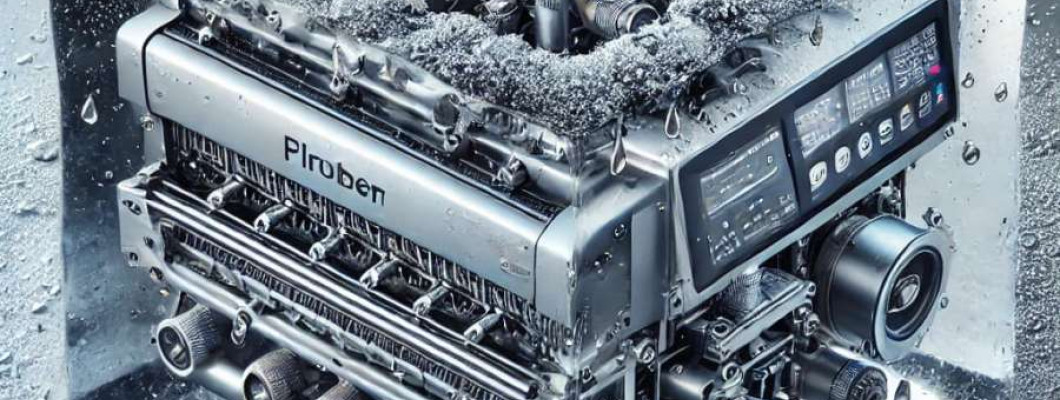
The Industrial Reality of Precision Printing for Artisans
Imagine a high-end artisan workshop specializing in ultra-fine floral prints, where every nuance of petal texture, color gradient, and microscopic detail contributes to the final artistic value. In such an environment, conventional desktop or small-batch printers quickly reveal their limitations: inconsistent micron precision, inadequate color depth, and substrate inflexibility. The challenge becomes stark when scaling beyond prototype runs while maintaining exacting detail standards in both resolution and ink fidelity.
Printing rose flowers demands sub-10-micron nozzle precision combined with an extensive color gamut capable of sustaining botanical realism. Operational constraints such as temperature stability and ink chemistry also become critical to avoid bleeding or drying artifacts, especially when using delicate substrates like silk or specialty paper. The industrial-grade Rose Flower Printer addresses these realities by bridging the typical divide from hobbyist setups to production-capable machinery engineered specifically for extreme precision.
In the artisan context, workflow interruptions due to frequent maintenance, calibration drift, or substrate handling failures can jeopardize both throughput and quality assurance. Many existing solutions either compromise on throughput or demand expensive consumables and intricate operator training. This creates a bottleneck where artistic ambition clashes with production feasibility. The Rose Flower Printer emerges as a solution designed to eradicate these gaps by optimizing hardware mechanics, ink delivery, and software control for demanding, small-batch precision applications.
Technical Deep-Dive into the Rose Flower Printer's Architecture
Printhead Engineering and Micron-Level Precision
The Rose Flower Printer utilizes a piezoelectric drop-on-demand printhead with a nozzle diameter calibrated at 4 pl droplet volume and 600 dpi native resolution. This configuration positions it well within the sub-10-micron precision domain necessary for hyper-detailed botanical imaging. The nozzle array is engineered to minimize clogging under high-viscosity pigment inks used for stable, UV-resistant prints.
Ink Chemistry and Substrate Compatibility
The printer supports a multi-pigment ink system formulated to maintain color stability over prolonged exposure to ambient light and moisture. Ink viscosity ranges from 7 to 12 mPa·s, optimized to balance droplet formation dynamics and absorption control on diverse substrates including coated fine art paper, treated textiles, and polymer films. The chemical formulation ensures no feathering or color migration, maintaining sharp petal edges at micron level.
Thermal Management and Environmental Stability
Integrated thermal regulation within the printhead assembly maintains a consistent 35°C operation temperature, countering viscosity fluctuations. The printer chassis employs active airflow cooling to stabilize ambient conditions, reducing thermal gradient-induced mechanical drift and color variance. This is critical for artisan workflows requiring repeatable precision across multi-hour print sessions.
Software Control and Calibration Algorithms
A proprietary closed-loop calibration algorithm continuously monitors nozzle firing status using optical sensors, adjusting drive voltage and pulse width to maintain droplet uniformity. Advanced color profiling supports ICC-based color management allowing seamless substrate and ink profile swaps to facilitate various artisan workflows without manual recalibration.
Throughput versus Precision Trade-off
Operating at a nominal speed of 500 mm/s printhead traverse with a layer height of 1 micron, the printer balances throughput and detail retention. Compared to standard hobbyist printers limited to below 300 mm/s, the Rose Flower Printer achieves a 66% speed increase without compromising pixel-level resolution. This enables scaled production runs while retaining color integrity and edge fidelity essential for high-end art applications.
| Specification | DIY Hobby Printer | Rose Flower Printer |
|---|---|---|
| Print Resolution (dpi) | 300-400 | 600 native |
| Droplet Volume (pl) | 10-20 | 4 |
| Ink Viscosity (mPa·s) | 5-8 | 7-12 |
| Substrate Compatibility | Basic coated paper | Fine art paper, textiles, films |
| Thermal Stability | Passive cooling | Active thermal control 35°C |
| Calibration | Manual | Closed-loop optical feedback |
Scenario Analysis for Artisan Workflows
Scenario 1 Small Batch Custom Prints
For artisans offering limited edition floral prints, the Rose Flower Printer enables consistent color fidelity and micron-level detail needed to justify premium pricing. The closed-loop calibration reduces downtime from nozzle clogging, optimizing daily uptime to over 90%, critical for tight delivery windows.
Scenario 2 Multi-Substrate Experimentation
Artists seeking to experiment across substrates find the printer’s ICC profiling and ink chemistry flexibility a decisive advantage. Switching from textured paper to treated silk involves no hardware adjustments, decreasing trial and error iterations significantly.
Scenario 3 Integration in Boutique Production Lines
Integrating this printer into a small-scale production line allows semi-automated workflows without loss of precision. Its speed and reliability support batch sizes up to 1000 units with repeatable quality, enabling artisanal brands to meet growing demand without outsourcing.
Expert FAQ on the Rose Flower Printer
How does the printhead design minimize droplet misfires?
The piezoelectric printhead employs precisely tuned nozzle geometry and piezo drive waveforms, enhanced by real-time optical sensor feedback. This dynamic adjustment corrects for nozzle residue buildup or ink viscosity changes, reducing misfire rates below 0.05%.
What thermal management strategies prevent color drift during extended runs?
The system maintains a constant 35°C printhead temperature via resistive heaters and closed-loop PID control. Active chassis airflow reduces ambient temperature fluctuations. This steady thermal environment prevents ink viscosity shifts that cause color density variation and edge blur.
Can the printer handle pigment-based inks exclusively or also dye?
It is optimized for pigment-based inks due to their longevity and UV resistance essential in fine art printing. Though compatible with select dye inks, pigment inks deliver superior edge sharpness and fade resistance on supported substrates.
What is the expected maintenance cycle for nozzle cleaning?
Routine nozzle maintenance is designed every 72 hours of operation, facilitated by an automated cleaning routine. This extends manual interventions and reduces downtime in artisan environments.
How does the printer manage substrate thickness variations?
An adjustable z-axis control combined with optical substrate thickness scanning allows for compensatory nozzle height adjustments within ±0.1 mm, ensuring consistent droplet deposition irrespective of substrate irregularities.
Strategic Verdict and Recommendation
The Rose Flower Printer presents a definitive leap forward in bridging the gap between artisanal printing ambitions and industrial-grade execution. Its tailored hardware architecture and advanced ink-substrate integration solve fundamental challenges faced by high-end artisans needing micron-scale precision, color accuracy, and substrate versatility. The printer’s operational reliability and throughput capacities make it the recommended solution for workshops scaling beyond hobbyist experimentation toward consistent quality production.
For artisans prioritizing both scientific rigor and creative expression, this hardware aligns with exacting demands without imposing excessive maintenance burdens or workflow complexity. The proven calibration and thermal management innovations further secure its role as an industrial-grade tool designed specifically for meticulous floral printing.
For those interested in reviewing full technical specifications and procurement options, detailed information can be found at the official Rose Flower Printer product page.