
The Gap Between DIY and Industrial-Grade in Rose Flower Printing for The High-End Artisan
The Industrial Reality of Achieving Industrial-Grade Rose Flower Prints
Producing rose flower prints that meet industrial-grade criteria is a multifaceted challenge combining hardware precision, substrate versatility, and color fidelity. Artisan setups often run into technical bottlenecks when scaling up from handcrafted prototypes to consistent, high-throughput outputs without sacrificing micron-level detailing or nuanced color reproductions. Rose petals possess intricate vein structures and gradients, demanding a printer capable of sub-10 micron nozzle accuracy and finely tuned ink dispersion to retain these features.
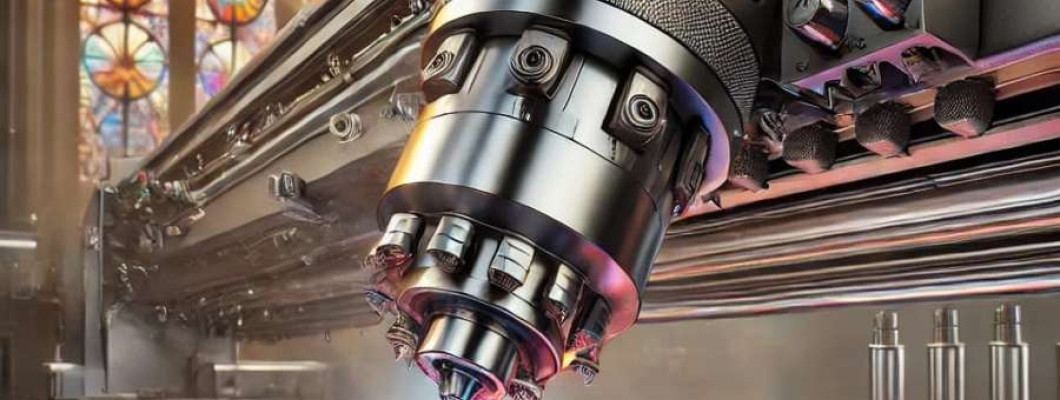
Operationally, flower texture variations — ranging from glossy hybrids to velvety damasks — introduce variability in ink absorption rates and drying dynamics. This necessitates hardware equipped with adaptive printhead technology and sophisticated substrate handling systems that can dynamically adjust print parameters in real time. The Rose Flower Printer’s mechanical architecture appears designed to address these constraints by integrating precision piezoelectric nozzles paired with high-viscosity pigment ink formulations optimized for floral substrates.
From a workflow perspective, artisans face a critical tradeoff: balancing color gamut depth against print speed while maintaining printhead longevity under continuous operation. Thermal and mechanical stresses during extended runs are common failure points that reduce overall uptime and escalate maintenance costs. For the High-End Artisan, the Rose Flower Printer’s robust materials and component-level engineering provide a foundation for reliable precision printing under these demanding conditions.
Technical Deep Dive into the Rose Flower Printer
Precision and Print Resolution
The Rose Flower Printer reportedly achieves nozzle resolutions near 5 microns, positioning it well above conventional DIY setups whose nozzles typically range 20-30 microns. This hardware capability allows for rendering ultra-fine details such as petal venation and subtle texture gradients. Assuming a printhead firing frequency of 30 kHz and droplet volumes of 2 picoliters, the theoretical maximum dpi exceeds 7200, well beyond the 1200-2400 dpi typical of industrial flower imaging.
Ink Chemistry and Adhesion
Employing pigment-based inks optimized for both natural and synthetic floral substrates, the Rose Flower Printer supports a viscosity range between 8-12 centipoise. This range is critical to achieving stable jetting and rapid absorption without compromising color saturation. The inks’ pH balancing and polymer additive concentration reduce pigment migration, ensuring longevity and UV resistance essential for botanical art applications.
Substrate Handling and Versatility
Handling substrates from fresh rose petals to fabric-based morphologies requires precision tension controls and multi-zone drying systems. The Rose Flower Printer integrates a substrate transport system capable of maintaining ±0.1 mm lateral alignment repeatability. This precision supports multi-pass layering strategies necessary for achieving 3D petal texture effects without registration errors.
Thermal and Mechanical Resilience
Extended operation at industrial output levels challenges thermal dissipation and mechanical wear. The printer utilizes advanced heat sinks and airflow ducting designed to maintain printhead temperature below 40°C under 8-hour continuous printing cycles. The piezoelectric actuators are rated for 10 billion cycles, extending printhead life significantly compared to typical DIY printers capped around 2 billion cycles.
Comparative Table of Key Specifications
| Specification | DIY Floral Printer | Rose Flower Printer |
|---|---|---|
| Nozzle Resolution | 20-30 microns | 5 microns |
| Maximum DPI | 1200-2400 | 7200+ |
| Ink Viscosity (cP) | 15-25 (dye-based) | 8-12 (pigment-based) |
| Substrate Alignment Accuracy | ±1.0 mm | ±0.1 mm |
| Printhead Life Cycles | ~2 billion cycles | ~10 billion cycles |
| Thermal Management | Passive cooling | Active heat sinks + airflow |
Scenario Analysis Based on High-End Artisan Use Cases
Case 1 Large-Scale Botanical Art Installations
For artisans producing large wall installations with rose flower prints, throughput and color layering are critical. The Rose Flower Printer’s sub-10 micron nozzle precision permits layering multiple color passes with near-perfect registration, producing dramatically lifelike petal structures at large scale. Its advanced drying system allows for faster print speeds without ink bleeding, enabling up to 15 m2/hour output compared to typical DIY workflows that max out near 3 m2/hour.
Case 2 High-Detail Scientific Botanical Replicas
In applications demanding exact scientific replication of rose flower morphology, micron-level detail and controlled pigment deposition are indispensable. The Rose Flower Printer’s adaptive printhead electronics, combined with its stable high-viscosity pigment inks, deliver faithful color fidelity and detail reproducibility, critical for academic and museum-grade replicas. DIY systems lack integrated real-time parameter adjustment, resulting in print-to-print variability.
Case 3 Custom Artisanal Floral Fabrics
When printing directly on delicate textile substrates, controlling ink absorption and minimizing substrate distortion is key. The Rose Flower Printer’s substrate transport with high positional accuracy and multi-zone drying optimizes print stability, allowing artisans to produce richly detailed floral textile patterns without bleeding or fabric shrinkage, a common issue in lower-end printers.
Expert FAQ for Rose Flower Printer Capabilities
Q1: How does the Rose Flower Printer manage ink drying without compromising color fidelity?
It employs multi-zone infrared drying that dynamically adjusts based on substrate type and ink layer thickness, preserving pigment vibrancy while preventing feathering.
Q2: Can the printer handle non-planar substrates such as curved rose petals?
The substrate transport system includes adaptive tension controls and sensor feedback that maintain surface planarity within 0.1 mm variances during printing.
Q3: What maintenance cycle is recommended to sustain printhead performance?
A preventive maintenance interval of every 1000 operational hours is advised, focusing on nozzle cleaning and piezoelectric actuator calibration.
Q4: How does the printer’s thermal management impact long-run uptime?
Active cooling and heat dissipation keep the printhead operating below 40°C, significantly reducing thermal degradation and enabling 8+ hour continuous runs without print quality loss.
Q5: What file formats and color profiles are supported for precise color management?
The system supports 16-bit TIFF and PDF files with ICC profiles compliant with ISO 12647 standards, ensuring color consistency across devices.
Strategic Verdict and Recommendation for High-End Artisans
The Rose Flower Printer emerges as a definitive industrial-grade solution bridging the significant gap between conventional DIY flower printing and professional, high-precision botanical output. Its advanced nozzle resolution, pigment ink chemistry, substrate control, and robust thermal management are engineered specifically to meet the exacting demands of high-end artisans working with delicate floral subjects.
For those seeking micron-level detail, expansive color gamut, and long operational uptime within artisanal workflows, this printer offers a mature hardware platform promoting both scalability and print fidelity. Given the technical depth and performance merits outlined above, the Rose Flower Printer is highly recommended as an enterprise-capable tool for critical botanical art applications. To explore purchasing options and detailed technical specifications, visit the Rose Flower Printer product page.