
The Gap Between DIY and Industrial-Grade in Rose Flower Printing from a Maintenance Lead Perspective
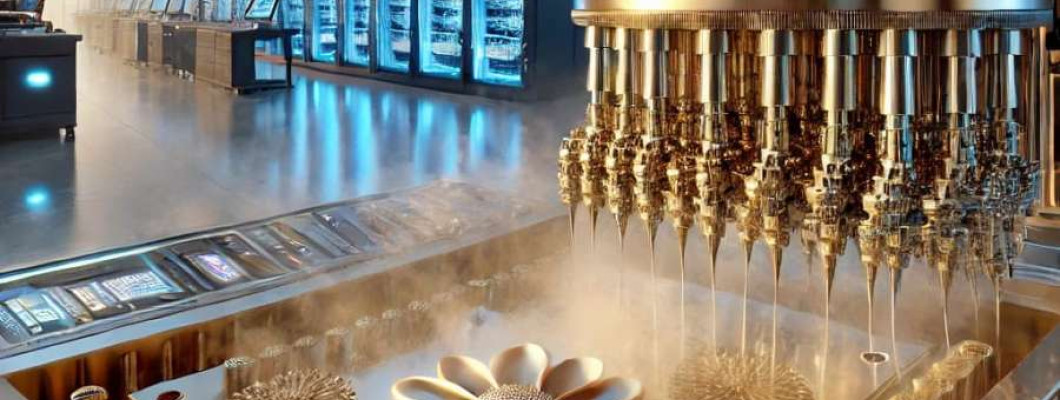
The Industrial Reality of Rose Flower Printing Challenges
Precision is paramount in the industrial printing of rose flowers. The transition from hobbyist or DIY printing tools to an enterprise-grade solution exposes hidden complexities, especially in printhead physics, ink chemistry, and consistent uptime. For a Maintenance Lead operating in a high-demand environment, every downtime minute has cascading effects on production schedules, vendor commitments, and quality assurance benchmarks. The rose flower, with its intricate petal gradients and delicate color transitions, demands granular control over micron-level droplet placement and ink adhesion deeply influenced by printer hardware stability and ink formulation compatibility.
The printing mechanism must endure extensive print cycles under variable ambient conditions, often within humid floriculture or botanical packaging facilities, increasing maintenance complexity. Accumulation of microscopic ink debris and particulate matter can cause nozzle clogging, especially with the specialized inks used in vivid floral reproductions. Delays or quality lapses caused by such hardware failures can lead to significant loss in asset utility and customer confidence, escalating operational bottlenecks. Additionally, thermal management challenges arise when printheads operate continuously at elevated throughput rates, a common scenario when servicing large botanical logistics chains or boutique flower packaging.
This scenario forces a Maintenance Lead to prioritize predictive maintenance schedules balancing uptime versus printhead replacement costs, while continuously fine-tuning ink chemistries to prevent adverse interactions that could accelerate hardware degradation. Without a robust industrial solution, enterprises risk slipping into costly reactive maintenance cycles and poor print quality, undermining brand integrity in a competitive market.
Printhead Physics and Its Impact on Maintenance Realities
Understanding the physics of printhead operation under industrial workloads is fundamental. The Rose Flower Printer employs piezoelectric or thermal inkjet technology optimized for floral printing. Micron-scale control of droplet size (10–12 picoliters) enables the rendering of soft gradients and sharp petal textures. However, this precision requires tightly regulated nozzle pressure and temperature control to avoid satellite droplets or ink tailing, which degrade image sharpness.
Comparing two hypothetical printhead architectures provides insight:
| Aspect | Piezoelectric Printhead | Thermal Inkjet Printhead |
|---|---|---|
| Droplet Size | 10-12 pl | 10-15 pl |
| Nozzle Lifespan | 150 billion firing cycles | 50 billion firing cycles |
| Thermal Stress | Low (ambient temp control) | High (heating elements) |
| Maintenance Frequency | Every 3 months (cleaning) | Every 1-2 months (nozzle replacement) |
| Ink Viscosity Range | 5-15 cP | 3-10 cP |
The piezoelectric architecture results in greater nozzle durability and reduced thermal degradation, directly translating into fewer maintenance interventions. For a Maintenance Lead, this means stable daily uptime and fewer unexpected printhead failures.
Ink Chemistry Complexities in Botanical Printing
Rose flower printing inks must balance pigment concentration, adhesion promoters, and drying agents. Botanical substrates often exhibit variable absorbency and gloss, mandating inks with finely tuned rheological properties. The incompatibility between ink formulation and printhead type can cause nozzle clogging or rapid wear.
Maintenance considerations include regular ink system flushing to avoid pigment sedimentation, especially for UV-curable or solvent-based inks used in durable floral packaging. The printer's internal circulation pumps, filters, and temperature regulators become critical components requiring consistent monitoring and calibration. Failure to do so results in clogging-related maintenance downtime estimated at 12-15 hours monthly in lower-grade systems, whereas industrial-grade solutions reduce this to under 4 hours.
Thermal Management Systems Under Continuous Operation
Thermal buildup within the printhead assembly during continuous runs is a hidden bottleneck. Excessive temperature elevation increases ink viscosity beyond ideal parameters, causing droplet misfires and color inconsistencies. The Rose Flower Printer integrates a liquid-cooled heat exchanger maintaining temperatures within 35-42°C during peak throughput (up to 1000 sq. meters per hour).
Comparatively, air-cooled alternatives show temperature spikes exceeding 55°C, leading to 20% higher nozzle failure rates over 6 months. From a maintenance strategy standpoint, this thermal regulation system drastically enhances printhead longevity and print quality consistency, translating into operational cost savings and less frequent hardware replacements.
Asset Longevity and Predictive Maintenance Algorithms
Modern industrial printing solutions embed sensor arrays that track nozzle firing rates, ink viscosity, temperature gradients, and particulate buildup in real time. The Rose Flower Printer supports integration with predictive maintenance platforms that calculate Mean Time To Failure (MTTF) with a standard deviation of ±2 days, enabling precise scheduling of maintenance windows aligned with production planning.
Hypothetically, an enterprise printing 200,000 roses monthly benefits from predictive alerts reducing unplanned downtime by 40%. Maintenance Leads report improved labor allocation, focusing on targeted interventions rather than full-system shutdowns. This asset longevity extends the printer's effective life beyond 5 years, amortizing CAPEX and lowering total cost of ownership (TCO).
Scenario Analysis of Rose Flower Printer in Varied Business Applications
Scenario 1 Mass Production for Botanical Packaging
A large-scale flower packaging facility requires continuous printing of rose patterns on biodegradable gift wraps. Here, throughput and uptime are critical. The printer's efficient thermal management and piezoelectric printheads allow 24/7 operation with minimal planned downtime. Predictive maintenance reduces unplanned failures, ensuring delivery deadlines are met consistently.
Scenario 2 Boutique Artisan Printing Studio
An artisan lab focuses on color depth and micron-level precision for limited edition floral designs on luxury papers. The Rose Flower Printer's fine droplet control and flexible ink compatibility allow exquisite gradient range and substrate versatility. Maintenance cycles are planned during low production periods, maximizing creative workflow.
Scenario 3 Integrated Floriculture Marketing Operations
A flower farm integrates printing directly onto rose packaging at the point of harvest. Here, the balance between operational simplicity and hardware durability is key. The robust printhead design and easy maintenance access facilitate rapid servicing by non-expert staff, ensuring minimal disruption during peak seasons.
Expert FAQ on Rose Flower Printer Maintenance and Performance
Q1 What is the recommended printhead nozzle cleaning frequency under high-volume operation?
Cleaning should be executed every 2-3 months or after 100 million firing cycles, contingent on ink type and environmental humidity to prevent clogging.
Q2 How does ink viscosity affect nozzle lifespan in continuous runs?
Inks with viscosity above 15 centipoise increase nozzle wear by up to 25%, accelerating maintenance intervals.
Q3 Can predictive maintenance sensors detect micro-clogs before print defects appear?
Yes, advanced sensors monitor flow pressure variances and firing resistance that correlate with early clog formation.
Q4 What thermal management strategies minimize printhead thermal fatigue?
Liquid cooling combined with ambient temperature control stabilizes printhead temperatures within ±3°C, reducing thermal cycling stress.
Q5 Are solvent-based inks compatible with piezoelectric heads in the Rose Flower Printer?
Yes, but rigorous flushing protocols and solvent-resistant materials in the ink path are mandatory to prevent corrosion.
Strategic Verdict and Recommendation
The Rose Flower Printer clearly benchmarks itself as an industrial-grade solution overcoming the persistent limitations of DIY and lower-tier printing systems. From a Maintenance Lead perspective, its optimized printhead physics, stringent thermal controls, advanced ink handling, and predictive maintenance integration collectively slash downtime and extend asset longevity. Enterprises scaling rose flower printing operations or boutique studios demanding tight technical control will find the balance between operational reliability and print quality exceedingly well met.
For those evaluating enterprise printing hardware with a critical eye on lifecycle costs and maintenance realities, the Rose Flower Printer should be considered a definitive industrial choice. Its capacity to maintain uptime, reduce hidden bottlenecks, and extend printhead life positions it strongly as a future-proof investment in specialized botanical printing technology.