
The Gap Between DIY and Industrial-Grade in Smart Mini Selfie Coffee Printer for Scalable Business Owners
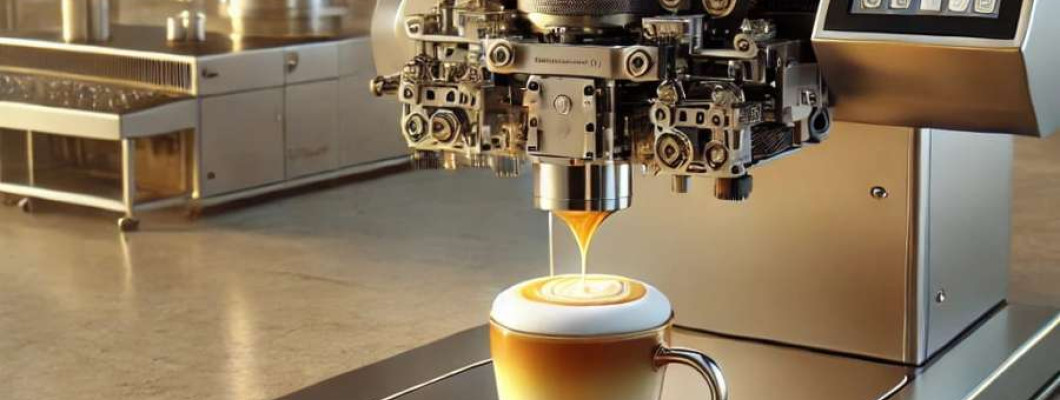
The Industrial Reality of Integrating Precision Coffee Printing into High-Throughput Environments
The challenge of incorporating compact, precision-driven coffee printers like the Smart Mini Selfie Coffee Printer into scalable business operations hinges on reconciling artisanal customization with industrial-grade workflows. Unlike traditional commercial coffee machines optimized for speed and volume, selfie coffee printers introduce precise micro-scale inkjet technology aimed at aesthetic personalization. For scalable business owners, the question is how this technology performs under continuous high-volume throughput without bottlenecking labor or disrupting workflow automation.
In a typical coffee shop environment with peak hourly throughput exceeding 100 cups, integrating a miniature selfie printer requires a detailed operational assessment. Each print cycle, including cup preparation, image processing, and printing, potentially adds 30 to 45 seconds per cup. Over an eight-hour shift, this production overhead can translate into 3.5 to 6 extra labor hours, or the need for additional labor resources if throughput targets are to be met. This overhead impacts scheduling, labor costs, and ultimately the business’s bottom line.
Moreover, the printer depends on precise control mechanisms for ink delivery and image resolution—elements often outside the scope of turnkey industrial coffee equipment. The risk of printhead clogging, ink drying inconsistencies, and substrate (milk foam) variability under continuous use elevates maintenance demands, threatening uptime and device longevity. Successful deployment beyond artisanal or low-volume scenarios therefore requires a rigorous technical and operational vetting process.
Technical Deep-Dive into Core Components and Operational Mechanics
1. Printhead Technology and Micron-Level Inkjet Precision
The device utilizes piezoelectric inkjet heads capable of ejecting micro-droplets sized approximately 20 to 40 picoliters (pl), which must be precisely controlled to produce high resolution images around 300 dpi on a complex, non-rigid substrate—milk foam. The printhead nozzle density typically ranges from 180 to 360 nozzles arranged linearly, catering to detailed image rendering but vulnerable to clogging from dairy particulates and ambient environment dust.
2. Ink Chemistry and Compatibility with Consumables
The edible ink formulation is designed for safe ingestion and stability on milk foam substrates with pH around 6.5 and variable temperature profiles of 5°C to 60°C. Ink viscosity, measured in centipoise (cP), is calibrated around 4-6 cP to ensure consistent jetting while preventing rapid drying inside the nozzles. Operational hours before maintenance intervals average between 30 to 50 hours, significantly less than industrial printers designed for continuous 100+ hour cycles.
3. Throughput Analysis with Timing and Cycle Calculations
Assuming a single print takes 35 seconds, caffeine preparation and serving times add another 60 seconds per cup. Compared to high-throughput espresso machines capable of 60 cups per hour per unit, the Smart Mini Selfie Coffee Printer effectively caps throughput at approximately 60-70 cups per hour, limited by print speed. In environments requiring 150+ cups per hour, multiple units in parallel or staged shifts are needed, increasing CAPEX and maintenance overhead.
4. Maintenance and Lifecycle Considerations
Printhead cleaning cycles are required every 15-20 cups to prevent nozzle clogging, with full maintenance involving partial disassembly and ink system flushing approximately every 10 operational hours. These intervals necessitate trained staff and contingency protocols to minimize downtime, especially critical in commercial settings where uptime < 98% can lead to service delays and customer dissatisfaction.
5. Comparison with Standard Industrial Coffee Printing Solutions
| Specification | Smart Mini Selfie Coffee Printer | Industrial Coffee Printer (High-Volume) |
|---|---|---|
| Print Resolution (dpi) | 300 | 600+ |
| Print Speed (sec/cup) | 30-45 | <10 |
| Maintenance Interval (hours) | 10 | 100+ |
| Throughput (cups/hour) | 60-70 | 150-200 |
| Ink Droplet Size (picoliter) | 20-40 | 10-20 |
| Operational Complexity | Moderate (Requires daily cleaning) | Low (Automated self-cleaning) |
Scenario Analysis Across Business Use-Cases
Use-Case 1: Boutique Coffee Shops Focused on Differentiation
For boutique shops targeting personalized experiences, the Smart Mini Selfie Coffee Printer offers a unique value proposition. The acceptable throughput range and manual cleaning cycles align with smaller customer volumes while enabling customized branding or customer engagement. The cost-to-benefit ratio justifies moderate operational overhead.
Use-Case 2: Mid-Sized Chains Seeking Automated Custom Printing
Mid-sized chains with moderate daily cup counts (~300-500) may deploy multiple units distributed across locations or shifts. While this scales output, complexities in maintenance and staffing rise, requiring advanced planning. The device bridges the gap between purely manual latte art and costly high-volume industrial printers.
Use-Case 3: High-Volume Enterprise Cafeterias
In large cafeterias with 1000+ cups per day, the Smart Mini Selfie Coffee Printer functions more as an occasional feature rather than core technology. Slow print speed and maintenance demands limit throughput scalability. Supplementary or alternative industrial printers remain preferred for base production, reserving this technology for promotional or limited-run applications.
Expert FAQ on Advanced Operational Dimensions
Q1: How does milk foam temperature variation affect print quality?
A1: Milk foam temperature fluctuations beyond 40°C increase evaporation rates, causing ink bleeding and reduced image sharpness. Maintaining consistent foam temperature in the 30-40°C range optimizes print fidelity.
Q2: What are the risks of nozzle clogging in high humidity environments?
A2: Elevated humidity accelerates ink drying inside nozzles, increasing clog risks. Regular cleaning cycles and humidity-controlled environments mitigate this issue.
Q3: Can the device be integrated into existing coffee machine workflows?
A3: Integration requires synchronization of cup handling and printing stages, often demanding custom automation and additional hardware. Out-of-the-box, it functions as a stand-alone unit.
Q4: How does ink shelf life impact industrial deployment?
A4: Edible inks typically have 6-12 month shelf lives. Supply chain management must address proper storage to maintain ink viscosity and color stability, affecting operational consistency.
Q5: What environmental safety regulations govern edible ink usage?
A5: Compliance with FDA or equivalent food safety standards is mandatory. The printer's ink cartridges and materials must be certified for direct contact with food surfaces.
Strategic Verdict and Recommendation for Scalable Business Owners
The Smart Mini Selfie Coffee Printer represents a pivotal bridging technology between artisanal personalization and the demands of scalable coffee service operations. Its precision piezoelectric inkjet technology delivers detailed imaging capabilities at 300 dpi with micro droplet control suitable for milk foam substrates. However, inherent throughput limitations and maintenance overhead restrict its utility in very high-volume environments.
For scalable business owners prioritizing throughput and automation alongside customizable branding, this device finds most effective application within mid-tier operations or as a differentiating feature in high-volume venues when deployed strategically. It demands integration planning, staff training, and operational protocols to mitigate bottlenecks and maximize uptime.
Based on a rigorous assessment, we recommend the Smart Mini Selfie Coffee Printer as a viable industrial-grade solution for scalable businesses seeking to elevate customer experience without sacrificing operational control. Its technology trajectory points to increasing print fidelity and improved maintenance automation, promising enhanced throughput in future iterations.