
The Gap Between DIY and Industrial-Grade in Spot A4 LED UV Printer Cylinder Printing with a Maintenance Lead Focus
The Industrial Reality of Cylinder Printing Maintenance Challenges
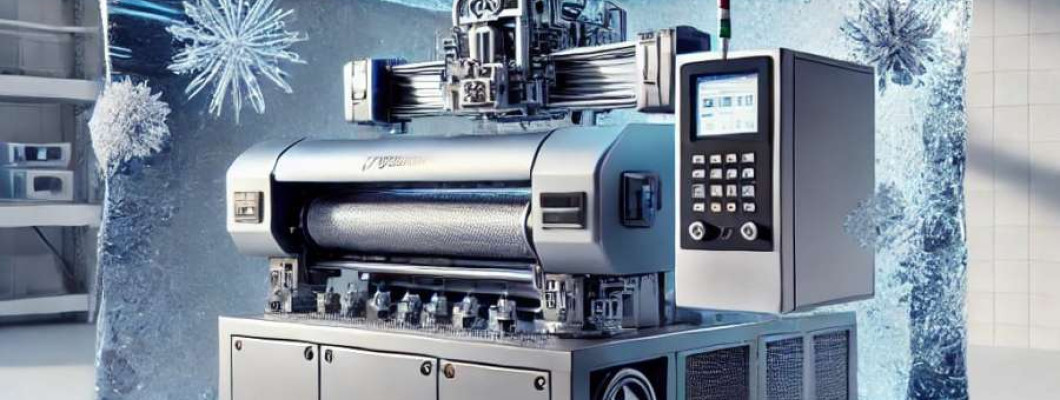
Within the industrial printing sector, the move toward LED UV printing technology embodies both opportunity and operational complexity. Especially in cylinder printing applications where precision and uptime are critical, the daily realities faced by maintenance teams can define overall production success or failure. The Spot A4 LED UV Printer Cylinder Printing system surfaces as a pivotal technology, promising industrial-grade reliability that distinctly separates it from DIY or low-tier alternatives.
Maintenance leads juggle a spectrum of issues: printhead clogging due to UV ink chemistry, thermal stress on LED arrays and substrates, alignment challenges caused by cylindrical distortion, and frequent recalibrations to counteract mechanical wear in high-speed print cycles. These challenges are exacerbated by the small format A4 size with intricate detail demands common in cylinder printing for packaging or customized production runs.
Operational bottlenecks emerge when printheads display inconsistent droplet ejection or when UV curing intensity fluctuates, risking adhesion or substrate damage. Addressing these requires robust printhead physics understanding, strict chemical control for ink handling, and finely tuned daily uptime protocols that industrial facilities must rigorously enforce.
Technical Deep-Dive on Key Printhead and Ink Chemistry Interactions
Printhead Physics Under Thermal and Mechanical Stress
Spot A4 LED UV Printer utilizes piezoelectric drop-on-demand printheads optimized for high-density 1200 dpi resolution. The micro-nozzle arrays operate at droplet volumes around 6-10 picoliters (pl), balancing color fidelity and print speed. Thermal cycling from rapid UV LED firing (wavelength around 395 nm) induces expansion-contraction cycles leading to micro-scale mechanical fatigue over operational lifespan.
The printhead lifetime is governed by maintaining constant nozzle temperature (~35°C ± 2°C) using integrated cooling channels. Deviations result in increased nozzle misfires, requiring recalibration or replacement. The mechanical resonance frequencies of the printhead assembly near 350 Hz must be isolated from vibration sources in the cylinder rotation mechanism to maintain micron-level precision.
UV Ink Chemistry and Curing Dynamics
UV-curable inks used in cylinder printing contend with viscosity variations from 20 to 30 centipoise (cP) depending on pigment load and temperature. The photoinitiators in these inks require consistent LED energy density around 300 mW/cm2 for optimal polymerization within milliseconds. Insufficient UV exposure risks poor adhesion and surface tackiness, while overexposure causes substrate deformation.
Ink particle size distribution averages 150 nm, favoring smooth flow through narrow nozzles yet risking sedimentation if circulation is inadequate. The maintenance lead must monitor ink viscosity daily and perform regular degassing to prevent microbubbles affecting jetting performance.
Mechanical Design for Cylinder Alignment and Stability
Maintaining concentricity below 0.05 mm during high-speed rotation (up to 60 rpm) is crucial. The printer features precision bearings rated at 30,000 hours MTBF and vibration dampening mounts constructed from anodized aluminum alloy. Misalignment induces feedback loop errors in print registration, escalating defect rates.
Comparative Data Table on Maintenance Metrics
| Parameter | Spot A4 LED UV Printer | Typical DIY UV Printer |
|---|---|---|
| Printhead Lifetime (hours) | 2500+ | 600-1000 |
| UV LED Power Stability (mW/cm²) | ±2% | ±10-15% |
| Maintenance Downtime per Week (hours) | 1-2 | 6-8 |
| Ink Circulation and Degassing | Automated, real-time monitored | Manual, irregular |
| Substrate Alignment Precision (mm) | ±0.05 | ±0.25+ |
Energy Consumption and Thermal Management
The integrated cooling system consumes around 120 Watts under standard operation, stabilizing printhead temperature. The LED UV arrays operate efficiently with a power draw of approximately 60 Watts each, significantly lower than traditional mercury vapor lamps, reducing heat load and subsequent thermal damage risks. Thermal management plays a pivotal role in both mechanical stability and ink curing consistency, directly impacting print quality and operational uptime.
Scenario Analysis for Maintenance Lead Decision Making
Scenario 1: High-Volume Cylinder Label Printing Facility
The Spot A4 LED UV Printer offers consistent printhead longevity and rapid automated ink circulation, reducing unplanned downtime. Maintenance schedules are predictable, and system diagnostics provide early warnings for nozzle wear. This ensures high throughput without compromising quality or requiring frequent intervention.
Scenario 2: Custom Prototype Production Shop
Precision is paramount when registering multiple colors on complex cylindrical substrates. The advanced mechanical stability and micro-nozzle control make the Spot A4 platform superior to DIY printers that often require extensive trial and error. Maintenance leads benefit from lower ink wastage and quick recalibration cycles.
Scenario 3: Mixed Substrate Small Batch Printing
Handling diverse surface chemistries and diameters is challenging. The printer’s robust maintenance protocols, combined with real-time ink viscosity monitoring, enable consistent adhesion and curing. Maintenance overhead is reduced, improving operational economics despite frequent material changes.
Expert FAQ on Printhead Physics and Daily Maintenance
Q1: What is the optimal nozzle temperature range for preventing printhead clogging?
A1: Maintaining 33-37°C ensures ink viscosity remains stable, avoiding particle aggregation and nozzle blockage.
Q2: How does UV LED power variation affect polymerization kinetics?
A2: A ±5% variation alters curing time by up to 20%, impacting adhesion and surface hardness.
Q3: Which ink chemistry parameters most impact sedimentation?
A3: Pigment particle size and density gradients are critical; sub-200 nm particles with consistent circulation reduce sedimentation.
Q4: How often should maintenance leads perform degassing cycles?
A4: At least once per 8-hour shift or sooner if jetting irregularities arise.
Q5: What vibration frequencies must be mitigated to maintain printhead precision?
A5: Frequencies near 350 Hz related to mechanical resonance require damping to prevent droplet misplacement.
Strategic Verdict and Recommendation
For maintenance professionals tasked with ensuring maximum uptime and precision in cylinder printing operations, the Spot A4 LED UV Printer Cylinder Printing system presents an industrial-grade step beyond DIY alternatives. Its integration of advanced printhead physics, stringent ink chemistry control, and robust mechanical engineering forms a cohesive platform optimized for high-demand environments.
The automated maintenance features, including real-time ink circulation and temperature stabilization, substantially reduce manual intervention frequency and extend printhead lifespan. These factors translate into lower operational costs and enhanced production consistency.
Given the technical merits and the comparative advantages analyzed, adopting the Spot A4 LED UV Printer Cylinder Printing system is a definitive choice for industrial settings requiring reliable and precise cylinder printing with manageable maintenance overhead. It is a future-proof investment aligned with the complex demands of modern printing maintenance leadership.