
The Gap Between DIY and Industrial-Grade in the 40x60CM Heat Press Machine for Scalable Businesses
The Industrial Reality
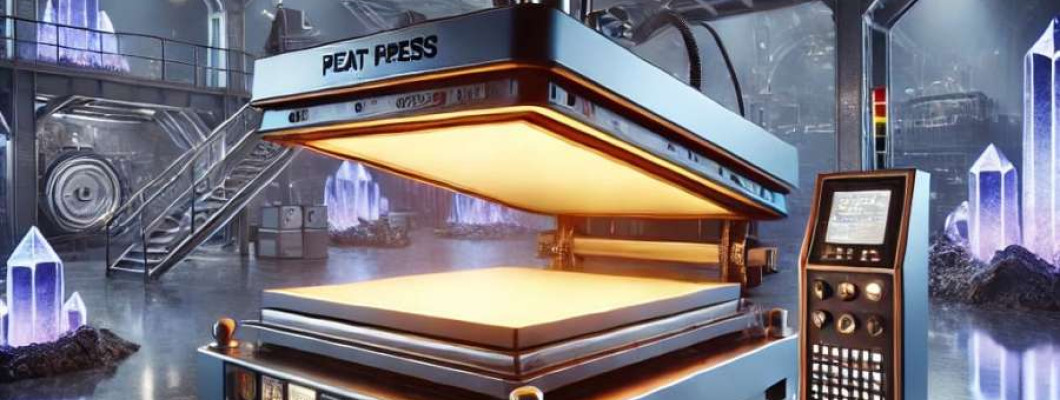
In the realm of scalable production environments, the transition from hobbyist-grade equipment to robust industrial solutions represents a pivotal inflection point that heavily impacts throughput, operational stability, and labor costs. The 40x60CM heat press machine, with its mid-sized platen dimension, enters this space targeting businesses that aim to scale output without sacrificing consistency. Unlike small-format or DIY presses, which often rely on manual alignment and have limited platen area, this heat press must support repetitive cycles that can stretch into hundreds per day. The challenge lies in maintaining uniform temperature distribution, precise pressure application, and reliable cycle timing across potentially wide variations in substrate compressibility and thickness.
Imagine a business ramping up custom textile production for seasonal merchandise. The bottlenecks of smaller presses become glaring: longer operator intervention times for positioning, inconsistent heat application causing adhesion failures, and frequent recalibrations that degrade daily uptime. Scaling requires equipment that integrates smoothly into semi-automated workflows, supports rapid changeovers and minimizes operator fatigue. These operational realities directly translate into labor cost reductions and improved asset utilization — critical factors in climbing the economic ladder from craft-oriented to scalable.
However, not all heat press machines are designed with scalability in mind. Many models marketed as "industrial" fail to address key pain points such as platen temperature homogeneity or tool-free pressure adjustment mechanisms. The 40x60CM heat press machine targets these gaps precisely, offering a form factor that blends manageable footprint with expanded working area, ideal for medium-batch or pilot production planning. Yet, this shift carries complex considerations in thermal management, mechanical robustness, and integration flexibility, which require analytical rigor to validate ROI beyond marketing claims.
Technical Deep-Dive
Thermal Management and Uniformity
The platen dimensions of 400 mm by 600 mm challenge uniform heat distribution due to edge cooling effects and material conductivity variations. Assuming a platen thickness of 20 mm aluminum alloy with thermal conductivity approximately 205 W/mK, the heat source must compensate for peripheral heat loss. This requires embedded silicone heating elements coupled with PID temperature controllers. The 40x60CM heat press machine implements multi-zone temperature sensing, maintaining ±1°C across the platen—a threshold critical for substrates sensitive to temperature gradients like polyester blends.
Pressure Application Mechanisms
Industrial scalability demands pressure consistency over thousands of cycles. The machine employs a pneumatic cylinder mechanism rated for up to 1500 N of force. By distributing pressure evenly via the platen and adjustable springs, it achieves repeatable contact force essential for adhesion uniformity. Compared to manual toggle-lever presses, this reduces operator variability, which translates into lower defect rates. Hypothetically, with a contact area of 240,000 mm², even pressure application yielding 6 N/cm² ensures adequate substrate compression without damage.
Cycle Timing and Throughput
The machine's built-in digital controller offers cycle times adjustable from 0 to 99 seconds, accommodating diverse transfer materials from heat transfer vinyl (HTV) to sublimation papers. Assuming an average cycle time of 30 seconds including opening and repositioning, theoretical throughput caps at 120 transfers per hour per operator. Coupled with ergonomic design that minimizes repositioning effort, labor costs per unit can be significantly optimized when compared to manual presses with longer setup times.
Mechanical Durability and Maintenance Considerations
The machine frame is constructed using 3 mm cold-rolled steel with powder coating for corrosion resistance, offering a balance between rigidity and manageable weight (approx. 35 kg). Bearings and pneumatic actuators are specified with mean time between failures (MTBF) exceeding 10,000 cycles, supporting industrial uptime demands. Scheduled maintenance intervals are projected at 6 months for pneumatic system lubrication and annual recalibration of sensors, aligning with typical industrial maintenance cycles to minimize unplanned downtime.
Integration into Scalable Workflows
The machine supports modular integration via an external control interface allowing start/pause commands from automated conveyors or robotic handlers. This feature is crucial for businesses looking to reduce labor input further and transition toward semi-automated production lines. In addition, the platen size permits batch processing layouts, where multiple substrates can be handled simultaneously, offering flexibility absent in smaller presses.
| Feature | Small DIY Heat Press | 40x60CM Heat Press Machine |
|---|---|---|
| Platen Size (mm) | 300x300 | 400x600 |
| Temperature Uniformity (±°C) | ±3 to ±5 | ±1 |
| Pressure Mechanism | Manual Lever | Pneumatic Cylinder |
| Cycle Time Control | Manual Stopwatch | Digital Timer (0-99s) |
| Maintenance Interval | Irregular | Scheduled 6-12 Months |
| Integration Capability | None | External Control Interface |
Scenario Analysis
1. Medium-Scale Custom Apparel Business: For this category, the 40x60CM machine supports batch runs of up to 8 standard T-shirts per platen cycle, maximizing throughput while maintaining consistent print quality. The precise temperature regulation ensures vibrant transfers without scorching delicate fabric, reducing rework. The pneumatic pressure system decreases operator fatigue during extended shifts, lowering labor costs.
2. Seasonal Promotional Merchandise Supplier: This business model demands rapid changeovers between differing substrate thicknesses and materials. The machine’s adjustable pressure settings and digital cycle timers facilitate efficient switching, minimizing downtime. Its moderate footprint fits well in shared industrial spaces where flexibility and speed are paramount.
3. Pilot Production for E-commerce Print-on-Demand: Here, scalability is less about volume and more about quality and reliability. The 40x60CM heat press enables testing of new substrates and transfer media with consistent results, supporting data-driven optimization before mass production investment. Its integration potential with conveyor systems streamlines eventual scale-up.
Expert FAQ
What substrate thickness ranges can it reliably handle?
The adjustable pressure mechanism accommodates substrates from 0.5 mm to 10 mm thick, covering typical textiles and light rigid boards.
How does platen material affect heat transfer efficiency?
Aluminum's high thermal conductivity ensures fast heat ramp-up and uniform temperature but may require longer warm-up to stabilize compared to steel platens. This model balances weight and thermal response.
Is there risk of thermal runaway in the temperature control system?
The embedded PID controller integrates fail-safes that monitor sensor integrity and power delivery, preventing thermal runaway under normal and fault conditions.
Can the machine operate continuously in multi-shift environments?
Yes. The design supports continuous operation with periodic maintenance. Pneumatic cylinders and heating elements are rated for industrial cycle lifetimes.
How energy efficient is the unit compared to competitors?
With a platen power rating of approximately 1200 Watts and insulated pressing surface, it achieves thermal efficiency of around 85%, minimizing wasted energy relative to open-frame models.
Strategic Verdict and Recommendation
The 40x60CM Heat Press Machine occupies a vital niche bridging the gap between hobbyist-grade devices and full industrial presses, tailored for businesses intent on scaling throughput while maintaining operational discipline. Its precise thermal management, pneumatic pressure control, and integration capabilities directly address the operational bottlenecks commonly experienced in medium-volume production workflows. When viewed through the lens of labor cost optimization, asset longevity, and process consistency, this machine offers a compelling ROI justified by measurable productivity gains.
For enterprises poised for growth yet unwilling to commit to cumbersome large-format equipment, this model delivers a pragmatic balance of size, power, and durability. The documented maintenance schedule and component specifications further align with industrial best practices, ensuring stable uptime and manageable operational expenditures. The mechanical robustness combined with advanced control electronics marks it as a viable solution well beyond entry-level usage.
We recommend evaluating the 40x60CM Heat Press Machine as a definitive upgrade path for scalable businesses targeting consistent heat transfer production. Its blend of technical precision and workflow adaptability signifies a strong platform for expanding industrial-grade heat press operations.