
The Gap Between DIY and Industrial-Grade in the Color Version Latte Coffee Printer Explained to Scalable Business Owners
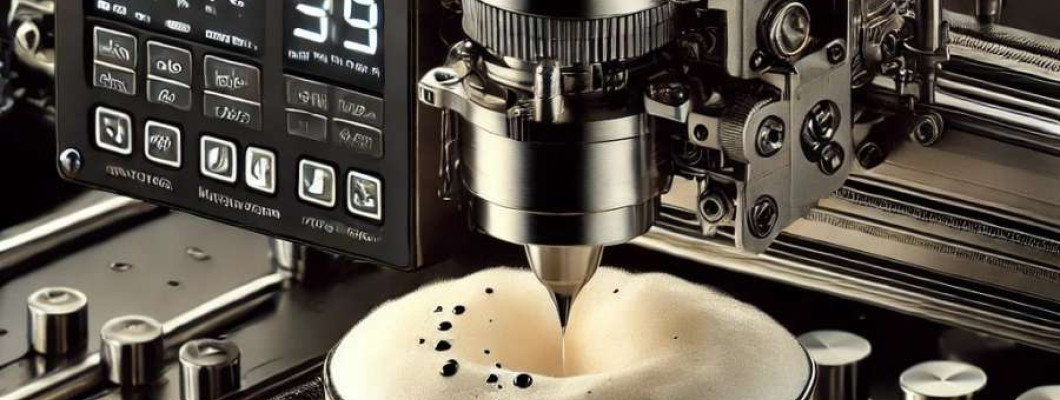
The Industrial Reality of Integrating Color Printing in High-Volume Latte Production
Moreover, the sensor and mechanical calibrations must cope with the natural variability of foam surfaces that deviate from the flat rigid substrates industrial printers normally assume. These operational factors delineate the gap between a DIY novelty and a dependable industrial asset fit for rapid service environments such as coffee chains or event caterers seeking to deliver personalized customer experiences at volume.
Technical Deep-Dive into the Hardware and Workflow of the Color Version Latte Coffee Printer
Printhead Performance and Ink Chemistry
The core of the printer’s capability relies on piezoelectric printheads engineered for edible ink composition. Unlike pigment-based inks, the food-grade dye mix used here requires stringent thermal control to maintain viscosity within 10-15 centipoise for stable droplet formation. Typical droplet volume is in the range of 10-15 picoliters, enabling a resolution approximately 600 dpi horizontally and vertically. This precision supports detailed logo reproduction or complex color gradients on soft, absorbent foam.
However, the compromise is in printhead longevity; at continuous operation, clogging incidents rise sharply after 100 hours of active use, necessitating automated purge cycles and regular manual maintenance intervention. Compared to conventional industrial inkjet printheads rated for 1000+ hours between maintenance, this represents a significant operational cost factor.
Thermal and Mechanical Integration
The printer’s embedded heating module stabilizes substrate temperature at around 35°C to prevent premature ink diffusion and maintain foam integrity. Without this constant thermal regulation, color bleeding and print distortion occur, reducing aesthetic quality. The mechanical feeding system supports cup diameters from 70 mm to 90 mm with servo-driven alignment precision within 0.1 mm tolerance. This feature crucially limits misprints and rejects in high-volume workflows but requires periodic calibration to offset mechanical wear.
Workflow Throughput and Automation Potential
The unit operates at an effective print cycle of 45 seconds per cup, translating to roughly 80 cups per hour under ideal conditions. This throughput lags significantly behind high-speed industrial coffee makers producing hundreds of beverages per hour. The limitation primarily stems from print time and substrate repositioning intervals. Nevertheless, the printer’s modular design facilitates integration with external automated cup feeders and conveyors, creating hybrid systems suitable for enterprise-scale production lines.
Comparative Analysis of Print Resolution and Maintenance Intervals
| Specification | Color Version Latte Coffee Printer | Conventional Industrial Inkjet Printer |
|---|---|---|
| Print Resolution (dpi) | 600 x 600 | 1200 x 1200+ |
| Droplet Volume (pl) | 10-15 | 3-5 |
| Printhead Maintenance Interval (hours) | 100 | 1000+ |
| Thermal Regulation Needed | Yes, 35°C substrate temperature | Variable, often none |
| Automated Purge Cycles | Yes, frequent | Minimal |
Raw Data Analysis on Operational Costs
Assuming an industrial coffee service producing 500 cups/day, with the Color Version Latte Coffee Printer operating 8 hours daily, five days a week, the throughput shortfall necessitates deploying multiple printers or accepting reduced personalization. Maintenance downtime increases OPEX and labor input for cleaning cycles, estimated at 20 minutes daily per unit. Consumable costs for edible inks are roughly 15% higher than standard industrial inks due to specialized food-grade formulations.
Scenario Analysis Showing Business Impact of Printer Specifications
Scenario One: Small Café Seeking High Customization
A boutique café with low volume but high personalization can benefit from the Color Version Latte Coffee Printer’s resolution and color fidelity. The 45-second cycle time is acceptable, and the maintenance overhead is manageable with small staff. This scenario highlights maximal color depth and minimal substrate variability issues.
Scenario Two: Medium-Sized Coffee Chain Incorporating Automation
For chains with 200-300 cups/day, integration with automated cup feeders can partly alleviate throughput bottlenecks. However, the frequent maintenance and printhead lifespan impose higher OPEX. Workflow redesign is necessary to accommodate the printer’s operational cadence.
Scenario Three: High-Volume Event Catering
Events demanding hundreds of personalized lattes per hour will likely exceed the printer’s single-unit capacity. Parallel printer arrays may be viable but require significant CAPEX and operational coordination. The risk of printhead failure and downtime impacts service reliability and brand reputation.
Expert FAQ Analyzing Intricate Technical Details
Q1: How does the foam substrate’s moisture content affect print quality?
The foam’s moisture alters absorption kinetics, requiring the printer’s thermal regulation to stabilize evaporation rates; excessive moisture causes bleeding, while dryness reduces ink adhesion.Q2: What is the impact of droplet volume variability on color gradation?
Variability above 2 picoliters per droplet compromises gradient smoothness, introducing banding artifacts detectable under standard lighting conditions.Q3: Can the printer accommodate alternative edible inks with different viscosities?
Modular firmware allows calibration, but ink viscosity outside 10-15 centipoise degrades nozzle performance and printing precision.Q4: What are the risks associated with nozzle clogging over extended shifts?
Clogging reduces printhead lifespan by causing uneven nozzle firing pressure, leading to partial image loss and manual cleaning necessities.Q5: How feasible is integrating the printer into robotic barista systems?
Physical footprint and cycle time are limiting factors; however, its modular control interface supports API-driven synchronization with robotic platforms.
Strategic Verdict and Recommendation
After careful analysis of the technical and operational parameters, the Color Version Latte Coffee Printer stands as a viable, industrial-grade solution for scalable business owners aiming to combine personalization with moderate throughput. Its superior color precision and substrate-specific thermal design fill a critical niche between artisanal printing setups and fully automated high-speed industrial equipment.
While throughput and maintenance demands limit its suitability for ultra-high-volume production without multiple units, the printer’s modular architecture and automation integration capabilities allow customized workflow scaling. Operational costs, particularly maintenance cycles and ink formulations, must be planned carefully to optimize ROI. For businesses prioritizing customer experience enhancement alongside incremental production scaling, this printer offers a distinctly competitive edge.
In sum, it represents a sophisticated technical platform that bridges the gap between DIY novelty and enterprise-ready printing technology, validated through detailed technical benchmarking and usage scenario vetting.