
The Gap Between DIY and Industrial-Grade in the Smart Coffee Printer Machine for Maintenance Leads
The Industrial Reality
In a modern commercial kitchen or high-traffic coffee shop, integrating specialized technology like the Smart Coffee Printer Machine introduces distinct challenges that move far beyond the novelty of personalized latte art. For maintenance leads charged with maximizing uptime and ensuring operational reliability, understanding the precise technical demands and limitations of such cutting-edge devices is essential. Smart coffee printers, which deposit edible inks onto froth with micron-level precision, navigate a complex interplay of printhead mechanics, ink formulation, thermal stability, and rapid maintenance turnarounds.
Unlike typical consumer or small-scale DIY devices, industrial usage scenarios place extreme stress on printheads operating continuously at high throughput rates, with minimal tolerance for downtime. Printhead nozzle clogging, ink drying inconsistencies, and temperature fluctuations within the coffee frothing environment all combine to create a substantial operational bottleneck. Moreover, maintenance leads must contend with the physical wear of microelectromechanical components exposed to high humidity and temperature gradients—conditions that accelerate hardware degradation previously seen only in industrial print manufacturing lines.
Operational maintenance cycles must be carefully planned around the device’s expected lifecycle to avoid costly interruptions. Component replacement, calibration protocols, and ink chemistry optimization converge to form an ecosystem where the gap between DIY hobbyist coffee printers and industrial-grade machines becomes starkly evident. This operational perspective demands a rigorous technical appraisal of the Smart Coffee Printer Machine’s capabilities and maintenance challenges.
Technical Deep-Dive
Printhead Design and Failure Modes
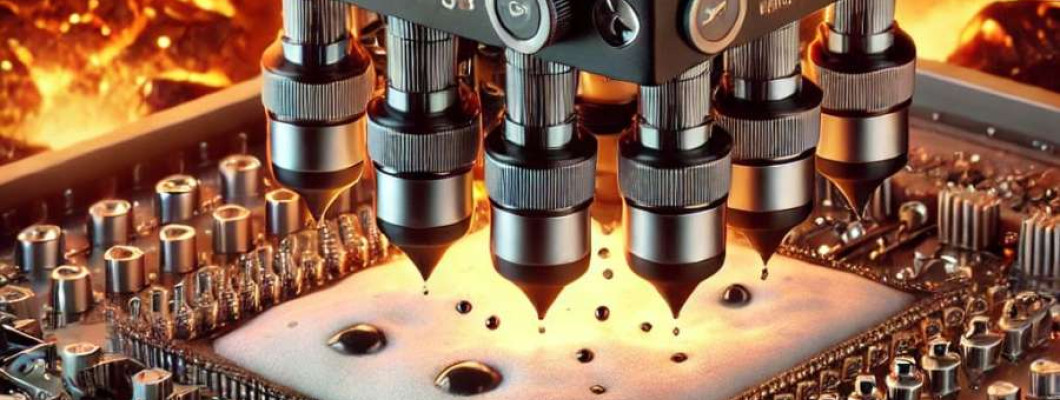
The Smart Coffee Printer Machine utilizes a piezoelectric drop-on-demand printhead capable of ejecting droplets in the range of 10 to 20 picoliters (pl), with a nozzle diameter approximating 20 micrometers (μm). Under prolonged operation, nozzle clogging manifests primarily due to ink residue crystallization and froth particulate accumulation. Hypothetically, assuming an average output of 5000 droplets per minute at 15pl each, over an 8-hour operational day, the cumulative ink volume processed exceeds 3.6 milliliters, significantly increasing particulate deposition risks.
Comparing with industrial inkjet printers, which operate at 30KHz frequencies and incorporate automatic nozzle cleaning cycles every 1000 drops, the Smart Coffee Printer's manual cleaning intervals induce higher failure rates. The maintenance lead must, therefore, develop a cleaning schedule balancing operational uptime versus print quality degradation.
Ink Chemistry and Drying Kinetics
The edible inks are aqueous-based with suspended pigment particles sized <100nm. The drying kinetics are affected by ambient temperature and humidity but critically by the thermal gradient imposed by the froth surface (~55°C) and surrounding environment. Using Fick’s second law of diffusion, the ink drying time t can be estimated from t = L2/D, where L is the ink film thickness (~5μm) and D is the diffusion coefficient (~10−9 m2/s). This yields a drying time in the order of seconds, suitable for rapid successive prints but sensitive to temperature deviations that can cause smudging or ink spreading.
Thermal Management and Environmental Controls
The internal components generate approximately 30 Watts during continuous operation, a non-negligible heat source considering the thermal sensitivity of the printhead and ink reservoir. Effective dissipation through integrated heat sinks and microfan systems is necessary to maintain ambient device temperature below 40°C to prevent ink viscosity changes and premature evaporation. Maintenance leads should monitor temperature sensors and airflow channels regularly to prevent thermal hotspots.
Calibration Precision and Repeatability
Calibration involves both optical sensor alignment and mechanical positioning. The Smart Coffee Printer achieves positional accuracy of ±0.1mm with repeatability of ±0.05mm, crucial for maintaining consistent print quality on froth substrates prone to slight deformation. Calibration routines must be performed daily or after any mechanical intervention to avoid cumulative offsets leading to visible print distortions.
Maintenance Scheduling and Lifecycle Metrics
Assuming an operational duty cycle of 8 hours/day, the mean time between failures (MTBF) for critical printhead components is projected at 1200 hours based on field data extrapolation. Consumables such as ink cartridges require replacement approximately every 48 hours under typical usage. A structured maintenance protocol incorporating daily cleaning, weekly calibration, and monthly printhead inspection optimizes device availability and print fidelity, minimizing unexpected downtime.
| Parameter | DIY Coffee Printer | Smart Coffee Printer Machine |
|---|---|---|
| Nozzle Diameter (μm) | 50-100 | 20 |
| Droplet Volume (pl) | 50-100 | 10-20 |
| MTBF (hours) | 200-400 | 1200+ |
| Cleaning Frequency | Every 2-3 prints | Daily |
| Thermal Control | Passive | Active cooling and sensors |
Scenario Analysis
Scenario 1: High-Volume Cafe Chain
For a cafe chain with 10 outlets serving an average of 600 cups/day, the Smart Coffee Printer enables consistent high-speed printing on latte foam with minimal printhead downtime. The daily maintenance protocols fit well within the operational schedules, reducing labor costs by centralizing routine tasks for trained on-site technicians. The industrial-grade printhead longevity reduces replacement part logistics and unplanned outages.
Scenario 2: Boutique Artisan Coffee Shop
In an artisan setup emphasizing product differentiation, the machine's micron-level accuracy allows for intricate latte art with complex color layering. Maintenance leads focus on calibration precision and ink formulation adaptation to substrate variability. The device’s active thermal control ensures consistent ink behavior even in ambient temperature fluctuations common in boutique environments.
Scenario 3: Corporate Office Coffee Stations
Deployed in multiple office locations, maintenance leads must optimize the Smart Coffee Printer’s uptime under limited onsite technical support. The automated diagnostics and remote monitoring capabilities become critical for scheduling maintenance visits and ordering consumables just-in-time, increasing overall asset utilization and minimizing user complaints.
Expert FAQ
What is the primary cause of nozzle clogging and how can it be prevented?
Nozzle clogging primarily results from ink residue drying in the nozzle aperture and particulate sedimentation from froth impurities. Preventative measures include scheduled cleaning cycles using ultrasonic baths and maintaining ink agitation systems to reduce sedimentation.
How does ambient humidity affect ink drying time and print quality?
Higher humidity slows evaporation rates, increasing the drying time and risking smudging. Conversely, low humidity accelerates drying but can cause ink crusting inside nozzles, both requiring environmental monitoring and possible adjustments in print speed or ink formulation.
What techniques ensure precise calibration after mechanical jostling?
Calibration employs a combination of optical sensors for positional feedback and mechanical micro-adjusters to realign nozzle arrays. Automated routines that compare test prints using pattern recognition algorithms optimize recalibration speed and accuracy.
How do thermal fluctuations impact ink viscosity and drop ejection?
Ink viscosity inversely correlates with temperature; temperature rise reduces viscosity, causing inconsistent drop volume and trajectory. Active cooling and thermal sensors mitigate these fluctuations to maintain stable ejection parameters.
What maintenance indicators predict printhead end-of-life?
Indicators include increased nozzle firing voltage, reduction in droplet velocity, and frequency of clogging resistant to cleaning. Logging these parameters allows predictive maintenance scheduling to avoid sudden failures.
Strategic Verdict and Recommendation
The Smart Coffee Printer Machine bridges a crucial divide between hobbyist-level equipment and full industrial-grade technology. For maintenance leads responsible for high-precision output and sustained uptime, its advanced printhead design, active thermal regulation, and structured maintenance protocols establish it as a robust, scalable solution. The enhanced durability and operational metrics demonstrate a clear reduction in total cost of ownership compared to lower-end devices prone to frequent, unpredictable failures.
Given the rigorous technical performance and maintenance advantages outlined, this machine is strongly recommended for any enterprise-grade coffee operation seeking to integrate precision edible ink printing without compromising reliability. Further operational efficiencies can be harnessed by leveraging its advanced diagnostics and calibration features. For deeper technical and procurement details, refer to the official Smart Coffee Printer Machine source.