
The Gap Between DIY and Industrial-Grade in the Smart Coffee Printer Machine Industry
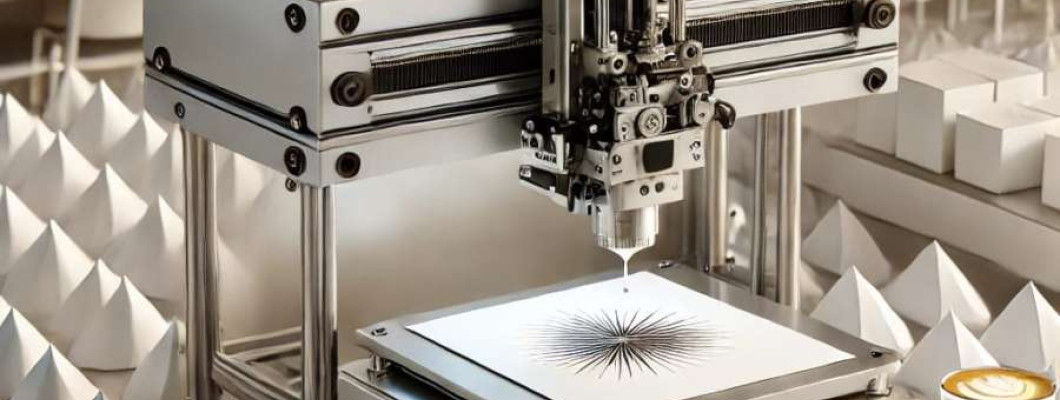
The Industrial Reality of Integrating Smart Coffee Printer Machines into High-Output Environments
Modern food service and retail environments are adopting automation technologies to optimize throughput while maintaining product quality. The smart coffee printer machine presents an innovative proposition: blending artisanal latte art with automated precision. However, the transition from novelty to industrial-grade utility exposes significant technical and operational challenges. In large-scale cafes or quick-service restaurants expecting sustained throughput, the limitations of DIY or consumer-grade coffee printers become evident. Factors such as printhead wear, ink deposition uniformity, substrate variability (foam consistency), and thermal management converge to create bottlenecks in production speed and reliability.
Unlike typical consumer-grade devices, industrial-grade coffee printers must operate continuously during high-traffic periods, printing coffee cup art reliably without frequent downtime. The complexity increases when considering the need for rapid printhead cooldown and replenishment cycles of edible ink cartridges designed for food safety compliance. The mechanical precision required to maintain micron-level print accuracy over thousands of prints weekly contrasts with desktop models optimized for sporadic use. Additionally, the variability in milk foam texture introduces a physical quality control bottleneck. Inconsistent substrates cause printoffset errors and reduce overall print resolution, thus complicating the deployment in fast-paced environments.
Technical Deep-Dive into Smart Coffee Printer Machine Architecture and Operational Parameters
Printhead Mechanics and Failure Points Under Industrial Stress
The core of the smart coffee printer lies in its piezoelectric inkjet printhead system. These printheads operate at frequencies ranging between 20 kHz and 60 kHz, ejecting edible ink droplets typically sized around 15 picoliters (pl). Industrial-grade units use reinforced piezo elements and ceramic substrates to extend operational life beyond 50 million actuations before performance degradation. Comparatively, consumer models often fail near the 10 million mark due to lower-grade materials and less rigorous thermal management.
Stress-induced failure modes include nozzle clogging, pulse timing drift, and mechanical fatigue of the diaphragm. The printhead temperature must be actively controlled between 25°C and 40°C to prevent ink viscosity fluctuation and bubble formation. Excess heat accelerates wear and distorts drop volume consistency, impacting print clarity and resolution.
Ink Chemistry and Food-Safe Compliance Metrics
Edible inks formulated for coffee printing require stringent certification, including FDA and European food safety approvals. The inks are predominantly water-based, with natural colorants resistant to thermal breakdown during printhead actuation. Ink viscosity tightly regulates droplet formation, nominally maintained between 2 and 5 centipoises (cP) at print temperature.
Industrial ink systems incorporate inline filtration at sub-10 micron levels to prevent particulate clogging while monitoring pH values to preserve color stability over print runs extending beyond 48 hours. In contrast, low-grade inks often suffer color bleeding and accelerated microbial growth, necessitating frequent cartridge changes.
Thermal Management Challenges in Continuous Operation
Maintaining operational temperature within a narrow band is critical. The printer’s internal cooling system employs miniaturized thermoelectric coolers combined with precision airflow channels to dissipate heat generated by high-frequency printhead cycling. Thermal runaway risks escalate with print rates exceeding 80 prints per hour in compact units.
Calculations show that a typical printhead dissipates approximately 15 Watts of heat during peak operation. Without adequate cooling, surface temperatures can increase from ambient 22°C to beyond 50°C within 10 minutes, severely compromising print quality and hardware lifespan.
Mechanical Precision and Substrate Variability Impact on Print Resolution
The spatial resolution of coffee printers is commonly quantified in dots per inch (dpi), with industrial-grade models achieving 600 dpi or greater. However, the substrate—milk foam—is inherently variable, with thickness fluctuating between 2 to 5 mm and surface roughness within 100 to 300 micrometers Ra.
This variability demands adaptive printhead height control within ±0.1 mm tolerances using optical or ultrasonic sensors to maintain uniform droplet deposition. Failure to mitigate foam surface irregularities leads to dot overlap or diffusion, reducing effective print resolution visually below 300 dpi.
Comparing Consumer vs Industrial-Grade Smart Coffee Printing Architecture
| Specification | Consumer-Grade Coffee Printer | Industrial-Grade Smart Coffee Printer Machine |
|---|---|---|
| Printhead Life Cycle | ~10 million actuations | 50+ million actuations with ceramic reinforcement |
| Print Resolution | 300 dpi max | 600 dpi and above |
| Ink Viscosity (cP) | Variable, 3-7 cP | Strictly controlled 2-5 cP with filtration |
| Thermal Management | Passive cooling | Active thermoelectric cooling with airflow |
| Substrate Adaptation | Fixed height, manual adjustment | Automated height control ±0.1 mm |
Scenario Analysis of Smart Coffee Printer Machine Deployment Across Business Use-Cases
High-Volume Quick Service Coffee Chain
For a chain producing over 1000 coffee cups daily, throughput and reliability are paramount. The industrial-grade smart coffee printer machine’s capacity to print 80+ cups per hour per unit with minimal downtime fits this profile. Automated substrate thickness detection reduces operator intervention, and robust ink systems minimize cartridge swaps. This installation reduces labor by 30% while improving consistent visual branding on beverages.
Specialty Artisan Coffee Bar
In a boutique setting emphasizing latte art quality, the 600 dpi print resolution and micron-level droplet control allow intricate, multi-color designs on diverse milk and milk-alternative foams. The device’s slower print cycle is offset by its superior image fidelity, making it a tool for differentiating premium offerings without compromising throughput during peak hours.
Event Caterers and Mobile Coffee Vendors
Mobility constraints require compact footprint and rapid setup. Industrial-grade printers with reinforced hardware sustain operation under fluctuating power and environmental conditions. The built-in thermal controls prevent printhead damage in outdoor or temporary venues. Quick ink cartridge replacement cycles enable continuous service during multi-hour events, leveraging automated diagnostics features for real-time fault detection.
Expert FAQ Answering Critical Non-Obvious Technical Questions
What are the principal mechanical failure modes in continuous smart coffee printing and their mitigation?
Nozzle clogging and diaphragm fatigue are dominant failure modes. Mitigation includes high-grade ceramic printheads, sub-10 micron ink filtration, automated nozzle purging cycles, and thermal stabilization with active cooling.
How does substrate variability affect droplet deposition dynamics?
Foam thickness and roughness alter droplet impact velocity and spread, potentially causing dot merging or feathering. Automated height sensing and adaptive printhead positioning maintain optimal droplet impact angles and distances within ±0.1 mm tolerances.
What ink properties ensure stable color and printhead longevity?
Low viscosity (2-5 cP), pH stability, microbial resistance, and thermal stability are critical. FDA-approved natural colorants and inline filtration systems extend printhead life and color fidelity over lengthy print runs.
How does thermal management influence print accuracy at high throughput?
Elevated temperatures increase ink viscosity variability and accelerate printhead wear. Active thermoelectric cooling combined with airflow channels maintains printhead temperature within 25-40°C to ensure droplet size consistency.
What are the operational trade-offs between print speed and resolution in industrial coffee printers?
Higher resolution printing (600 dpi) increases droplet firing frequency and thermal load, reducing maximum continuous throughput. Operators balance these by adjusting printhead cycling rates and cooling parameters to optimize image quality against production speed.
Strategic Verdict and Recommendation on the Smart Coffee Printer Machine
The mechanical, thermal, and chemical rigor required for industrial-grade smart coffee printing positions this device distinctly above consumer alternatives. Its architecture anticipates prolonged continuous operation with advanced printhead longevity, rigorous ink stability, and precise substrate adaptation. Businesses targeting scalable throughput without sacrificing image fidelity will find this technology uniquely suited for operational integration.
Given its advanced technical framework and compliance with food-safe performance criteria, the Smart Coffee Printer Machine is a definitive industrial-grade solution. It markedly closes the gap between artisanal coffee presentation and scalable business needs, enabling automated precision in demanding environments.