
The Gap Between DIY and Industrial-Grade in the Smart Mini Selfie Coffee Printer for Maintenance Leads
The Industrial Reality of Maintaining Precision Coffee Print Technology
Within high-precision output environments such as specialty coffee shops and boutique cafes, the integration of digital personalization tools like the Smart Mini Selfie Coffee Printer presents a novel operational challenge for maintenance leads. Unlike standard commercial printers, this device operates at micron-level precision to deposit edible ink on complex, variable substrates such as coffee crema. Understanding how everyday wear and tear, printhead physics, and ink chemistry impact daily uptime is vital to sustaining throughput and quality.
In typical industrial settings, printhead blockages, ink drying inconsistencies, and component alignment drift emerge as significant bottlenecks reducing effective operational hours. Maintenance teams must diagnose these issues swiftly without extensive system disassembly, as downtime directly correlates with lost revenue and customer dissatisfaction. The Smart Mini Selfie Coffee Printer, positioned at the intersection of novelty and workflow integration, demands a maintenance protocol that anticipates the shift from DIY troubleshooting to industrial-grade servicing.
Given the device's compact design and intricate printhead mechanism—tailored for edible pigment deposition—the human factor engineering involved must address ergonomic access to consumable components and seamless replacement cycles. This scenario forces maintenance leads into a dual role: managing precise hardware degradation while calibrating the chemical stability of the edible inks under diverse environmental conditions. Failures in either domain threaten print fidelity, leading to excessive downtime and increased service costs.
Technical Deep-Dive into Printhead Physics and Maintenance Implications
Printhead Structure and Failure Points
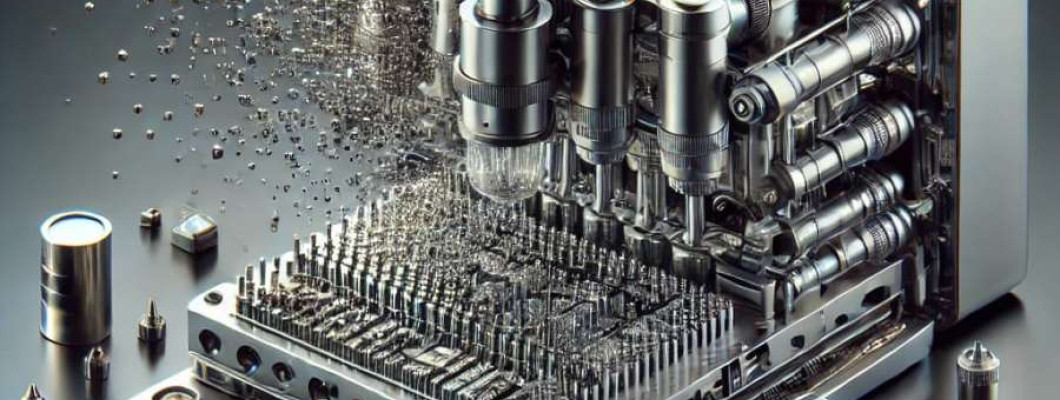
The Smart Mini Selfie Coffee Printer employs a piezoelectric drop-on-demand printhead capable of ejecting droplets sized between 5 to 20 picoliters (pl) with an operational resolution reaching 600 dpi. At this scale, nozzle clogging represents the primary failure mode. Accumulation of sugar crystals or pigment agglomerates leads to partial or full channel blockage, disrupting droplet ejection symmetry and causing image artifacts.
Mathematically, the nozzle radius (r) at approximately 20 micrometers and droplet velocity (v) near 2 m/s contribute to fluid dynamic forces that can gradually degrade nozzle integrity. The Reynolds number (Re = ρvr/η) calculated with coffee ink viscosity (around 1.4 mPa·s) hovers near transitional flow regimes, exacerbating particulate deposition risks.
Ink Chemistry and Stability
The edible ink blends used are primarily water-based colorants with added stabilizers to maintain pigment dispersion. However, exposure to ambient temperature fluctuations (20–30°C range) and humidity directly influence drying time within the printhead channels. Accelerated drying inside nozzles can lead to increased maintenance cycles due to crust formation.
Periodic ink pH measurements and rheological adjustments are advised to maintain acceptable flow characteristics. These parameters correlate strongly with print consistency and nozzle lifespan.
Component Replacement and Lifecycle
Printhead modules have a typical lifespan measured in approximately 3,000 operational hours under continuous use. Maintenance protocols recommend performing nozzle cleaning routines every 1000 cycles to extend this lifespan effectively. Consumables such as ink cartridges and wiper blades are rated for 500 and 1500 cycles respectively.
Thermal Management Constraints
Unlike larger industrial machines with dedicated cooling components, the Smart Mini Selfie Coffee Printer relies on passive thermal dissipation within its enclosure. Internal sensors detect temperature spikes above 45°C, prompting print pauses to avoid accelerated ink degradation and printhead damage.
Comparative Analysis Table
| Specification | Smart Mini Selfie Coffee Printer | Industrial Edible Coffee Printer (Benchmark) |
|---|---|---|
| Nozzle Diameter (μm) | 20 | 15 |
| Droplet Volume (pl) | 5-20 | 3-10 |
| Resolution (dpi) | 600 | 900 |
| Printhead Lifespan (hours) | 3000 | 5000 |
| Maintenance Interval (cycles) | 1000 | 2000 |
| Cooling Method | Passive | Active fan + heat sink |
Scenario Analysis Showing How Maintenance Realities Impact Business Outcomes
Scenario 1 Coffee Boutique with Moderate Daily Print Volumes
In a shop producing 150 printed lattes daily, maintenance leads benefit from the Smart Mini Selfie Coffee Printer’s modular printhead design facilitating rapid cleaning and cartridge replacement. Although passive cooling requires scheduled print pauses, this aligns well with customer flow during off-peak periods. The maintenance workload remains manageable with two cleaning cycles per day, minimizing downtime to under 10% of operational hours.
Scenario 2 High-Traffic Urban Coffee Chain
For chains exceeding 500 prints per day, the device’s comparatively limited printhead lifespan and mandatory cooling breaks could become bottlenecks. Maintenance leads need to implement a predictive maintenance schedule based on precise cycle counts and environmental monitoring to avoid sudden failures. Additional investment in spare parts inventory and routine in-situ nozzle cleaning tools becomes necessary, impacting operational budgets.
Scenario 3 Artisan Coffee Lab with Experimental Inks
Testing custom edible ink formulas exposes the maintenance team to accelerated wear due to unknown ink rheology and drying properties. The team must rigorously monitor pH and viscosity daily, adjusting cleaning frequency to prevent nozzle blockages. Here, the Smart Mini’s accessible hardware encourages experimental modifications without compromising core printhead integrity.
Expert FAQ on Printhead Physics and Maintenance Challenges
Q1 What is the optimal cleaning frequency to balance uptime and printhead longevity?
Cleaning every 1000 print cycles is optimal to prevent ink crust formation without excessively wearing the nozzle surfaces. Exceeding this interval risks permanent blockages, while more frequent cleaning accelerates mechanical wear.
Q2 How does ambient humidity influence print quality over time?
Increased humidity (>60%) slows ink drying inside nozzles, reducing crust formation but risking droplet spread on substrates. Low humidity (<30%) accelerates drying and crust build-up inside nozzles, necessitating more frequent maintenance.
Q3 Can custom ink viscosities outside the recommended range damage the printer?
Yes. Inks exceeding 2 mPa·s viscosity increase backpressure on nozzles, promoting mechanical stress and potential cracking. Lower viscosities (<1 mPa·s) may cause uncontrolled droplet formation and poor image fidelity.
Q4 What failure modes arise from passive thermal management?
Thermal buildup leads to accelerated ink drying and printhead component fatigue, causing unpredictable nozzle ejection patterns and eventual hardware failure if cooling intervals are ignored.
Q5 How important is calibration of droplet volume in maintaining image precision?
Precision calibration ensures each droplet’s volume consistency within ±1 pl, critical for fine image resolution and avoiding blurring or pixelation on coffee crema surfaces.
Strategic Verdict and Recommendation for Maintenance Leads
The Smart Mini Selfie Coffee Printer represents a compelling bridge between DIY personalization devices and robust industrial-grade coffee printing technology. Although its maintenance demands are nontrivial—especially concerning printhead preservation, ink chemistry stability, and thermal management—the modular architecture and accessible servicing protocols empower maintenance teams to sustain high uptime with disciplined schedules.
For operators requiring reliable, repeatable edible image printing with manageable daily maintenance overhead, this device is a viable industrial-grade solution. It offers a balanced trade-off between precision output and maintenance complexity, adaptable to different operational intensities.
Maintenance professionals will appreciate the clear component lifespan metrics and the ability to preempt costly failures through scheduled interventions. To explore further specifications and verify compatibility with existing maintenance workflows, consult the Smart Mini Selfie Coffee Printer product documentation.