
The Gap Between DIY and Industrial-Grade Latte Coffee Printing Explored for Scalable Business Owners
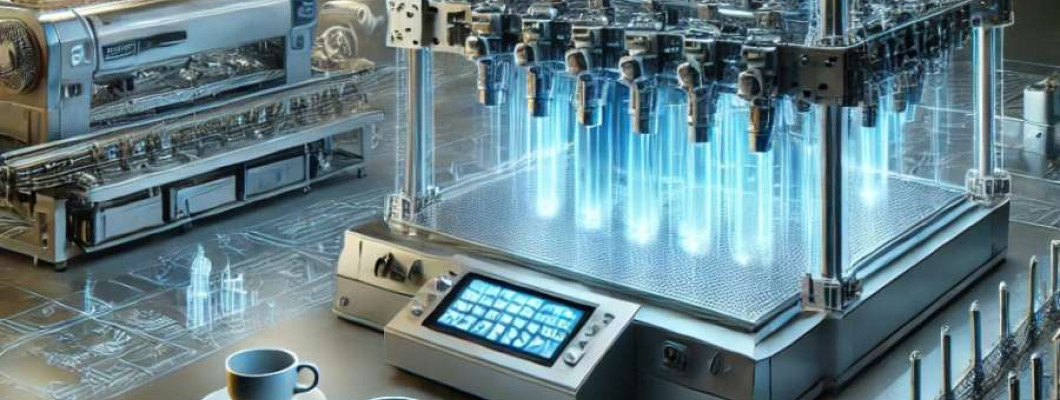
The Industrial Reality of Integrating Latte Coffee Printers into Scalable Business Environments
For scalable business owners in the hospitality and specialty beverage sectors, the introduction of automated latte coffee printers represents both an opportunity and a technical challenge. While the concept of producing printed latte art is appealing for customer engagement, the transition from artisanal solutions or DIY setups to industrial-grade deployments reveals critical operational bottlenecks. These include throughput limitations, reliability under continuous use, and the integration of printing hardware within beverage preparation workflows. Unlike manual techniques or small-scale devices, industrial environments demand sustained output performance measured in hundreds or thousands of units daily, requiring equipment that resists wear and maintains precision over extended operational cycles.
Consider a mid-sized coffee shop chain seeking to deploy automated latte printing as a unique selling proposition across multiple locations. The underlying hardware must withstand frequent high-cycle actuation without degradation in print quality or downtime due to maintenance interventions. Concurrently, the printhead system and ink delivery mechanisms must be compatible with fast beverage preparation times, ensuring minimal impact on customer wait times. The business' success is predicated on operational dependability, automation compatibility, and predictable maintenance costs.
Without an industrial-grade approach, typical DIY or consumer-grade printers suffer from ink clogging, printhead wear, and software limitations that manifest as frequent failures or inconsistent print output. These issues cause bottlenecks in throughput, increased labor overhead for troubleshooting, and ultimately revenue loss due to dissatisfied customers or reduced service capacity. This reality drives the necessity for a printer explicitly designed to reconcile the functional gap between artisanal novelty devices and enterprise-capable hardware, capable of integrating seamlessly into scalable environments.
Technical Deep Dive into the Color Version Latte Coffee Printer Architecture
Printhead Technology and Ink Delivery Systems
The Color Version Latte Coffee Printer employs a specialized piezoelectric printhead array optimized for high-viscosity, food-grade inks that adhere reliably to coffee froth surfaces. The printhead features an array of nozzles each dispensing droplets sized approximately 10 pl with a resolution reaching up to 600 dpi horizontally. This nozzle size balances droplet coalescence and substrate absorption kinetics, critical for maintaining crisp color boundaries on the non-uniform, deformable latte surface.
An industrial-grade ink pumping mechanism utilizes precise pressure regulation and degassing chambers to prevent air bubbles that would otherwise cause nozzle misfires. The ink chemistry is engineered for stability in humid, warm environments (operating temperature range 20-45 °C) with pigments that resist rapid diffusion within the froth medium, ensuring image stability for a minimum of 30 minutes post-printing.
Throughput Metrics and Operational Duty Cycle
The printer is capable of processing up to 120 cups per hour under continuous operation, facilitated by a print cycle time of approximately 30 seconds per cup. This throughput rating factors in the precise timing of coffee cup placement, froth stabilization, and image printing sequences. Printhead duty cycle is rated for 600 hours before scheduled maintenance, translating roughly to 72,000 printed cups per service interval. This metric substantially exceeds consumer-grade devices typically rated below 50 hours in continuous usage scenarios.
Thermal and Mechanical Robustness
The hardware chassis integrates active cooling with heat dissipation fins and thermoelectric coolers managing the printhead environment. This thermal management maintains nozzle temperature within ±2 °C to ensure viscosity stability and droplet formation consistency. Mechanical components such as the servo-driven cup carousel and precision alignment sensors maintain positional tolerance within 0.1 mm, vital for high-quality, repeatable prints.
Comparison of Industrial vs DIY Latte Printing Hardware
| Specification | Color Version Latte Coffee Printer | Typical DIY Printer |
|---|---|---|
| Printhead Resolution | 600 dpi horizontal at 10 pl droplets | 300 dpi, 20-50 pl droplets |
| Throughput | 120 cups/hour continuous | 15-30 cups/hour |
| Duty Cycle | 600 hours before maintenance | 30-50 hours before failure |
| Ink Chemistry | Food-grade, pigment stable 20-45 °C | Non-food safe, unstable pigments |
| Thermal Control | Active thermoelectric cooling ±2 °C | Passive cooling only |
Software and Integration Capabilities
The device supports RESTful API integration allowing seamless connection to point-of-sale (POS) systems or custom automation workflows. This interface supports print queue prioritization, image customization per order, and real-time status monitoring. Firmware updates can be deployed remotely, ensuring continued compliance with regulatory standards and feature enhancements.
Scenario Analysis for Scalable Business Owners
Scenario 1: High-Volume Chain with Automated Service
A coffee chain targeting rapid service times leverages the printer's 30-second cycle to embed personalized latte art without extending customer wait times. Through API integration, unique images are sent wirelessly per order. The robust ink delivery and thermal controls ensure consistent output across multiple sites, reducing maintenance overhead and preventing downtime.
Scenario 2: Specialty Café Emphasizing Customer Experience
Here, the priority is print quality and image fidelity on diverse substrate sizes from 120 to 180 mm diameter cups. The 600 dpi resolution and micron-level positional accuracy maintain sharp, vibrant prints, increasing customer retention through visually appealing product presentation. The printer's modular design allows scaling the setup as business grows.
Scenario 3: Franchise with Mixed Manual and Automated Operations
Some locations use manual baristas for standard orders but deploy automated latte printing for promotional campaigns and premium offerings. The printer's flexible API allows switching between modes and updating print designs remotely. Maintenance scheduling aligns with franchise-wide service intervals, minimizing operational disruptions.
Expert FAQ on Industrial Latte Coffee Printing Technology
How does the printhead avoid clogging with milk froth residues?
The printhead employs a hydrophobic nozzle coating combined with microfluidic backflush cycles between prints to expel potential milk residue build-up. This preserves nozzle integrity and reduces cleaning frequency.
What are the key ink stability parameters for coffee print applications?
Parameters include pigment particle size (<100 nm), pH neutrality, viscosity around 5-7 cP at 25 °C, and resistance to protein interactions with milk froth components.
How does thermal management influence droplet size consistency?
Temperature fluctuations affect ink viscosity; active thermal control maintains a steady viscosity, ensuring each droplet mass remains consistent at ~10 pl, critical for uniform image density.
What maintenance procedures optimize uptime?
Scheduled printhead cleaning every 600 hours, periodic ink reservoir refilling with degassed ink, and weekly mechanical calibration of servo components maintain operational reliability.
How does integration with POS systems enhance operational efficiency?
Integration enables automatic print job generation as orders are placed, reducing human error, synchronizing workflow timings, and allowing centralized monitoring for rapid issue resolution.
Strategic Verdict and Recommendation
The Color Version Latte Coffee Printer unequivocally bridges the operational and technical gap between DIY consumer products and industrial solutions required by scalable coffee businesses. Its printhead design, thermal and mechanical robustness, and software integration capabilities provide a sustained throughput and image quality suited for high-demand environments. This device mitigates common bottlenecks such as print inconsistency, ink degradation, and maintenance downtime that plague lesser systems.
Scalable business owners aiming to differentiate offerings while maintaining operational efficiency will find this technology critical. It satisfies the rigorous demands of multi-location chains and specialty cafés alike, enabling consistent, high-quality visual product differentiation without compromising service speed. Full details and procurement options can be explored at the official Color Version Latte Coffee Printer product page.