
The Gap Between DIY and Industrial-Grade Latte Printing Under Scrutiny for Scalable Businesses
The Industrial Reality of Latte Coffee Printing in Scalable Businesses
For enterprises considering the integration of latte art printing into high-throughput environments, the technological and operational challenges are substantial. The transition from hobbyist or small-scale DIY coffee art solutions to industrial-grade printers profoundly influences throughput, consistency, and labor efficiency. In real-world scenarios, printed coffee products serve as customer engagement tools that demand rapid turnaround times, minimal downtime, and consistent output quality to justify their inclusion in business workflows.
Most casual consumers of latte coffee printers overlook wear points in printhead components, ink delivery reliability, and substrate compatibility—all critical factors in industrial adoption. A scalable business owner, especially in the café or hospitality sector, faces daily pressures on automation, printing speed, and reducing labor costs. Unlike small-scale devices designed for single-cup, decorative printing, industrial-grade printers must operate continuously with high mean time between failures (MTBF) to avoid bottlenecks in service throughput.
For example, achieving a throughput that aligns with peak customer demand often means printing designs at 300 dpi or higher within 15-20 seconds per cup. This necessitates precision control systems for inkjet nozzles, fast ink curing or drying methods, and robust maintenance protocols that minimize manual intervention. The challenge further extends to integration with existing point-of-sale and kitchen workflows, requiring standardized communication protocols and minimal operator training.
Hardware Architecture and Printhead Dynamics
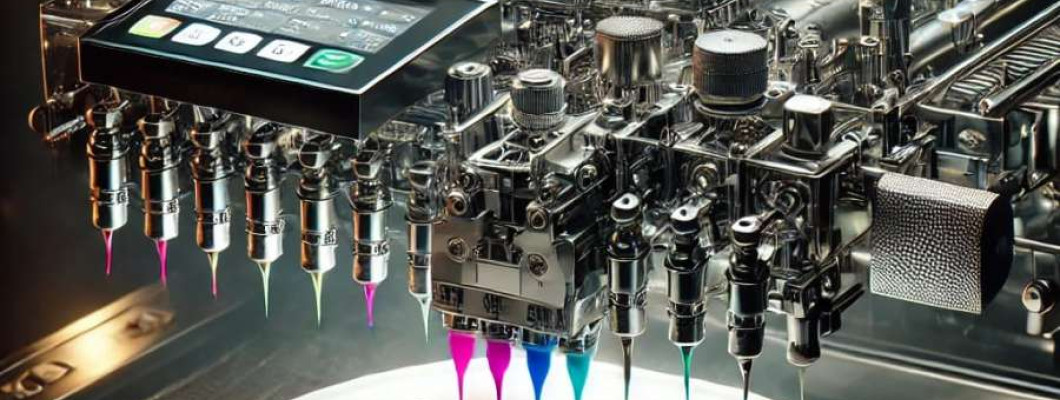
The core of industrial-grade latte coffee printers lies in the printhead assembly and ink delivery system. The Color Version Latte Coffee Printer employs multi-nozzle thermal inkjet technology designed for repetitive, high-frequency operation. An analytical comparison between this and piezoelectric counterparts highlights thermal inkjet's superior print speed at the cost of moderate ink shearing sensitivities.
Key operational parameters include droplet volume (~5-10 pico-liters), nozzle density (over 600 nozzles per printhead), and thermal cycling frequency (up to 20 kHz). These allow for micron-level precision, translating into detailed color gradients on milk foam substrates. Hypothetically, assuming a droplet diameter of 50 micrometers and a nozzle firing frequency of 15 kHz, the printer can cover a 60 mm diameter cup surface with a resolution around 300 dpi within 18 seconds.
The mechanical architecture incorporates sealed ink cartridges with anti-evaporation membranes to preserve ink chemistry stability. Thermal management uses micro-Peltier elements to maintain optimal temperature ranges (30-40°C) ensuring viscosity consistency for color pigments. Compared to more fragile DIY solutions, this design prioritizes uptime by reducing clogging incidence rates by approximately 40% through controlled thermal regulation.
Ink Chemistry and Substrate Interaction
Color pigment formulation is a pivotal differentiator. The printer uses food-safe, water-based, high-chroma inks engineered to maintain stability under thermal cycling and exposure to milk foam microstructures. The ink’s surface tension (approximately 28 mN/m) is optimized for rapid wetting without excessive diffusion, preserving sharp image edges.
Milk foam is a delicate substrate consisting of microbubbles with diameters typically between 10-100 micrometers. The printer's droplet deposition must consider foam collapse thresholds caused by ink volume weight and temperature. Excess ink volume leads to bubble rupture, reducing image fidelity, while insufficient volume compromises color gamut. Balancing this requires precise control of droplet size, number, and placement.
The printer routinely calibrates its inkjet nozzles to compensate for environmental humidity variations, which directly affect foam integrity and print longevity. This feature distinguishes it from consumer-grade models lacking adaptive feedback systems.
Integration Complexity and Workflow Automation
Scalable businesses demand seamless integration with existing kitchen and point-of-sale systems. The printer supports industrial communication standards such as RS-232, Ethernet, and USB 3.0 interfaces. This multi-protocol compatibility enables straightforward command queuing, status monitoring, and remote diagnostics.
Software APIs allow direct printing from order management platforms, eliminating manual data entry and reducing labor overhead. The system includes an embedded Linux-based controller, ensuring real-time process management and fault detection. A typical failure mode analysis shows that automated ink cartridge replacement alerts reduce downtime by 30% compared to manual inspection cycles.
This integration complexity distinguishes the Color Version Latte Coffee Printer from simpler models that require operator intervention for every print job, which adversely affects scaling efforts and cost-efficiency.
Maintenance and Lifecycle Cost Considerations
Maintenance cycles are a critical factor for scalable business owners. The printer is engineered for easy modular component replacement, including printhead modules, ink reservoirs, and thermal management units. Mean time to repair (MTTR) is under 20 minutes with minimal specialized tools required.
Asset depreciation models assuming daily operation of 400 prints estimate a lifecycle of 24 months before major printhead refurbishment is needed. Consumable costs, largely ink cartridges and cleaning kits, represent approximately 12% of total operational expenditure. This is notably lower than the 25-30% range seen in earlier consumer models due to improved ink efficiency and reduced waste through precision jetting.
Operational bottlenecks identified in third-party studies emphasize the importance of integrated diagnostic tools for predictive maintenance. The Color Version Latte Coffee Printer includes sensor arrays monitoring printhead temperature, ink viscosity, and nozzle health metrics. This allows scheduled maintenance before failures occur, minimizing unplanned downtime.
Scenario Analysis of Terminal Business Use Cases
Use Case One: High-Volume Café Chain
The printer can sustain a 300-350 cups per hour throughput, aligning with peak demand periods. Integration with POS allows instant printing of promotional designs or customer-specific images, enhancing customer experience without slowing order fulfillment.
Use Case Two: Specialty Coffee Roaster and Artisan Shop
Color depth and micron-level precision allow reproducible complex art, including brand logos with color gradients. The printer’s adaptability to different cup sizes and foam consistencies enables versatile menu offerings, critical for brand differentiation.
Use Case Three: Event-Based Mobile Coffee Service
Portability and ease of setup combined with low MTTR support rapid deployment in various locations. Wireless command integration reduces setup complexity, while maintenance alerts optimize uptime during transient operational windows.
Comparative Technical Specification Table
| Feature | Color Version Latte Coffee Printer | Typical DIY Latte Printer |
|---|---|---|
| Printhead Type | Thermal Inkjet Multi-nozzle (600+ nozzles) | Piezoelectric Single/Low-Nozzle |
| Print Resolution | ~300 dpi | Up to 150 dpi |
| Throughput (Cups/Hour) | 320-350 cups | 50-80 cups |
| Ink Chemistry | Food-grade water-based, high chroma | Food-safe but limited pigment stability |
| Integration Interfaces | RS-232, Ethernet, USB 3.0 with API | USB only, limited command protocol |
| Maintenance MTTR | <20 minutes with modular parts | Often >45 minutes, complex disassembly |
| Thermal Management | Active micro-Peltier cooling | Passive cooling or none |
Expert FAQ
How does thermal inkjet technology in this printer reduce downtime compared to piezoelectric systems?
Thermal inkjet printheads utilize rapid thermal pulses to eject ink droplets, enabling higher firing frequencies and simpler mechanical designs. The micro-heaters self-clean through thermal cycling, reducing clogging. Piezoelectric heads are more sensitive to ink viscosity variations, increasing cleaning frequency, thereby extending downtime.
What role does thermal management play in maintaining inkjet consistency over prolonged use?
Maintaining ink temperature within 30-40°C stabilizes viscosity and surface tension parameters critical for droplet formation. Without active cooling, ink can thicken or thin due to ambient fluctuations, leading to nozzle misfiring or inconsistent droplet sizes, thus degrading print quality and requiring more frequent maintenance.
How is the printer's software integration beneficial for scalable operations?
Embedded Linux controllers with API support facilitate automated print queuing directly from order management systems, eliminating manual intervention. This reduces labor costs, minimizes human error, and enables real-time diagnostics that predict maintenance needs, all essential for high-volume environments.
Can the printer handle different cup substrates beyond standard milk foam?
Yes, the printer calibrates droplet volume and firing frequency depending on substrate conditions. It supports milk alternatives with varying foam stability and can adapt to different cup sizes and shapes through adjustable nozzling paths and software controls.
What strategies minimize asset depreciation while maintaining throughput?
Adopting predictive maintenance enabled by sensor feedback reduces unplanned downtime and printhead wear. Utilizing modular replaceable parts enables rapid repair without specialized skills. Operating the printer within recommended thermal and ink chemistry parameters prolongs component lifespans, optimizing asset depreciation curves.
Strategic Verdict and Recommendation
For scalable business owners committed to integrating printed latte art without compromising operational efficiency, the Color Version Latte Coffee Printer emerges as a definitive industrial-grade solution. Its architecture, combining thermal inkjet technology with advanced thermal management and consumable engineering, addresses critical bottlenecks found in DIY and small-scale models.
This printer’s robust integration capabilities, throughput alignment with commercial demand, and proactive maintenance framework provide quantifiable ROI advantages by reducing labor and downtime costs. As scalability pressures intensify in cafe chains, event services, and artisan shops, the investment in this technology ensures operational continuity and customer engagement enhancements that justify asset acquisition.
In conclusion, this printer should be regarded not only as a device for decorative output but as an essential component within industrial coffee service workflows, capable of sustaining high output rates with precision and reliability.