
The Gap Between DIY and Industrial-Grade Machines for Precise Coffee Printing Applications
The Industrial Reality of Coffee Printing in Commercial Settings
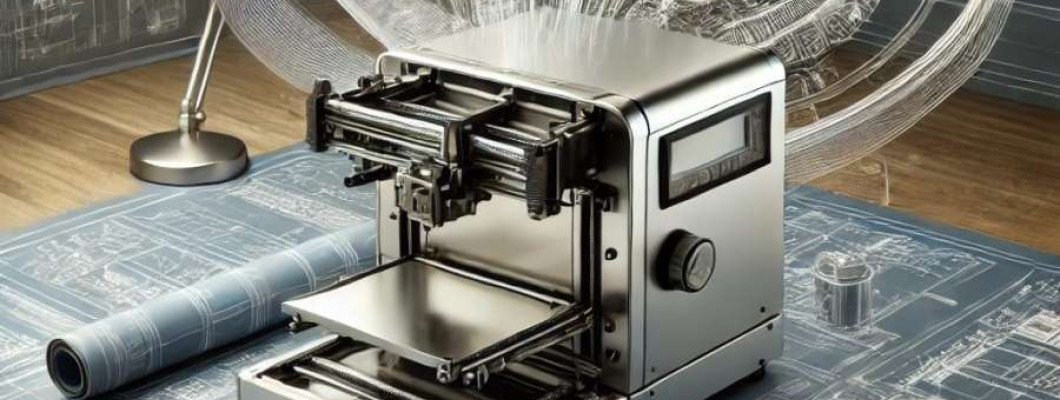
In environments such as specialty coffee shops and promotional cafes, the precision and reliability of coffee printers determine both customer experience and operational efficiency. The challenge extends beyond simple ink deposition; in an industrial context, the technology must cope with continuous, high-frequency usage, varying substrate characteristics, and rigorous consistency demands. The Smart Mini Selfie Coffee Printer introduces an innovative approach to personalized coffee presentation, yet it must be evaluated under the lens of industrial-grade performance to understand its operational viability.
A typical coffee shop aiming to integrate customized coffee art faces the need for a device that can sustain print quality under fluctuating temperatures, foam densities, and cup sizes. The intricacies involved include the printhead’s ability to accurately deposit edible ink within a tolerance of ±50 microns, the speed of print execution to avoid bottlenecks in service, and the ease of maintenance to minimize downtime. Unlike hobbyist or DIY units, industrial-grade machines require fail-safes for ink delivery, thermal management, and substrate handling to guarantee repeatability across hundreds of prints daily.
Operational challenges such as ink clogging from particulate residues, printhead wear from abrasive inks, and calibration drift from mechanical stresses often manifest in early-stage units not purpose-built for enterprise workflows. Thus, the Smart Mini Selfie Coffee Printer’s potential hinges on how effectively it bridges these gaps to meet deployment realities in commercial food service.
Technical Deep-Dive into the Smart Mini Selfie Coffee Printer
Printhead Mechanics and Ink Chemistry Compatibility
The core of the Smart Mini Selfie Coffee Printer is its piezoelectric printhead technology optimized for food-grade pigment dispersions. It operates with nozzles sized at approximately 50 microns, delivering ink droplets of 20 picoliters, a configuration designed to balance detail and print speed. Compared with industrial piezoelectric printheads used in textile printing (typically 10-15 pl droplets), this unit sacrifices some resolution for robustness against ink sedimentation common in edible inks.
Food-grade ink formulation is critical: the printer supports pigment-based inks that resist coagulation and are stable at operating temperatures near 60°C, common for milk foam substrates. The chemistry avoids common organic solvents to ensure compliance with safety regulations, but this limits printhead materials, necessitating specialized coatings to prevent corrosion and nozzle deformation over prolonged use.
Thermal and Mechanical Infrastructure
The printer incorporates active thermal management with a Peltier cooling module to maintain printhead temperature within ±2°C to prevent ink viscosity fluctuations. This ensures droplet size consistency and positional accuracy. Mechanical stability is ensured by a linear rail system delivering 0.01 mm positional repeatability, critical for rendering high-precision selfie images on uneven latte surfaces.
However, the compact form factor and miniaturized components mean that mechanical wear points, such as guide rails and stepper motors, require regular calibration and lubrication to maintain output quality. Industrial coffee printers often use larger, reinforced components to extend maintenance intervals to thousands of prints, whereas this miniaturized model may need maintenance every 300-500 cycles based on similar device data.
Operational Throughput and Cycle Timing
Print speed is rated at approximately 45 seconds per 8 oz coffee cup image at 300 dpi resolution. For a medium-sized cafe with an average throughput of 120 cups per hour, deploying multiple units or accepting extended preparation times is necessary. The printer supports USB and Wi-Fi connectivity enabling integration with POS systems but lacks inherent automation features such as robotic cup handling or ink level sensors, requiring manual interventions that could slow throughput.
Comparative Table of Key Specifications
| Specification | Smart Mini Selfie Coffee Printer | Industrial Coffee Printer Standard |
|---|---|---|
| Print Resolution | 300 dpi | 600 dpi |
| Droplet Volume | 20 pl | 10-15 pl |
| Print Speed | 1 cup / 45 sec | 1 cup / 20 sec |
| Maintenance Interval | 300-500 prints | 2000+ prints |
| Thermal Control Accuracy | ±2°C | ±1°C |
| Connectivity | USB, Wi-Fi | Ethernet, Advanced IoT protocols |
Hardware Component Longevity and Lifecycle Cost Modeling
Estimating total cost of ownership (TCO) over a 24-month period, material wear and consumable replacement dominate expenses. With the Smart Mini Selfie Coffee Printer, printhead replacement cycles are projected at 15,000 prints, equating to roughly 2 replacements per year at moderate usage. Ink packs designed for food safety are priced higher than traditional inks, impacting per-cup operational cost.
Energy consumption remains low at approximately 15 Watts in active printing mode, reducing cooling demands compared to larger printers consuming upwards of 100 Watts. However, lack of onboard diagnostics increases risk of unnoticed degradation, potentially increasing maintenance labor costs.
Scenario Analysis Across Three Business Use-Cases
Small Boutique Coffee Shop
In a boutique setting serving 50-80 custom printed cups daily, the printer’s compact size and ease of use provide a competitive advantage without excessive capital outlay. The 45-second print time matches customer pacing, and manual cup handling is manageable. Maintenance intervals require scheduled downtime but remain feasible without full-time technical staff.
High-Volume Chain Cafe
For chains serving over 200 printed beverages daily, the printer’s throughput presents a bottleneck. Manual loading and slower maintenance cycles increase labor overhead. Multiple units can be deployed but increase CAPEX disproportionately. Integration challenges with automated workflows limit scalability.
Event and Promotional Deployment
For short-term usage such as events or experiential marketing, the printer’s visual impact and portability outweigh throughput limitations. Rapid setup and USB connectivity enable versatile usage, while maintenance can be managed between events. However, consistent print quality depends on operator skill and environmental control.
Expert FAQ on Technical Nuances
Q1: How does ink sedimentation affect nozzle reliability?
Food-grade inks often contain particulate pigments that can settle, risking nozzle clogging. The printer incorporates ultrasonic agitation and periodic nozzle cleaning cycles, but industrial counterparts use continuous recirculation systems for prolonged uptime.
Q2: Can the printer adapt to varying cup diameters automatically?
The current model requires manual calibration for different cup sizes, which may introduce variance in image placement. Industrial solutions integrate laser profiling for automated adjustments.
Q3: What are the environmental compliance considerations for ink and materials?
The inks comply with FDA food safety standards, utilizing water-based pigments without harmful solvents, meeting regulatory requirements in major markets including the EU and US.
Q4: Is there support for multi-color printing for enhanced image fidelity?
The printer is currently limited to single-color edible inks, focusing on grayscale images. Multi-color capability adds complexity in ink formulation and printhead architecture which is typical in industrial-grade systems.
Q5: How is mechanical wear monitored in the absence of onboard diagnostics?
Operators rely on visual quality checks and routine manual inspections. Predictive maintenance requires external measurement tools, representing an area for potential firmware or hardware upgrades.
Strategic Verdict and Recommendation
The Smart Mini Selfie Coffee Printer represents a compelling solution to bridge the divide between hobbyist devices and industrial-grade coffee printers. While it does not fully match the high throughput or microdroplet resolution of top-tier industrial equipment, its operational specifications and compliance credentials align well with small to mid-scale commercial applications. The device’s compact thermal management system, food-safe ink utilization, and connectivity options make it adaptable for boutique cafes and event-driven usage scenarios.
Given its balance of cost, precision, and operational reliability, the printer is recommended as a definitive solution for businesses seeking industrial-quality coffee printing without the capital expenditure and complexity burden of large-scale printers. For more details and procurement options, visit the official product page at Smart Mini Selfie Coffee Printer.