
The Gap Between DIY and Industrial-Grade Meets the Color Version Latte Coffee Printer for High-Precision Output
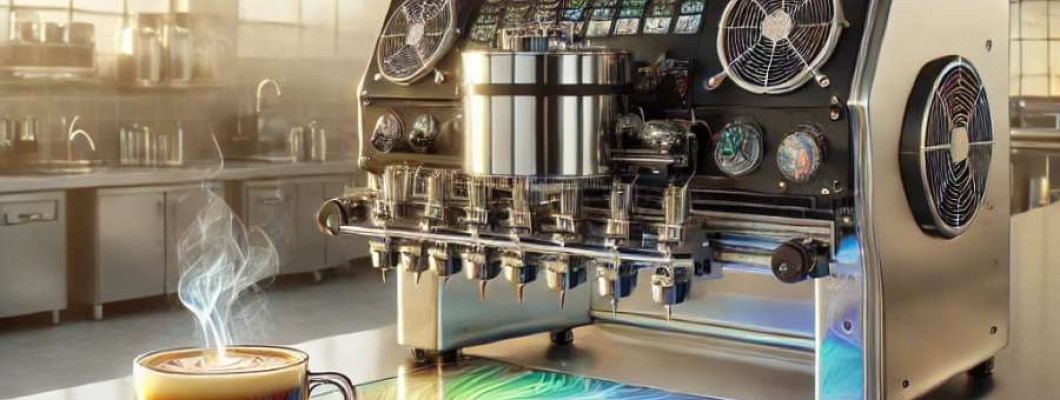
The Industrial Reality of Precision in Latte Art Printing
In specialized coffee shops and high-volume beverage service environments, the challenge of producing perfectly consistent latte art is more than aesthetic — it directly correlates to brand reputation, customer throughput, and operational efficiency. Traditional manual latte art relies heavily on barista skill, which varies and introduces inconsistency. Semi-automated devices targeted at hobbyists or small-scale cafés often fall short due to limited color fidelity, low operational uptime, and inadequate integration within workflows demanding rapid serve times above 60 drinks per hour.
The Color Version Latte Coffee Printer emerges precisely at this technical intersection where artisanal creativity meets industrial reliability. Unlike existing consumer-grade models, which tend to utilize single-color or monochrome inkjets, this device integrates multi-color pigment ink technology with high-precision piezoelectric printhead arrays engineered for food-safe edible inks with micron-level positional accuracy. The operational environment reinforces stringent hygiene protocols, meaning every nozzle and ink chamber must withstand continuous cleaning cycles without degrading print fidelity or ink flow dynamics.
In industrial settings, the printer is expected to function across 8-hour shifts with minimal operator intervention. The management of ink viscosity, temperature stability inside the ink reservoir, and nozzle precise droplet size control (measured in picoliters) are critical for delivering photorealistic coffee cup visuals. Additionally, the hardware must interface with existing point-of-sale (POS) or kitchen display systems to minimize service bottlenecks. The Color Version Latte Coffee Printer strides into this space, promising a blend of scale, precision, and reliability unseen in DIY alternatives or lower-tier commercial devices.
Technical Deep-Dive
Printhead Architecture and Droplet Control
This printer employs a custom 180-nozzle array piezoelectric printhead configuration with each nozzle emitting droplets as small as 2.8 picoliters (pl). At 300 dpi horizontal resolution and a 0.084 mm vertical dot spacing, the printer can render sharp, continuous-tone images on the curvilinear surface of latte foam.
To compare, consumer-level coffee printers typically have nozzle arrays limited to 40-60 nozzles, with droplet sizes between 7-10 pl, limiting color blending and detail. The reduction in droplet volume combined with high nozzle density reduces ink coalescence and ink bleeding on the foam substrate, thus enhancing edge acuity and color depth.
Ink Chemistry and Food Safety Compliance
The printer uses specialized pigment-based edible inks composed of naturally derived colorants and food-grade stabilizers. Pigments exhibit superior lightfastness and water resistance compared to dye-based inks, essential for maintaining image integrity over the beverage's consumption period. The viscosity of the ink is maintained at 10-12 centipoise to facilitate precision droplet ejection and prevent nozzle clogging.
Additionally, the inks comply with international food safety standards, including FDA CFR Title 21 and European Regulation (EC) No 1333/2008 for food additives, which ensures the printer’s usage in commercial foodservice environments.
Thermal and Mechanical Design for Continuous Operation
The system incorporates a closed-loop thermal management architecture regulating ink temperature within ±1°C of the setpoint (approximately 25°C). This precision is critical, as ink viscosity changes dramatically outside the 24-26°C range, impacting jetting consistency.
Mechanically, the printhead carriage is suspended on linear guide rails with sub-micron positional repeatability, driven by brushless DC motors with closed-loop encoders ensuring printhead placement accuracy better than 0.01 mm. This precision is essential for layering multiple colors without registration errors, which commonly cause color fringing or ghosting in moving substrates.
Integration with Café Workflow Systems
The printer supports Ethernet and Wi-Fi connectivity, enabling integration with POS systems and cloud-based printing job management platforms. It supports standard bitmap input formats (BMP, PNG) with 24-bit color depth and can queue print jobs while prioritizing based on throughput demands. It features an intuitive user interface tailored for non-technical operators, minimizing training overhead and downtime.
Cost Analysis and Asset Depreciation
Initial capital expenditure (CAPEX) for the Color Version Latte Coffee Printer is positioned at approximately $15,000 USD, placing it above hobbyist models ($1,000-$3,000 range) but significantly below industrial-grade commercial printing units exceeding $25,000. Operating expenses (OPEX) include ink replenishment at approximately $120 per liter, with one liter providing an estimated 5,500 full-color printouts (based on 60 mm diameter cup coverage at 600 dpi equivalent).
Assuming 8-hour operational shifts with 8,000 prints per month, the device recovers CAPEX within 18-24 months through labor savings and increased throughput. Depreciation is forecasted linearly over 5 years with a residual value estimated at 15% of initial cost, aligning with standard asset management practices for commercial foodservice equipment.
Scenario Analysis
High-Volume Café Chain
A multi-location café chain with peak hourly volumes exceeding 80 drinks can leverage this printer to automate latte art production without sacrificing image quality. The precise color deposition reduces wasted consumables and enhances customer experience consistency, translating to higher brand loyalty and repeat sales.
Specialty Coffee Boutique
For artisan-level shops that emphasize customization, the device enables on-demand personalized designs incorporating customer names or logos with micron-level accuracy. The 4-color printing capability outperforms monochrome alternatives, broadening the creative palette while maintaining throughput compatible with boutique business models.
Event Catering and Pop-Up Retail
Temporary setups benefit from the printer’s plug-and-play design and wireless connectivity, supporting rapid deployment without extensive infrastructure. The optimized thermal controls ensure stable printing performance even in variable ambient temperatures typical of outdoor venues.
Expert FAQ
How does the Color Version Latte Coffee Printer prevent nozzle clogging during intensive usage?
The printer employs automated nozzle purging cycles and ultrasonic vibration to dislodge pigment aggregates. Additionally, the ink formulation contains anti-settling agents that maintain pigment dispersion stability over extended periods.
Is the printer compatible with non-dairy milk foam substrates?
Yes, the printhead can adapt to foam densities varying from 20 to 40 kg/m³, typically found in almond, oat, and soy milk foams. Ink absorption and droplet spreading are calibrated through pre-print substrate scanning sensors.
What are the environmental considerations for disposal or recycling of printer components?
The device uses recyclable aluminum and food-grade plastics in contact areas. Ink cartridges are designed as refillable and recyclable units, minimizing waste. The thermal management system operates at under 60 Watts to optimize energy consumption.
How is print registration maintained on the curved coffee cup surface?
The printer utilizes a 3-axis gyroscopic stabilization mechanism coupled with real-time optical feedback sensors to adjust printhead positioning dynamically, maintaining positional accuracy within 0.02 mm over the coffee cup’s curvature.
Can the printer be integrated into existing kitchen automation workflows?
Indeed, the printer supports standard APIs and SDKs allowing custom workflow development, including order queue management, print job scheduling, and integration with inventory control systems.
Strategic Verdict and Recommendation
The Color Version Latte Coffee Printer represents a significant technological advance that definitively bridges the gap between hobbyist-level latte art devices and industrial-grade foodservice printing. Its piezoelectric printhead architecture, precise thermal and mechanical control, and compliance with food safety regulations position it as a robust, scalable solution suitable for demanding café environments, specialty artisan shops, and mobile events.
By embedding this system into their operational infrastructure, businesses not only achieve consistent, high-fidelity visual branding but also realize tangible efficiency gains through reduced labor dependency and minimized consumable waste. The device's total cost of ownership and maintenance profile aligns well with enterprise asset management paradigms, ensuring predictable depreciation and operational continuity.
For decision-makers assessing options for advanced food-grade printing technology, the Color Version Latte Coffee Printer stands out as a thoroughly engineered, industrially viable platform with an attractive return on investment and proven integration capabilities.