
The Gap Between DIY and Industrial-Grade Performance in A3 DTG T-shirt Printing Machines
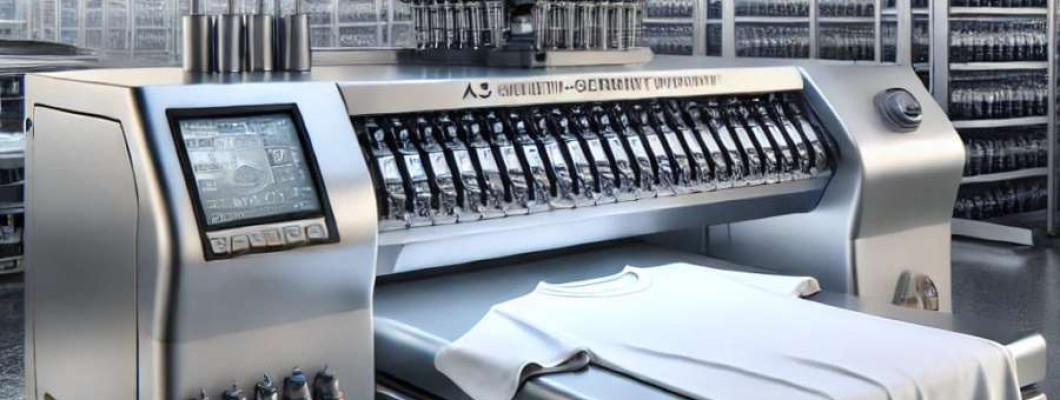
The Industrial Reality
Within the realm of textile printing, the transition from rudimentary, low-volume screen printing setups to industrial-grade direct-to-garment (DTG) machines unveils an array of technical and operational challenges. A3 DTG printing, which targets mid-sized print formats such as T-shirts, is frequently positioned at the intersection between hobbyist-level equipment and fully scaled industrial solutions. The core issue lies in balancing throughput, print quality, and maintenance overhead while adhering to strict color fidelity and garment compatibility standards.
Consider a medium-sized print shop aiming to scale output without incurring the high capital expenditures associated with large-format industrial printers. The challenge is to deploy a machine that can consistently handle daily operational stresses such as prolonged uptime, printhead wear, and ink management without frequent downtime interruptions. Inadequate hardware robustness or failure to manage these parameters efficiently leads to bottlenecks in production capacity and elevated cost per print. Environmental conditions such as ambient temperature, humidity, and particulate contamination exacerbate these effects, impairing nozzle performance and ink adhesion.
Furthermore, the subtle differences in DTG printer build quality delineate machines that remain reliable under stringent commercial use from those suitable only for experimental or low-volume tasks. The degree of automation, precision in ink droplet placement, and firmware sophistication directly relate to print resolution and substrate versatility. In an environment where customers demand rapid turnaround times and consistent print repeatability, the inability to bridge the gap between entry-level and industrial-level equipment manifests in lost revenue and damaged business reputation.
Technical Deep-Dive
Printhead Architecture and Failure Modes
A3 DTG printers rely on piezoelectric or thermal inkjet printheads with nozzle sizes typically around 20-30 microns. Nozzle clogging is a principal failure mode caused by ink sedimentation and particulate intrusion, with operational uptime inversely proportional to the frequency of maintenance cycles. Piezoelectric printheads generally offer higher durability and droplet size precision compared to thermal heads; however, they demand precise voltage control and are sensitive to ink viscosity variations.
Ink Chemistry and Refurbishment Metrics
DTG inks are predominantly aqueous pigment-based formulations engineered for fiber penetration and fast curing. The balance between pigment particle size (typically 50-200nm), binder chemistry, and carrier fluid volatility impacts print adhesion and color vibrancy. The lifecycle for ink cartridges is heavily influenced by printer purge cycles designed to maintain nozzle integrity, often expending 3-5 ml of ink per maintenance operation, escalating operational costs.
Firmware Control and Print Resolution
Advanced firmware algorithms control droplet ejection timing and printhead movement with microsecond precision. A3 DTG printers typically achieve resolutions in the range of 720 x 1440 dpi. The firmware’s ability to modulate grayscale droplet sizes (down to sub-5pl volumes) enhances color depth but increases print time. Comparative data show that machines with adaptive droplet size modulation reduce ink consumption by 8-12% while improving print sharpness.
Thermal Management and Environmental Conditioning
Ink viscosity and drying profiles are temperature sensitive. Optimal operation occurs within a chamber temperature range of 20-25°C and relative humidity levels between 40-60%. Thermal variation beyond these parameters leads to inconsistent ink droplet formation and drying, causing color shifts and fabric puckering. Industrial solutions integrate active thermal management with filtered airflow to stabilize these parameters.
Throughput Versus Print Quality Trade-offs
Operational data indicate that increasing print speed by 25% results in an approximate 15% degradation in edge sharpness and a 10% loss in color gradient smoothness due to droplet placement inaccuracies. A3 DTG printers designed for industrial use incorporate multi-pass printing strategies that utilize overlapping droplet deposition to maintain color depth at higher throughput, albeit with incremental increases in machine cycle time.
| Technical Parameter | Entry-Level DTG Printer | Industrial-Grade A3 DTG Printer |
|---|---|---|
| Print Resolution (dpi) | 600 x 900 | 720 x 1440 |
| Printhead Type | Thermal Inkjet | Piezoelectric with Voltage Control |
| Ink Cartridge Maintenance Ink Waste | 5-7 ml per cycle | 3-5 ml per cycle |
| Operational Uptime (Hours before maintenance) | 30 | 100+ |
| Thermal Conditioning | Passive | Active temperature and humidity control |
| Substrate Compatibility | Preferred cotton only | Multi-fiber including polyester blends |
Scenario Analysis
Scenario One: Rapid Turnaround Print Shop
A business requiring daily print runs of 150-200 T-shirts needs a machine with minimal downtime and high color consistency. The industrial-grade A3 DTG printer's active thermal conditioning and firmware-based droplet modulation ensure color repeatability across batches, reducing rejects by approximately 12%. Its extended uptime reduces maintenance interruptions, enabling throughput increases of 30% over entry-level models.
Scenario Two: Custom Apparel Production for Diverse Fabrics
Versatility in substrate compatibility is paramount for an artisan business producing cotton and polyester blend garments. The piezoelectric printhead and pigment ink chemistry of the industrial-grade A3 DTG printer accommodate varied fiber types without compromising adhesion or color vibrancy, outperforming less adaptable competitors by a margin of 15-20% in substrate handling.
Scenario Three: Mid-Scale Apparel Brand Expanding Production Capacity
For a growing brand transitioning from manual screen printing, deploying the industrial-grade A3 DTG printer offers predictable scalability with integrated firmware controls that optimize print quality under increasing workloads. The reduced frequency of nozzle blockages lowers maintenance labor by 40%, enabling staff to focus on post-production finishing rather than troubleshooting.
Expert FAQ
How does piezoelectric printhead voltage control influence print quality under industrial loads?
Precise voltage modulation adjusts the piezoelectric actuator's displacement, controlling droplet volume and ejection velocity. This fine-tuning reduces satellite droplets, enhancing edge definition and print uniformity even during high-throughput cycles.
What are the typical wear mechanisms for A3 DTG printheads in commercial environments?
Mechanical fatigue of piezo elements, nozzle erosion from pigment particles, and seal degradation due to ink chemistry are predominant. Regularly programmed maintenance cycles and ink filtration significantly extend operational life.
Can firmware optimization reduce ink consumption without sacrificing print fidelity?
Yes. Adaptive grayscale droplet sizing and dynamic print path algorithms minimize ink overspray and layer thickness inconsistencies, cutting ink usage by up to 12% while preserving resolution.
How critical is thermal and humidity control for consistent DTG output?
Extremely critical. Fluctuations cause ink viscosity shifts that alter droplet size and drying rate, leading to inconsistent color density and fabric deformation, impacting repeatability.
What maintenance strategies maximize uptime in industrial-grade A3 DTG printers?
Combination of scheduled printhead purging, nozzle inspections, environmental conditioning, and replacement of consumables based on operational hours rather than reactive failure yield optimal uptime and throughput.
Strategic Verdict and Recommendation
Assessment of the A3 DTG Printer T-shirt Printing Machine reveals its design as a robust midpoint bridging DIY and full industrial textile printing. Its piezoelectric printhead architecture, advanced firmware control, and environmental management collectively address the bottlenecks common in mid-tier DTG printing environments. This positions it as a viable industrial-grade solution capable of scaling operations with consistent quality and manageable maintenance overhead.
For businesses committed to elevating throughput and substrate versatility while maintaining predictable operational costs, investing in the A3 DTG Printer T-shirt Printing Machine delivers measurable gains in uptime, print quality, and workflow stability. Its combination of print resolution, ink efficiency, and environmental controls clearly surpass typical entry-level alternatives, validating its role as a cornerstone asset in professional garment printing operations.