
The Gap Between DIY and Industrial-Grade Precision in A2+ UV Embossed Glossy Printing
The Industrial Reality of A2+ UV Embossed Glossy Printing in Production Environments
Transitioning from artisanal or semi-industrial UV printing setups to fully industrial-scale operations with A2+ size UV printers capable of embossed glossy finishes reveals distinct operational and technical challenges. Industrial-grade embossing on glossy surfaces demands rigorous consistency and precision over extended runs, with tolerances often measured in microns. The technical complexity is compounded by the need for uniform UV curing to maintain both the embossed texture and the glossy sheen without introducing defects such as uneven gloss, substrate distortion, or micro-bubble formation within the printed layers.
In high-volume environments, operators contend with variations in substrate planarity and thermal expansion that can alter embossing registration, causing printhead positional errors that visibly degrade output quality. Unlike entry-level or DIY printers, industrial-grade models deploy closed-loop sensors and adaptive calibration algorithms to maintain embossing alignment and gloss uniformity. Furthermore, the operational throughput of A2+ format printers—which print on substrates approx. 420 mm by 594 mm—necessitates optimization of drying cycles, UV lamp intensity, and ink chemistry to prevent bottlenecks while preserving intricate embossed patterns.
Maintenance regimes in industrial settings are critical; printhead degradation, especially in UV-curable inkjet nozzles, leads to incomplete or inconsistent embossing details, which directly impact downstream finishing processes and customer satisfaction. Additionally, the glossy embossed finish requires precise environmental controls to prevent contamination or curing anomalies. From an infrastructure perspective, integrating these printers into production lines requires thermal management systems capable of dissipating up to several hundred watts of heat generated per print cycle, maintaining stable operating temperatures to ensure reproducible print quality.
Technical Deep Dive into Hardware and Process Variables Affecting Print Quality
Printhead Mechanics and UV Ink Interaction
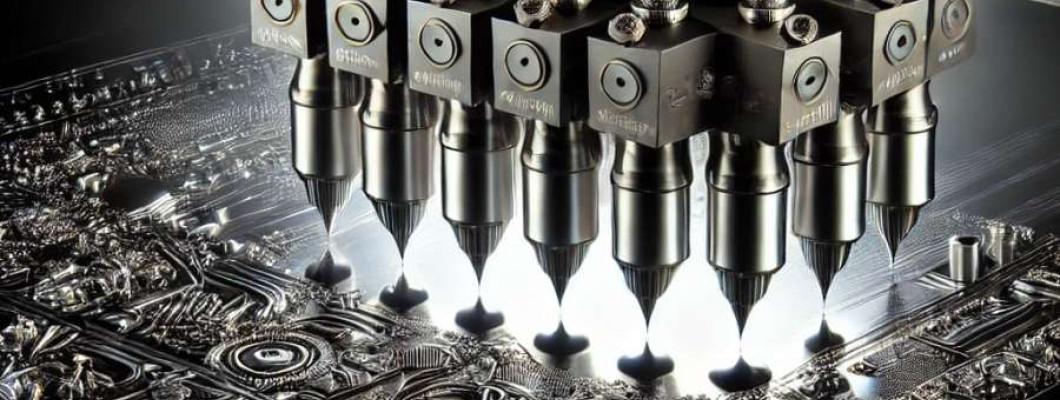
Modern industrial A2+ UV printers utilize piezoelectric printheads with droplet volumes as low as 6 picoliters (pl) enabling micron-level precision. The interaction between ink viscosity, surface tension, and cure kinetics under UV irradiation governs the embossed effect quality. For example, embossed patterns typically require a controlled layering of polymerized ink cured by UV LEDs emitting at approximately 395 nm wavelength, with lamp intensities reaching up to 500 mW/cm2. The curing depth must be balanced to avoid substrate warpage.
Embossing Registration and Alignment Systems
High-precision industrial models employ optical sensors and servo motor-driven transport systems with sub-0.1 mm positional accuracy. Closed-loop feedback enables compensation for substrate thickness variability typically ranging from 0.2 mm to 1.0 mm. Mathematical models for alignment correction incorporate sensor data to adjust head positioning dynamically across X, Y, and Z axes to preserve embossing fidelity.
Comparative Data on Ink Chemistry and Gloss Retention
Two main UV ink classes are prevalent: acrylate-based and epoxy-based formulations. Acrylate inks cure rapidly and facilitate higher gloss retention (>90% gloss measured at 60 degrees per ASTM D523 standards), whereas epoxy inks provide enhanced embossing durability but with slightly lower gloss (approx. 75-85%). Both require specific post-curing thermal profiles to enhance crosslinking density, impacting the tactile and visual embossed effect longevity.
Thermal Management Constraints
Embedded cooling systems typically involve forced air with heat exchangers or liquid coolant circuits to maintain printhead and substrate temperatures within 25-30 °C during prolonged production runs. Exceeding these limits risks ink viscosity fluctuations impacting droplet formation, causing print defects such as banding or misregistration.
Performance Benchmarks Relative to DIY UV Printers
| Parameter | Industrial A2+ UV Printer | Typical DIY UV Printer |
|---|---|---|
| Print Resolution (dpi) | 1200 – 1440 dpi | 300 – 600 dpi |
| Embossing Registration Accuracy | ±0.05 mm | ±0.5 mm |
| Gloss Uniformity (% gloss) | 85 – 95% | 60 – 75% |
| Maximum Substrate Thickness | Up to 1.5 mm | Up to 0.5 mm |
| UV Lamp Intensity | Up to 500 mW/cm2 | Up to 200 mW/cm2 |
| Operating Temperature Range | 20 – 30 °C (controlled) | Ambient |
Scenario Analysis Examining Three Varied Business Models
Small-Scale High-Detail Craft Studio
A boutique studio specializing in limited-edition embossed stationery benefits from the A2+ UV printer's micron-level detail and substrate versatility. The precision embossing yields consistent tactile patterns, elevating product quality beyond manual embossing. However, the studio must allocate budget for scheduled maintenance and controlled environmental conditions to maintain performance, representing a critical operational investment.
Mid-Size Printing Shop with Mixed Workloads
This model balances volume with quality and faces challenges integrating the printer into batch workflows. The variable substrate types require frequent recalibration managed by automated adaptive controls. The printer's rapid UV curing and embossing speed reduce cycle time, increasing throughput by up to 40% compared to previous digital presses lacking embossed finishing.
Large Industrial Manufacturer of Promotional Materials
At scale, thermal management and ink chemistry drive operational efficiency. Continuous monitoring systems prevent downtime, while the printer's ability to handle 1.5 mm substrates enables complex multi-layer applications. The high gloss and embossed finishes add perceived value to high-ticket promotional items, justifying CAPEX and OPEX expenditures.
Expert FAQ Answering Advanced Technical Queries
1. How does printhead nozzle wear specifically affect embossed gloss uniformity?
Wear causes inconsistent droplet size and misfires, leading to uneven layering in embossed regions. This results in texture irregularities and visible gloss variations due to uneven UV polymerization.
2. What are the physics behind substrate warpage during UV curing?
UV-induced polymerization generates exothermic reactions causing localized thermal expansion. Discrepant expansion rates between substrate and cured ink layers introduce mechanical stresses, leading to warpage if thermal dissipation is insufficient.
3. How can adaptive calibration algorithms improve long-term print consistency?
They dynamically adjust printhead positioning and ink flow parameters based on real-time sensor input and historical performance data, compensating for mechanical drift and environmental changes.
4. Why is heat dissipation critical beyond printhead longevity?
Excess heat alters ink viscosity and curing kinetics, disrupting droplet formation and crosslink uniformity, degrading both embossed texture and gloss retention.
5. What metrics should be tracked to anticipate preventive maintenance?
Key metrics include nozzle health (firing frequency and blockages), UV lamp intensity decay, substrate feed accuracy, and environmental parameters like humidity and temperature fluctuations.
Strategic Verdict and Recommendation for Industrial-Grade Applications
The A2+ Size UV Printer Embossed Glossy Printing platform represents a definitive leap in bridging the gap between artisanal quality and fully industrial performance. Its advanced hardware controls produce micron-level embossing consistency with superior gloss uniformity impossible to achieve using lower-tier or DIY solutions. The integration of adaptive calibration and tightly managed thermal systems ensures reliable throughput and reduced downtime, critical for industrial scalability.
In light of the comparative technical data, operational scenarios, and maintenance realities explored, this printer stands out as a viable solution for businesses prioritizing quality and precision without compromise. For enterprises seeking robust, repeatable embossed glossy finishes on varied substrates, the A2+ Size UV Printer Embossed Glossy Printing should be considered a primary asset within their production ecosystem, ensuring both elevated product standards and predictable asset longevity.