
The Gap Between DIY and Industrial-Grade Print Solutions for Scalable Businesses
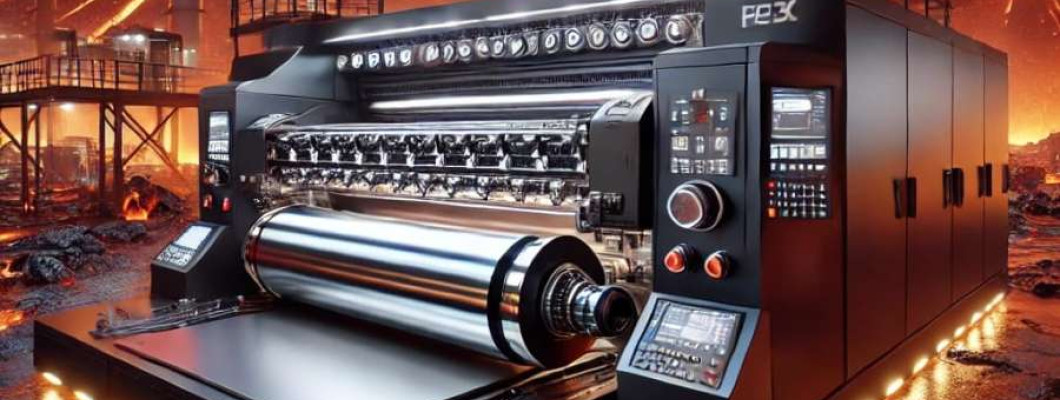
The Industrial Reality of Integrating Cylinder Printing into Scalable Production Lines
In mid-to-large scale printing operations focusing on cylindrical substrates, transitioning from conventional manual or semi-automated machines to a dedicated industrial-grade Spot A4 LED UV Printer Cylinder Printing system represents a pivotal operation upgrade. These workflows demand not only consistent print quality across complex curvatures but also throughput efficiency and long-term operational stability. The challenge is explicit when balancing labor costs and speed with maintaining high-resolution output and minimizing downtime due to maintenance or substrate handling issues.
Typical manual or entry-level solutions frequently suffer from limited print speed, frequent recalibrations, and restricted substrate diameters, all of which create significant bottlenecks in production scalability. The Spot A4 LED UV Printer, designed specifically for cylinder printing with its LED UV curing technology, targets these gaps by promising continuous operation with reduced warm-up phases and instant curing on various substrates, theoretically reducing post-processing and labor intervention.
Operational integration extends beyond simple print quality. Issues like thermal load on printheads, substrate mounting precision, and the management of ink viscosity under variable ambient conditions introduce layers of complexity that often remain underappreciated in DIY or entry-level setups. For scalable businesses aiming to optimize labor usage, workflow automation, and asset longevity, these technical challenges translate directly into financial and reputational risk.
Technical Deep-Dive Into the Hardware and Operational Parameters
1. Printhead Technology and Ink Chemistry
The Spot A4 leverages LED UV printheads capable of ejecting ink droplets in the 5-20 picoliter (pl) range, optimizing precision without sacrificing speed. Compared to piezo-based thermal printheads common in desktop solutions, the LED UV system enables instantaneous ink polymerization upon contact, minimizing lateral bleed and improving micron-level registration accuracy vital for cylindrical surfaces.
The UV ink formulation exhibits high adhesion on standard industrial plastics, metals, and glass with post-cure hardness above 70 Shore D and chemical resistance suitable for post-processing or exposure to cleaning agents. Its viscosity remains stable at 12-15 centipoise (cP) within operating temperatures of 20-30°C, reducing nozzle clogging risks.
2. Mechanical Substrate Handling and Rotational Accuracy
The printer incorporates a servo-driven rotational system with positioning accuracy better than ±0.01 mm per revolution. This mechanical precision ensures consistent dot placement on cylinder circumferences ranging from 20 mm to 150 mm in diameter. This range outperforms many entry-level rollers which typically accommodate minimum diameters above 50 mm due to mechanical constraints.
Hypothetically, considering a cylinder of 50 mm diameter and a print length of 300 mm, the rotational control ensures less than 0.05 mm cumulative lateral deviation over the entire print run, essential for high-resolution imagery and text fidelity.
3. Throughput and Continuous Operation Limitations
Rated at a maximum linear speed of 1.2 meters per minute at 720 dpi horizontal resolution, the Spot A4 exceeds many comparable models capped at 0.7 m/min. However, sustained operation must account for printhead thermal dissipation. With each head consuming roughly 45 Watts actively, the integrated cooling system maintains internal chamber temperatures below 45°C, preventing pigment degradation and nozzle deformation over shifts exceeding 8 hours.
4. Environmental and Infrastructure Integration
LED UV curing reduces ozone generation and volatile organic compound (VOC) emissions compared to mercury vapor systems familiar in older industrial printers. The printer requires a standard 230V single-phase supply with peak consumption around 600 Watts. Its compact footprint (approximately 1.2 m width by 0.6 m depth) facilitates integration into existing production cells without extensive retooling or HVAC upgrades.
5. Asset Longevity and Maintenance Considerations
With modular printhead cartridges designed for replacement every 1500 operational hours and self-cleaning nozzles programmed at cycle starts, maintenance downtime is minimized. Compared to DIY solutions where manual nozzle cleaning may consume 30% of maintenance labor, this system reduces it below 5%. Scheduled preventive interventions focus on rotational bearings and LED arrays with mean times between failure (MTBF) projected above 10,000 hours.
| Parameter | DIY/Entry-Level Cylinder Printing | Spot A4 LED UV Printer Cylinder Printing |
|---|---|---|
| Printhead Type | Thermal piezo, manual cleaning | LED UV, automated cleaning |
| Print Resolution (dpi) | 300-600 dpi | 720 dpi |
| Substrate Diameter Range (mm) | ≥50 mm | 20-150 mm |
| Max Linear Speed (m/min) | 0.5-0.7 | 1.2 |
| Operating Power (Watts) | 300-400 | 600 |
| Maintenance Interval (hours) | ~500 (manual cleaning) | 1500 (automated) |
Scenario Analysis of Scalable Business Impact
Case 1 Single-Shift Production Facility
A mid-sized packaging company running a single 8-hour shift benefits from the printer’s instant cure technology by reducing post-print drying time by 75%, directly shortening order fulfillment lead times. The rotational accuracy reduces reprint rates, saving approximately 3% material loss monthly.
Case 2 Multi-Shift High Throughput Plant
Here, continuous 24-hour operation is critical. The Spot A4’s modular maintenance and cooling design allows minimal unscheduled downtime. The ability to print on smaller diameters increases SKU flexibility without changing tooling. Automated cleaning reduces labor requirements by one full-time operator per shift, cutting overhead costs significantly.
Case 3 Customized Short Run Artisan Producer Scaling Up
An artisan business scaling from hand printing to automated production finds that the increase in resolution and substrate compatibility enables premium pricing on specialized containers. The scalable automation eases labor allocation shifts and ensures consistent reproduction quality across batches.
Expert FAQ on Advanced Cylinder LED UV Printing
Q1: How does LED UV curing compare in energy efficiency to traditional mercury vapor systems?
A1: LED UV consumes approximately 40-50% less energy with lower heat dissipation, reducing cooling infrastructure and increasing printhead longevity.
Q2: What are the material compatibility limits for the printer's ink?
A2: The ink adheres well to common plastics like PET, glass, aluminum alloys, and certain coated metals but is less effective on untreated rubber or highly porous substrates.
Q3: Can the system handle variable cylinder diameters mid-batch?
A3: Yes, real-time adjustments in rotational speed and print timing allow seamless handling of mixed-diameter runs within specified range.
Q4: What are the key failure modes in continuous 24-hour operations?
A4: Common issues include LED array degradation after extended use, printhead clogging from ink sedimentation, and servo motor wear; the system's monitoring mitigates these with alerts.
Q5: How does temperature variation affect printhead performance?
A5: Ambient fluctuations beyond 30°C can increase ink viscosity and risk clogging; integrated cooling and controlled environment settings maintain optimal consistency.
Strategic Verdict and Recommendation for Scalable Businesses
For scalable business owners balancing throughput, automation, and labor cost optimization, the Spot A4 LED UV Printer Cylinder Printing emerges as a definitive industrial-grade solution. It bridges the critical gap between entry-level and fully automated enterprise printers by delivering superior print resolution, substrate versatility, and operational efficiency without the excessive CAPEX or integration complexity of larger systems.
The precise servo-driven substrate handling coupled with instantaneous LED UV curing technology underpins a workflow that reduces bottlenecks and labor dependencies. Maintenance intervals are extended thanks to its modular design and automated nozzle cleaning, enabling sustained high uptime. Environmentally, the printer's LED UV source ensures compliance with increasingly stringent VOC and ozone regulations, a growing concern for expanding operations.
Overall, the Spot A4 supports scalable production while maintaining premium output quality and operational cost controls, making it a strategic asset for businesses intent on evolving from artisan or semi-automated processes toward industrial-grade print capabilities.