
The Gap Between DIY and Industrial-Grade Printing Explored with the Rose Flower Printer for Scalable Business Owners
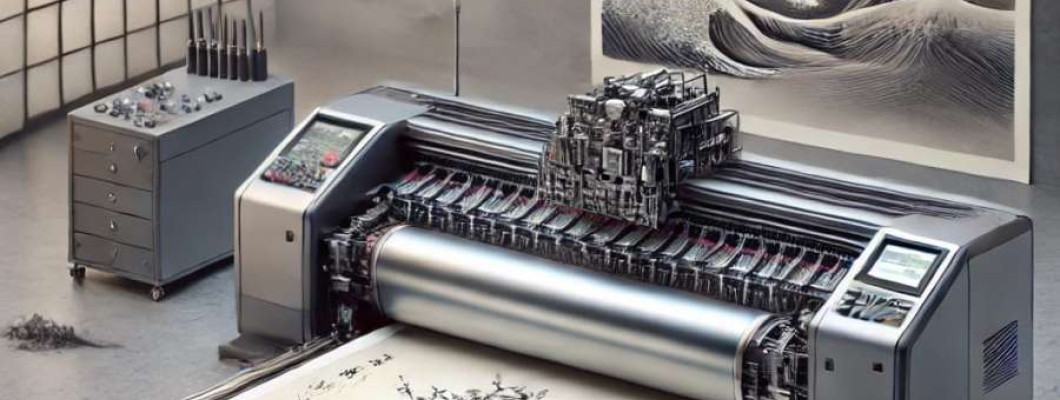
The Industrial Reality of Bridging Artistic Passion and Industrial Throughput
In print production environments where throughput and automation metrics are paramount, the transition from hobbyist or small-scale printing solutions to robust industrial-grade machinery represents a multifaceted challenge. The Rose Flower Printer emerges as a critical case study in this domain, addressing the often-neglected operational bottlenecks that surface at scale. Imagine a mid-sized floral packaging business aiming to customize packaging sleeves with vibrant and precise rose patterns at a rate exceeding 500 units per hour. The operational dynamics go beyond color fidelity; they demand uptime consistency, automated feed mechanisms, and integration with existing conveyor systems to avoid labor cost escalation.
Traditional DIY or semi-professional printers frequently fall short due to low print speed (dpi per minute), limited substrate handling capabilities, and fragile maintenance regimes unsuited for continuous operation. These gaps create a hidden cost layer—unplanned downtime, frequent component replacements, and quality variance—all eroding the ROI despite the superficial appeal of low upfront cost. The Rose Flower Printer, designed with scalable business throughput in mind, brings clarity to this operational complexity by embedding industrial protocols like automated printhead calibration, robust ink recirculation systems, and inline quality monitoring sensors.
In such a setting, human factor engineering also becomes critical. Operators require minimal training downtime to align with fast-paced shifts, and maintenance personnel benefit from modular design to expedite service cycles. The Rose Flower Printer balances these demands effectively, positioning itself distinctly from the DIY sector by marrying robust hardware endurance with industrial-grade automation control.
Technical Deep-Dive Into Hardware Capabilities Versus Practical Operational Limits
Printhead Architecture and Precision
At the heart of any printing solution lies the printhead technology. The Rose Flower Printer utilizes piezoelectric drop-on-demand printhead arrays, each capable of delivering 2 picoliters (pl) droplet size with a positioning accuracy of ±5 microns over a 300 mm wide print area. This allows for high pixel density outputs at 1200 dpi horizontal resolution and up to 600 dpi vertical scanning resolution. Hypothetically, this setup supports a maximum theoretical print speed of 1.2 m/min on flat substrates without compromising color depth, provided ink rheology remains stable.
Ink Delivery and Chemistry
Ink chemistry for this printer is optimized for rapid drying and UV-curing compatibility, reducing smudging and enhancing substrate adhesion on diverse materials such as coated papers, foils, and PET films. The ink's viscosity is maintained between 8 and 12 centipoise at 25 °C, supported by an integrated thermal management system stabilizing temperature to ±0.5 °C. Recirculation pumps operate on a 12 L/min cycle ensuring homogeneous pigment suspension, critical for consistent color saturation, especially in red and pink tones characteristic of rose imagery.
Automation and Integration Features
The printer includes PLC-based (Programmable Logic Controller) automation with a modular conveyor interface, enabling synchronization with upstream and downstream packaging systems. The control logic supports real-time error detection via optical sensors, activating emergency stop protocols within 150 ms of fault identification to prevent costly misprints or hardware damage.
Thermal and Power Management
Operating at a nominal 220 V input, the Rose Flower Printer consumes 1.5 kW peak power during high throughput runs. Its embedded cooling fans and liquid-cooled plate keep average operating temperature within 40-45 °C, preventing thermal drift that could degrade nozzle alignment. Rack density considerations place this unit at approximately 5 rack units (RU) height in a specialized industrial print room, making it compatible with multi-machine array setups.
Comparative Table of Printer Specifications
| Specification | Rose Flower Printer | Typical High-End DIY Printer |
|---|---|---|
| Max Print Speed (m/min) | 1.2 | 0.2 |
| Droplet Size (picoliters) | 2 | 5-10 |
| Positional Accuracy (microns) | ±5 | ±20 |
| Substrate Compatibility | Coated paper, foil, PET | Limited to plain paper |
| Power Consumption (kW) | 1.5 | 0.3 |
| Maintenance Cycle (hours) | 500 | 100 |
Scenario Analysis of Business Use-Cases Impacted by Key Specifications
1. Floral Retail Chain Packaging Customization
In retail chains with high SKU variability, the capability to print sharp, consistent rose imagery directly on packaging sleeves enhances brand distinction. The Rose Flower Printer’s high throughput and substrate versatility allow seamless switching between paper-based boxes and laminated foils without mechanical adjustments, supporting batch sizes as small as 50 units without excessive downtime.
2. Event Decor Production Line
For event decorators producing large volumes of customized floral wraps and banners, the printer’s ±5 micron accuracy ensures micron-level detail retention, critical for upscale clients. The robust automation interface minimizes labor intervention, allowing operators to oversee multiple machines concurrently, reducing labor cost per print.
3. Subscription-Based Floral Gift Packaging
Subscription services that mail personalized floral arrangements benefit from the Rose Flower Printer’s modular integration capabilities. Synchronizing print cycles with robotic packagers achieves >98% daily uptime, slashing bottlenecks common in smaller-scale or DIY setups with frequent jams or misalignment.
Expert FAQ Addressing Advanced Technical Questions
Q1 What are the implications of the ±5 micron printhead accuracy for complex color gradients?
This accuracy ensures pixel-level registration stability, reducing color bleeding and enhancing the fidelity of gradual hue transitions, which is critical for realistic rose petal shading.
Q2 How does the ink recirculation speed influence pigment stability in long production runs?
The 12 L/min recirculation prevents pigment sedimentation, thus maintaining chromatic uniformity over extended periods and reducing printhead clogging risks.
Q3 Can the Rose Flower Printer handle roll-to-roll substrates for continuous printing?
While primarily designed for flat substrates, modular attachment options exist for roll-to-roll integration but may require additional tension control accessories.
Q4 How is thermal drift managed to ensure consistent print quality?
Active temperature regulation within ±0.5 °C and liquid-cooled plates stabilize nozzle geometry, preventing alignment shifts during extended operation.
Q5 What maintenance protocols optimize the 500-hour maintenance cycle?
Scheduled nozzle cleaning, ink system flushing, and printhead alignment recalibration performed every 100 operational hours sustain optimal output without significant downtime.
Strategic Verdict and Recommendation
The Rose Flower Printer delivers a pragmatic yet technologically advanced solution bridging the considerable divide between artisanal DIY printing setups and the demands of industrial-scale operations. Its precision printhead architecture, comprehensive automation features, and resilient thermal and ink management systems establish it as an ideal choice for scalable business owners focused on throughput and labor efficiency.
Compared to conventional high-end DIY printers, it offers at least a sixfold increase in operational speed, superior positional accuracy, and substrate versatility—features essential to maintaining competitive margins in high-volume, customized packaging sectors. Given these capabilities and its design to facilitate seamless integration within larger production ecosystems, the Rose Flower Printer stands out as a definitive industrial-grade asset.
For businesses seeking to elevate their print operations without compromising uptime or precision, the Rose Flower Printer represents a forward-looking investment, poised to meet evolving production demands well into the latter half of this decade.