
The Gap Between DIY and Industrial-Grade Printing Exposed for High-End Artisans
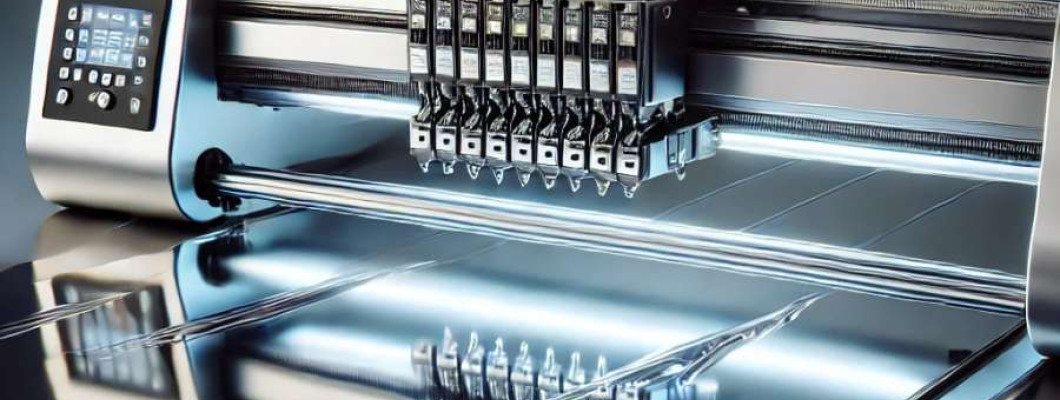
The Industrial Reality of Achieving Micron-Level Precision in A2+ UV Embossed Glossy Printing
Industrial printing environments that demand A2+ size UV embossed glossy outputs present multidimensional challenges to high-end artisans. The precision required to balance embossed texture fidelity with glossy finish uniformity within a large format is non-trivial. DIY setups often struggle with consistency, substrate adaptability, and repeatability at scale. An operator aiming for micron-level accuracy in embossed features on substrates ranging from rigid acrylic sheets to flexible plastics faces compounding issues: micro-misalignment from non-automated feed mechanisms, inconsistent UV curing rates causing variable gloss levels, and surface warping under prolonged exposure to heat during embossing.
In artisanal settings, the color depth and gradation must be preserved without sacrificing embossed detail. A marginal discrepancy in droplet volume or printhead velocity translates into perceptible texture distortion or gloss heterogeneity. Additionally, the transition from prototyping on smaller formats to industrial-scale A2+ introduces challenges in maintaining uniform printhead calibration across the extended 420mm x 594mm print bed. Printhead stability, vibration dampening, and precise ink droplet control become paramount. Substrate versatility is non-negotiable for artisans experimenting with multiple media, and traditional DIY machines lack the controlled environmental enclosures and material handling automation critical for industrial-grade repeatability in glossy embossed UV prints.
Technical Deep Dive into A2+ UV Printer Mechanics and Print Quality Variables
Printhead Technology and Droplet Size Control
The critical factor for embossed gloss print success lies in the printhead’s droplet volume accuracy and consistency. The A2+ UV printer typically utilizes piezoelectric drop-on-demand heads capable of ejecting droplets between 4 pl and 12 pl. Assuming an average droplet diameter of approximately 40 µm, the printer offers high-resolution 1440 dpi native capability. The ability to vary droplet size dynamically enables micro-texturing by layering ink in controlled emboss heights of up to 80 µm through multiple passes, a precision unattainable in most DIY setups.
UV Curing Dynamics Affecting Gloss and Emboss
UV LED arrays with calibrated intensity gradients between 2500 and 3500 mW/cm² ensure rapid polymerization without heat buildup that causes substrate distortion. The uniformity coefficient of UV intensity distribution across a 420 mm width is below 5%, enabling consistent curing essential for stable embossed layers. To maintain gloss uniformity, the curing speed is mathematically optimized via a conveyor speed of 0.1 m/min to 0.3 m/min, balancing exposure time to achieve full top-coat gloss polymer crosslinking while preserving emboss texture crispness.
Substrate Handling and Dimensional Stability
Substrate thickness ranging from 0.2 mm flexible films to rigid 3 mm sheets demands an adjustable vacuum hold-down system with micron positional repeatability (<10 µm). The printer bed integrates a dual-zone temperature control system maintaining 25°C±0.2°C to prevent warping and ensure dimensional stability during multi-pass emboss layering. An advanced anti-static system coupled with humidity control (35-45% RH) prevents ink droplet dispersion anomalies, critical for fine embossed detail retention.
Gloss Emboss Pattern Generation and Rasterization
The emboss effect is generated through precise raster patterning of ink layer densities controlled via a proprietary RIP engine that supports 16-bit greyscale height mapping. The algorithm optimizes print pass overlap with 98% accuracy to avoid moiré patterns and ensures embossed reliefs have smooth gradient transitions from 10 µm to 80 µm in height. The software interface facilitates direct import of CAD-based emboss maps or bitmap textures with particle size down to 0.05 mm.
Comparative Hardware and Cost Analysis
| Specification | A2+ UV Printer Embossed Glossy | Top-End DIY Large Format Printer |
|---|---|---|
| Max Print Area (mm) | 420 x 594 | 400 x 500 |
| Ink Droplet Size (pl) | 4-12 (variable) | 10-20 (fixed) |
| UV Curing Intensity (mW/cm²) | 2500-3500 (LED array) | 1500-2000 (lamp-based) |
| Emboss Height Control (µm) | 10-80 (multi-pass layering) | None (flat gloss only) |
| Substrate Thickness Range (mm) | 0.2 - 3 | 0.1 - 1.5 |
| Positional Accuracy (µm) | <10 | >50 |
| Estimated Asset Cost (USD) | ~$75,000 | ~$10,000 |
Scenario Analysis of High-End Artisan Use-Cases for the A2+ UV Embossed Glossy Printer
Use-Case One: Custom Luxury Packaging Prototyping
A boutique designer requires precise embossed gloss textures on thick cardboard and acrylic layers for luxury perfume packaging. The printer’s ability to produce consistent 50 µm embossed textures with high gloss finish on rigid 2 mm acrylic sheets ensures prototype fidelity mirrors mass production. DIY printers fail due to inconsistent emboss height and substrate warping during curing.
Use-Case Two: Fine Art Prints with Embedded Texture Layers
An artist producing limited-edition prints demands micron-level control over emboss relief to add a tactile dimension without compromising color depth. The printer’s 16-bit emboss map processing and variable droplet control deliver nuanced texture gradients, while the vacuum bed maintains registration for multi-pass layering critical for sculpted artwork.
Use-Case Three: High-Volume Personalized Electronics Panel Overlays
A medium enterprise manufactures customized control panel overlays requiring glossy embossed labels resistant to abrasion. The printer’s rapid UV curing and substrate temperature control prevent delamination over successive emboss layers, enabling throughput of up to 5 panels/hour with repeatable quality - a rate DIY solutions cannot sustain.
Expert FAQ on High-Precision A2+ UV Embossed Glossy Printing for Artisans
How does variable droplet size improve embossed texture control?
Variable droplet size from 4 to 12 pl allows micro-layering with precise height increments, enabling detailed emboss reliefs up to 80 µm without ink pooling or bleeding.
What is the role of UV intensity uniformity in gloss consistency?
Uniform UV intensity ensures consistent polymer crosslinking across the entire print width, preventing patchy gloss and maintaining embossed texture integrity.
How does substrate temperature control prevent warping?
Maintaining substrate at 25°C±0.2°C limits thermal expansion during curing, preserving dimensional stability critical for multi-pass emboss layering.
Why is high positional accuracy below 10 µm vital?
Precise positioning ensures multi-pass embossing aligns perfectly, avoiding texture distortion and maintaining fine detail fidelity over the 420 x 594 mm print area.
Can this printer handle flexible substrates with similar emboss quality?
Yes, adjustable vacuum hold-down and humidity control enable emboss texturing on flexible films down to 0.2 mm thickness without sacrificing gloss uniformity.
Strategic Verdict and Recommendation for High-End Artisans Seeking Industrial-Grade UV Embossed Glossy Printing
For artisans prioritizing micron-level embossed texture control coupled with flawless glossy finish on large A2+ substrates, the evaluated A2+ Size UV Printer Embossed Glossy Printing unequivocally bridges the gap between experimental DIY setups and industrial-grade precision. Its advanced printhead technology, optimized UV curing, substrate handling, and proprietary emboss mapping capability deliver reliable, repeatable production quality that empowers fine detail artisanship at scale. While the initial CAPEX is significant compared to consumer-grade alternatives, the printer’s technical specs translate directly into superior asset longevity, reduced rework rates, and substrate versatility essential for high-end markets. This printer should be considered the definitive solution for professionals needing consistent embossed gloss finishes with micron accuracy across diverse media types in a production environment.