
The Gap Between DIY and Industrial-Grade Printing for A2+ Size UV Embossed Glossy Output
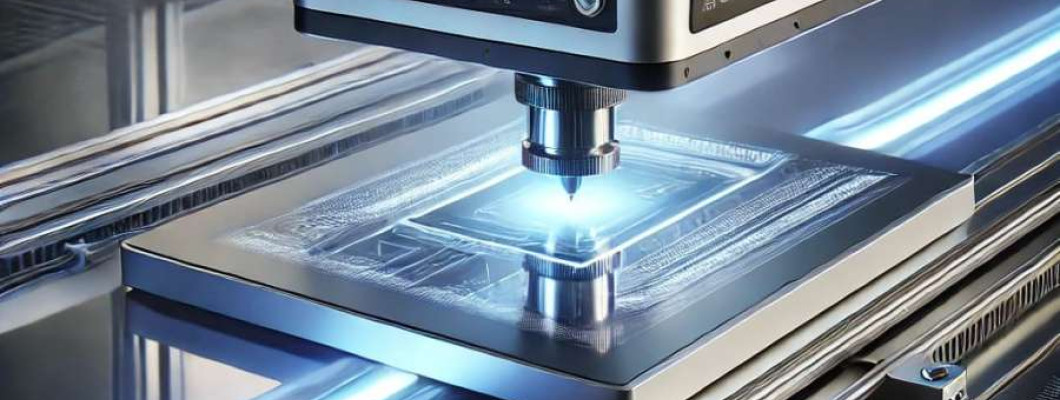
The Industrial Reality of High-Precision UV Embossed Glossy Printing on A2+ Format
Producing embossed glossy prints on A2+ substrates with UV technology presents a multi-faceted challenge that spans hardware precision, ink chemistry, and process control. The transition from hobbyist or small-scale setups to industrial-grade production is not trivial; it requires addressing stringent repeatability, throughput demands, and substrate versatility without sacrificing the tactile depth and gloss uniformity essential in embossed finishes.
In industrial environments, operators face critical challenges such as consistent UV curing intensity over large flatbed areas measuring approximately 420 mm x 594 mm or greater, fine 3D embossing effects integrated without secondary processes, and managing the physical stresses placed on media during high-resolution multi-pass printing. These factors expose operational bottlenecks including printhead alignment drift, ink layering consistency, and potential substrate deformation under UV exposure.
Furthermore, the variability in embossing depth directly correlates to mechanical reliability and sensor feedback loops in real-time. Without comprehensive calibration mechanisms, these printing systems risk producing out-of-tolerance batches that compromise client specifications. The hardware must maintain nanometer-level positional accuracy while delivering droplet volumes in the 3-10 picoliter (pl) range to achieve the required micron-scale precision in gloss layering and embossed texture.
Technical Deep-Dive into A2+ UV Embossed Glossy Printing System Components
Printhead Technology and Ink Deposition Mechanics
The system is expected to utilize piezoelectric drop-on-demand printheads optimized for UV-curable inks. The printhead nozzle diameter typically ranges between 30-50 micrometers, with droplet volumes nominally 3-10 pl to balance coverage and detail resolution. For embossed glossy effects, multi-layer deposition must be controlled with layer thickness precision around 5-10 micrometers per pass. Hypothetically, to achieve a 50-micrometer embossed height while maintaining gloss uniformity, a minimum of 5-10 printing passes with layer curing intervals of under 500 milliseconds are required to avoid ink spreading and substrate warping.
UV Curing System and Thermal Management
The UV curing lamp intensity profile must be spatially homogeneous across the 420 mm x 594 mm print area, with an irradiance of 1000-2000 mW/cm². Lamp types typically include LED or metal halide sources, with LED favored for its energy efficiency and lower thermal output. Maintaining substrate flatness under thermal load is critical, necessitating integrated cooling or heat dissipation architectures to prevent micro-scale distortions that would negatively affect embossed gloss sharpness and printhead-to-substrate gap consistency.
Hardware Structural Stability and Precision Motion Control
Positional accuracy of the print carriage and substrate transport system must sustain less than 10 micrometer deviation under operational stresses, facilitated by high-precision linear encoders and closed-loop servo motors. Vibration dampening and mechanical rigidity of the flatbed frame are essential to avoid printhead misalignment over the A2+ print zone, especially during extended batch runs exceeding multiple hours.
Ink Chemistry and Layer Adhesion Properties
UV-curable inks formulated for embossed finishes must exhibit controlled viscosity and curing kinetics to ensure sharp edge definition and minimal post-cure shrinkage. Adhesion promoters and rheology modifiers maintain layer integrity and provide the tactile embossed effect. The ink's refractive index and hardness also influence glossiness; formulations are fine-tuned to maximize specular reflectance without compromising flexibility.
Operational Software and Real-Time Process Monitoring
Software integration enables dynamic adjustment of droplet size, curing intensity, and carriage speed based on sensor feedback, such as optical profilometry or inline gloss meters. These real-time control loops mitigate operational bottlenecks by correcting deviations within a < 100 millisecond window, crucial for maintaining batch consistency in industrial workflows.
| Specification | DIY/Small Scale Systems | Industrial-Grade A2+ UV Printer |
|---|---|---|
| Print Area (mm) | Up to 300 x 400 | 420 x 594 (A2+ format) |
| Printhead Resolution (dpi) | 600-1200 dpi | 1200-2400 dpi |
| Droplet Volume (pl) | 10-20 pl | 3-10 pl |
| UV Irradiance (mW/cm²) | 500-800 | 1000-2000 |
| Positional Accuracy (micrometers) | 20-50 | <10 |
| Throughput (A2+ per hour) | 2-5 | 10-20 |
Scenario Analysis for A2+ UV Embossed Glossy Printing Impact
Scenario 1: High-Volume Packaging Prototype Production
Companies producing mock-ups for luxury packaging benefit from the printer’s ability to deliver repeatable embossed gloss with micron-level detail. The precise printhead control minimizes waste and accelerates turnaround times compared to analog embossing techniques, improving workflow uptime and asset utilization.
Scenario 2: High-End Artisanal Print Shops
Print shops specializing in bespoke prints for galleries require superior color depth and tactile finishes. The printer’s UV curing stability and multi-layer ink chemistry provide the substrate versatility needed across coated, uncoated, and specialty media without compromising embossed texture fidelity.
Scenario 3: Industrial Advertising Material Production
Large-scale production environments printing point-of-sale displays and signage demand uniform embossed glossy output with minimum downtime. The printer’s integrated real-time monitoring and rapid curing allow sustained throughput at industrial speeds, meeting tight delivery schedules while maintaining print quality.
Expert FAQ on A2+ Size UV Printer Technical Complexities
Q1: How does printhead droplet volume affect embossed print texture?
A1: Smaller droplets (3-10 pl) enable finer layering control and higher gloss uniformity, critical for embossed effects. Larger volumes risk uneven layering and reduced tactile sharpness.
Q2: What are the primary causes of substrate deformation during UV curing?
A2: Thermal gradients from uneven UV irradiance and rapid polymerization shrinkage cause warping. Controlled cooling and uniform lamp intensity mitigate this.
Q3: How is positional accuracy maintained over extended print runs?
A3: Closed-loop servo feedback combined with vibration isolation maintains sub-10 micrometer positional stability, essential for maintaining embossed detail consistency.
Q4: Can embossed glossy effects be achieved on rigid and flexible substrates alike?
A4: Yes, though flexible substrates require calibrated tension systems to prevent distortion, and ink formulations may be adjusted for adhesion and flexibility.
Q5: What software features are essential for industrial-grade embossed printing?
A5: Real-time process monitoring, adaptive droplet size modulation, and integration with inline spectrophotometers and gloss meters enable consistent output quality.
Strategic Verdict and Recommendation for Industrial Adoption
The A2+ Size UV Printer Embossed Glossy Printing solution embodies a pivotal advancement bridging the divide between limited DIY/desktop-scale output and robust industrial-grade production. Its sophisticated integration of piezoelectric printhead precision, high-intensity uniform UV curing, and real-time software feedback addresses core operational bottlenecks inherent in embossed glossy print production.
For businesses requiring scalable throughput combined with micron-level embossed texture fidelity and substrate versatility, this system represents a technically sound and economically viable investment. It mitigates hidden costs related to quality rework and downtime prevalent in lesser systems. The hardware’s adherence to stringent positional and thermal controls establishes it as an industrial asset with longevity and resale value reflective of enterprise-grade equipment.
Consequently, evaluating this printer as a cornerstone technology for high-precision UV embossed printing aligns with modern manufacturing imperatives. Its capabilities substantiate a clear recommendation for entities seeking to upgrade from artisanal or semi-industrial workflows to fully industrial-scale execution.