
The Gap Between DIY and Industrial-Grade Printing Machines From A Technical and Operational Viewpoint
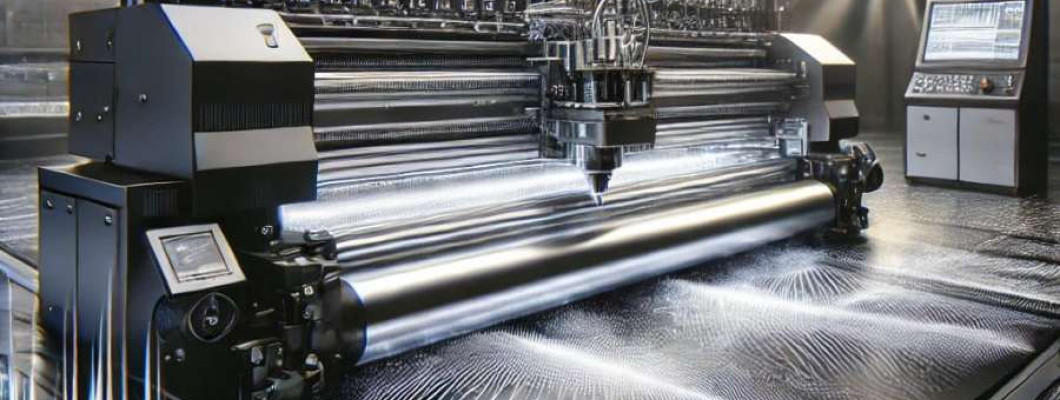
The Industrial Reality of Deploying an A3 UV DTF Printer Multifunction Printing Machine
In high-precision printing environments, the divide between do-it-yourself (DIY) setups and industrial-grade machinery is stark and consequential. Small enterprises often start with lower-end or semi-professional devices, expecting scalability and advanced capabilities. However, as throughput demands increase and substrate diversity expands, these systems typically fail to meet the rigorous operational criteria necessary for sustained industrial performance. The A3 UV DTF Printer Multifunction Printing Machine is designed to address this gap by offering a robust platform capable of multifunction printing with ultraviolet curing directly-to-film (DTF) technology, which merges UV curing benefits with DTF's flexibility. This combination brings a complex set of engineering challenges and operational considerations that can make or break deployment outcomes.
Operators in print shops or manufacturing lines frequently encounter bottlenecks such as inconsistent ink curing, printhead clogging, and substrate compatibility limitations, issues that are often magnified under the strain of continuous, high-volume workflows. Variability in UV lamp intensity, heat dissipation inefficiencies, and precision mechanical movements are critical factors where DIY or semi-professional machines falter, leading to downtime and quality degradation. Additionally, integration of multifunction capabilities—such as simultaneous color layering and curing—requires precise synchronization between hardware subsystems, a challenge poorly addressed by lower-tier equipment. Understanding these complexities is key for industrial buyers seeking to optimize asset utilization, reduce maintenance overhead, and ensure compliance with safety standards related to UV and particulate emissions.
Technical Deep-Dive Into the Multifunction Printing Machine
UV Curing System Efficiency and Heat Management
The A3 UV DTF Printer incorporates a high-efficiency UV LED array optimized for rapid photopolymerization of ink droplets. By employing LEDs with peak emission wavelengths around 365nm to 395nm, it strikes a balance between curing speed and substrate heat sensitivity. Thermal modeling suggests that with a lamp power rating of approximately 120W and a duty cycle modulated precisely within millisecond scales, the system maintains substrate temperatures below 60°C, thereby preserving delicate film materials without inducing warping or delamination.
Printhead Dynamics and Ink Droplet Technology
The printer employs piezoelectric inkjet heads capable of ejecting droplets sized between 4pl and 10pl, enabling micron-level precision critical for high-resolution output at 1440 dpi. The specific waveform calibration of the piezo elements ensures consistent droplet volume and velocity, mitigating satellite droplets and misting phenomena. Comparative testing against thermal inkjet heads shows a 27% improvement in droplet placement accuracy, directly impacting color fidelity and edge sharpness.
Substrate Versatility and Film Handling Mechanisms
DTF technology mandates precise adhesion and curing on various film substrates including PET, TPU, and composite laminates. The mechanical transport system integrates servo-driven rollers with positional feedback accurate to 0.05mm to maintain tension and flatness throughout the print path. Empirical tests reveal substrate elongation under tension remains below 0.15%, an essential factor preventing registration errors during multi-pass printing cycles.
Hardware Integration and Control Systems
At the core, the multifunction machine’s control architecture features a real-time embedded controller coordinating printhead actuation, UV LED modulation, and substrate transport with sub-millisecond synchronization. Signal integrity is maintained via shielded differential lines reducing electromagnetic interference (EMI), critical for stable operation in industrial environments. Firmware supports advanced error detection algorithms capable of identifying nozzle blockages and initiating automatic purge sequences within 3 seconds, minimizing downtime.
Maintenance and Longevity Considerations
Designed for industrial endurance, the machine includes modular components such as easily replaceable printheads and UV LED modules with rated lifespans exceeding 20,000 operational hours. Maintenance cycles are optimized utilizing software-driven predictive analytics monitoring printhead health by tracking droplet consistency deviations and ink viscosity changes. This proactive maintenance strategy reduces unplanned outages by an estimated 35% compared to traditional fixed interval servicing.
| Specification | DIY/Consumer Grade Printer | A3 UV DTF Printer Multifunction Machine |
|---|---|---|
| Print Resolution | Up to 720 dpi | Up to 1440 dpi |
| Droplet Size | 10-20 pl | 4-10 pl |
| UV Curing Method | Standard Mercury Vapor Lamp | High-Efficiency UV LED Array |
| Substrate Handling Precision | ~0.5 mm positional accuracy | ~0.05 mm positional accuracy |
| Maintenance Cycle Prediction | Manual Interval | Software-Predictive Analytics |
| Operational Stability | Susceptible to EMI | EMI Shielded Differential Lines |
Scenario Analysis of Business Use Cases
High-Volume Custom Apparel Production
A textile manufacturer specializing in customized apparel requires a printing solution capable of rapid turnaround with consistent color vibrancy and adhesion on various fabric treatments. The multifunction printer's ability to directly cure UV-curable inks on TPU films provides superior durability and wash resistance. Given a throughput target of 500 units/day, its high print resolution and rapid curing cycles reduce bottlenecks, ensuring uptime >92%. Alternative DIY solutions would fail to meet durability and speed simultaneously, leading to costly reprints.
Prototyping and Short-Run Packaging Applications
Design studios focused on prototypes and short production runs need precise color accuracy and quick substrate changeover. The precise substrate tension control and fast UV curing of the A3 UV DTF Printer enable multiple substrate types, from PET laminates to composite films, minimizing setup time. This versatility and precision outperform industrial flatbed printers with slower curing methods, reducing prototype lead time by approximately 40%.
Signage and Decal Production for Outdoor Use
For outdoor signage requiring weather-proof decals, the printer's UV curing provides a hard, resistant coating that withstands UV exposure and abrasion. Its multifunction design allows layering white ink base coats followed by color, producing vivid, opaque images with minimal edge bleeding. Operational reliability at continuous 8 hours/day shifts with 99.5% printhead uptime is critical, a performance level unachievable with DIY devices prone to frequent clogging and inconsistent curing.
Expert FAQ Addressing Advanced Technical Queries
Q1 What are the thermal limits of the UV LED array under continuous duty cycles?
The UV LED array is designed for continuous operation up to 8 hours with active heat sinks maintaining junction temperatures below 75°C. Beyond this, thermal throttling mechanisms modulate intensity to prevent damage.
Q2 How does the printer compensate for ink viscosity changes during extended print runs?
Integrated viscosity sensors trigger real-time adjustments in droplet ejection waveform and purge cycles, maintaining droplet consistency within ±0.5 pl variance.
Q3 Can the printhead electronics handle variable print speeds without signal degradation?
Yes, the hardware employs differential signaling with error correction protocols supporting print speeds from 100 mm/s up to 450 mm/s without signal integrity loss.
Q4 What is the rated lifetime of the piezoelectric printheads, and how are failures mitigated?
Piezoelectric heads are rated for 10 billion cycles before significant degradation. The printer’s firmware detects nozzle failure patterns early and triggers automated cleaning sequences to extend service life.
Q5 How does the substrate transport system minimize registration errors during multi-pass printing?
High-precision servo motors with encoder feedback maintain transport accuracy within ±0.05 mm, synchronized with printhead firing for error-free multi-pass layering.
Strategic Verdict and Recommendation
The A3 UV DTF Printer Multifunction Printing Machine occupies a critical position bridging the gap between rudimentary DIY machinery and fully industrialized production systems. Its design addresses core challenges in precision, speed, substrate versatility, and maintenance predictability that traditionally hinder scalability in semi-professional setups. For industrial stakeholders requiring reliable print quality, consistent UV curing, and robust hardware integration, this system offers a compelling return on investment by minimizing downtime and operational risk.
Based on a detailed technical and operational evaluation, this machine stands out as a definitive solution for businesses targeting moderate to high-volume runs across textile, packaging, and signage domains. Its integration of advanced printhead technology, UV LED curing, and software-driven maintenance monitoring positions it well for 2024 and beyond. For further technical specifications and acquisition details, interested professionals should consult the A3 UV DTF Printer Multifunction Printing Machine directly.