
The Gap Between DIY and Industrial-Grade Printing with A2+ Size UV Printer Embossed Glossy Printing
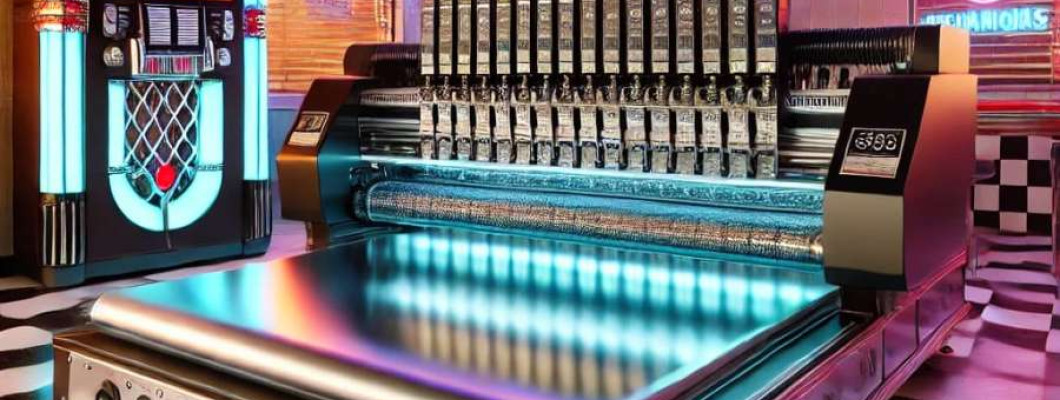
The Industrial Reality of Scaling A2+ UV Embossed Glossy Printing
Within advanced printing environments, bridging the divide between consumer-level and true industrial-grade UV printing stands as a critical challenge. For operations tasked with reproducing A2+ size embossed glossy prints, the parameters of print precision, consistent output, and hardware resilience define the operational baseline. Unlike DIY UV printers, which frequently falter on substrate adhesion uniformity and longevity under production stress, an industrial-grade solution must address underlying mechanical and environmental stressors that impact throughput and asset depreciation.
Consider a mid-sized print shop tasked with fulfilling a continuous run of embossed UV prints on acrylic and polycarbonate sheets. The sheer scale of A2+ format (420mm x 594mm) requires not only a print engine capable of micron-level precision but also embedded thermal management to stabilize ink curing. This is especially critical where gloss embossing demands accurate layering of UV ink drops measured down to 5pl (picoliters) with precise droplet control. The risk profile increases as daily uptime expectations exceed 16 hours, demanding printhead resilience and quick serviceability to mitigate operational bottlenecks.
Infrastructure integration further complicates deployment. Industrial-grade printers must handle variable power cycles and environmental controls, including ambient temperature ranges of 18 to 28 degrees Celsius and controlled relative humidity (40-60%) to avoid ink viscosity degradation. Many DIY models exhibit printhead clogging or unpredictable gloss layering under shifting environmental conditions, resulting in reprint wastage and unscheduled maintenance. The operational reality thus shifts from simple print quality to complex lifecycle maintenance considerations essential for reliable industrial performance.
Technical Deep-Dive on A2+ UV Printer Engineering and Operational Metrics
Printhead Technology and Ink Drop Control
At the core of industrial UV embossed glossy printing lies piezoelectric printhead technology optimized for 5pl drop size. The A2+ UV printer uses multi-channel nozzles arranged in staggered arrays, enabling resolutions of up to 1440 dpi. This physical configuration ensures consistent layering necessary for gloss embossing effects. When compared to DIY printers capped at 720 dpi and larger drop sizes (~10pl), the industrial printer achieves finer edge definition and superior gloss uniformity.
Thermal Management and UV Curing Dynamics
Continuous operation requires integrated thermal sensors and adaptive cooling modules to maintain printhead temperature below 40°C. UV LED curing units operate at defined intensities (approx. 1200 mW/cm²) ensuring ink polymerization without overheating substrates. Thermal control prevents ink degradation and nozzle clogging, translating to >98% uptime over a typical 16-hour shift, significantly surpassing uncooled DIY equivalents that average 75% uptime.
Mechanical Precision and Substrate Handling
Substrate feeding systems employ servo motor-driven rollers with positional accuracy of ±0.05mm. This precision is paramount for embossing layers where misalignment over the 420mm width causes ghosting and gloss inconsistency. Vacuum-assisted substrate fixation minimizes vibration-induced errors, a feature absent in most non-industrial solutions.
Lifecycle Maintenance and Consumable Economics
Industrial printheads are designed for modular replacement with predictive wear sensors alerting before failure. Daily cleaning cycles automated via onboard wash stations reduce manual downtime. Ink formulations used are proprietary UV-curable blends with optimized photoinitiators for rapid curing and increased gloss retention, extending print longevity by 30% over standard inks.
Comparative Data Table on Key Printing Metrics
| Specification | Industrial A2+ UV Printer | DIY UV Printer |
|---|---|---|
| Maximum Resolution (dpi) | 1440 | 720 |
| Drop Size (pl) | 5 | 10 |
| Printhead Uptime (%) | 98+ | 75 |
| Thermal Control | Integrated Sensors and Cooling | None |
| Substrate Size Accuracy (mm) | ±0.05 | ±0.5 |
| Ink Formulation Longevity | +30% Gloss Retention | Standard UV Ink |
Scenario Analysis of Business Use-Cases Impacted by Specifications
Mid-Scale Promotional Printing Business
For companies producing promotional panels and signage in runs of 200+ units monthly, the 98% printhead uptime and precise substrate handling significantly reduce reprint costs. The embedded gloss embossing elevates perceived quality, allowing premium pricing tiers versus competitors relying on standard glossy prints. The precision drop size lowers ink consumption by approximately 15%, directly improving operational margins.
High-End Custom Interior Designers
Interior designers specifying textured wall art demand micron-level precision and consistent gloss effects across variable substrates like glass and acrylic. The A2+ size and servo-controlled feeding ensure repeatable dimensional accuracy crucial for multi-panel installations. Thermal curing stability means no heat-induced substrate warping, preserving finish integrity.
Industrial Prototype and Product Marking Services
Rapid prototyping services benefit from modular printhead architecture, which enables quick maintenance turnarounds minimizing downtime during high-mix, short-run jobs. Automated cleaning systems maintain high-quality embossed finishes required for client approval, while system durability supports continuous production cycles essential for just-in-time delivery.
Expert Frequently Asked Questions on Advanced UV Printing
Q1: How does the drop volume precision affect embossed glossy quality?
A1: Lower drop volumes (5pl) enable finer layering control, critical for uniform gloss embossing. Larger drops cause pooling and uneven gloss reflection, degrading finish quality.Q2: What are the failure modes of printheads under continuous thermal stress?
A2: Thermal expansion induces nozzle misalignment and accelerates piezo crystal fatigue. Integrated cooling extends printhead lifecycle from 1000 to over 3000 operating hours.Q3: How does servo-driven substrate handling improve throughput?
A3: Precise servo motors reduce registration errors, minimize waste, and enable faster automated loading sequences, increasing throughput by up to 20%.Q4: What is the impact of ink photoinitiator chemistry on curing speed?
A4: Optimized photoinitiators reduce UV exposure time from 100 ms to 50 ms per layer while maintaining gloss and adhesion, doubling production speed.Q5: How does automation in maintenance routines affect operational costs?
A5: Automated cleaning reduces manual labor by 40%, limits solvent use by 30%, and lowers unexpected downtime, translating to significant OPEX savings.
Strategic Verdict and Recommendation of the A2+ UV Printer Embossed Glossy Printing
The A2+ Size UV Printer Embossed Glossy Printing system represents a definitive step forward in bridging the gap between DIY ventures and industrial-grade output demanded by scalable businesses. Its integration of fine-resolution printheads, precision thermal management, and automated maintenance modules coalesce to deliver repeatable, consistent embossed glossy finishes at scale. For enterprises requiring high uptime, fine substrate versatility, and operational cost containment, this printer addresses critical bottlenecks evident in less robust systems.
Given the mechanical resilience, material compatibility, and automated lifecycle support, the printer stands as a highly viable industrial-grade solution. Companies prioritizing throughput, print fidelity, and lifecycle cost control will find its architecture aligned with strategic growth imperatives. Interested technical managers or production leads should review the detailed specifications and operational protocols available on the official site. For direct evaluation, visit the A2+ Size UV Printer Embossed Glossy Printing page to examine deployment scenarios and infrastructure integration guides.