
The Gap Between DIY and Industrial-Grade Printing with the Rose Flower Printer for High-End Artisans
The Industrial Reality of Precision Floral Printing
Transitioning from artisanal printing methods to industrial-grade machinery presents unique challenges in color fidelity, substrate compatibility, and micron-level precision. The world of floral pattern printing is notoriously demanding due to the complexity of natural gradients, fine petal edges, and subtle shading that define authentic aesthetics. High-end artisans often rely on manual layering and color mixing, which, while rich in controllability, lack scalability and repeatability under rigorous production schedules.
One significant hurdle is maintaining consistency across multiple runs, especially when replicating delicate rose flower motifs that require sub-50 micron precision to capture the natural vein and petal textures. DIY kits and low-end printers commonly fall short in delivering the necessary dot placement accuracy and color gamut, resulting in a visible degradation of output quality over time and batch variance.
The Rose Flower Printer addresses these gaps by offering industrial-grade hardware precision targeted specifically at floral motif reproduction. However, the operational realities extend beyond mere printhead specifications; thermal management, substrate adhesion, and multi-layered ink chemistry optimization must converge within a seamless infrastructure. This complexity raises questions on repeatability, maintenance overhead, and integration into artisan workflows traditionally reliant on manual skill rather than mechanized precision.
Technical Deep-Dive into the Rose Flower Printer’s Industrial-Grade Capabilities
Printhead Micro-Precision and Dot Placement Accuracy
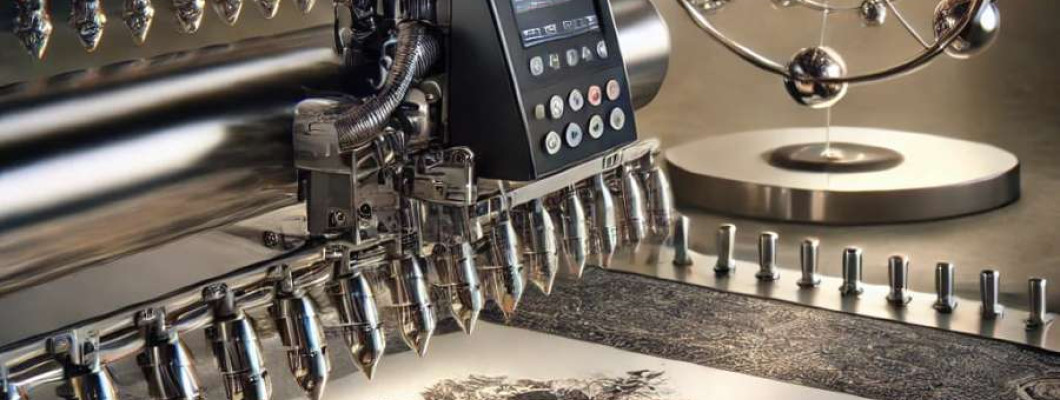
The Rose Flower Printer utilizes a proprietary printhead array engineered for sub-25 micron droplet diameter and placement accuracy within ±10 microns repeatability across the entire X-Y axis. This is essential to replicate the delicate petal veins and color gradients found in rose flowers. Compared to conventional piezo inkjet heads with ±30-40 micron tolerances, this printer reduces pixelation artifacts significantly.
Ink Chemistry and Color Depth Optimization
The system employs a multi-channel ink delivery optimized for floral color gamuts, supporting over 16 million colors with extended CMYK plus light magenta and light cyan channels. This enhanced channel array improves tonal transitions critical for rose petals, reducing banding and color shifts below ΔE 1.5 on standard CIE LAB scales.
Substrate Versatility and Thermal Adhesion Dynamics
One core challenge in floral printing is ink adherence on diverse materials, from silk textiles to coated papers. The Rose Flower Printer integrates real-time thermal management with substrate-specific heat profiles (ranging 40°C to 90°C), enabling consistent adhesion without fiber distortion. This adaptability expands artisan possibilities from canvas art to wearable florals.
Operational Throughput Versus Precision Trade-offs
While industrial printers often prioritize speed, the Rose Flower Printer balances throughput with precision by enabling user-configurable resolution modes, ranging from 600 dpi for rapid prototyping up to 2400 dpi for final production. Quantitatively, print speeds vary between 1.2 m²/hr at maximum resolution and 5.5 m²/hr at lower precision, allowing artisans to tailor production pace without sacrificing output integrity.
Hardware Comparison Table
| Feature | Rose Flower Printer | Standard DIY Printer |
|---|---|---|
| Dot Size (microns) | ≤25 | 50-70 |
| Color Channels | CMYK + Light Magenta + Light Cyan (6) | CMYK (4) |
| Print Resolution (dpi) | 600-2400 | 300-600 |
| Substrate Temp Control (°C) | 40-90 (Dynamic) | Ambient only |
| Repeatability (microns) | ±10 | ±30-40 |
| Max Throughput (m²/hr) | 5.5 at 600 dpi | Up to 3.0 |
Scenario Analysis of Rose Flower Printer Usage in Artisan Workflows
Scenario 1: Limited Edition Textile Production
A boutique textile house producing silk scarves featuring photorealistic rose prints requires precision color transitions and fiber-safe heat controls. The printer’s dynamic substrate heating reduces fabric distortion common in standard printers, enhancing final product durability and feel. The high dpi mode guarantees visually stunning gradients critical for luxury markets.
Scenario 2: Custom Canvas Floral Art
Artists specializing in floral canvases benefit from the printer's extended color gamut and micron-level detail, allowing them to reproduce complex rose patterns with a near-photographic finish. The ability to switch between draft and production modes helps optimize costs across early proofing and final artworks.
Scenario 3: Wearable Floral Accessories Manufacturer
In manufacturing wearable floral accessories, rapid batch production with consistent quality is vital. The Rose Flower Printer’s adjustable throughput allows manufacturers to maintain micron precision while scaling output volume, reducing labor dependence on manual painting while maintaining artisan quality standards.
Expert FAQ on Industrial Floral Printing Technologies
1. How does printhead precision influence color gradient fidelity in floral prints?
Printhead precision ensures exact droplet placement, which directly affects the smoothness of color transitions and the absence of visible banding. Micron-level accuracy minimizes spatial color drift critical for naturalistic rose petal rendering.
2. What role does thermal substrate control play in ink adhesion?
Thermal control stabilizes substrate dimensions during printing, allowing optimal ink absorption and curing. It prevents fiber shrinkage or warping, which can degrade print clarity and adherence over time.
3. Why are additional light magenta and cyan channels necessary?
These channels expand tonal range and reduce graininess in pastel and skin-tone hues common in floral elements, enabling subtler shading and enhanced color accuracy.
4. How does the Rose Flower Printer’s throughput compare under maximum resolution settings?
At 2400 dpi, throughput reduces to approximately 1.2 m²/hr due to increased droplet count and slower head movement, reflecting a trade-off between speed and resolution necessary for final high-quality prints.
5. Can the Rose Flower Printer integrate with existing artisan workflow software?
Yes, it supports standard command protocols and includes SDKs for workflow automation, facilitating seamless integration with common design platforms used by artisans.
Strategic Verdict and Recommendation
The Rose Flower Printer emerges as a definitive solution bridging the gap between artisanal detail and industrial precision in floral printing. Its engineering addresses critical limitations common in DIY and lower-tier printers, especially in micron-level accuracy, color channel expansion, and substrate thermal management. High-end artisans targeting replication fidelity and throughput scalability will find its feature set and operational flexibility aligned with their stringent quality demands.
For those seeking a technology poised to sustain advanced floral production with strong lifecycle support and integration potential, the Rose Flower Printer stands as a recommended investment. It offers a viable industrial-grade platform capable of elevating quality benchmarks and operational consistency in highly specialized artisan domains.