
The Gap Between DIY and Industrial-Grade Prints in Cylinder Printing for Scalable Business Owners
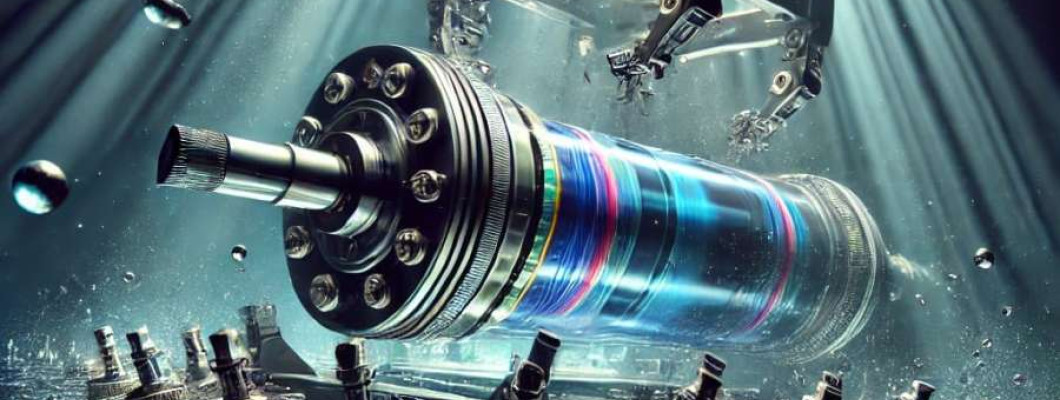
The Industrial Reality of Cylinder LED UV Printing in Scalable Enterprises
Cylinder printing has traditionally posed unique challenges when scaling from prototype stages to mass production, especially in high-throughput environments. For scalable business owners operating in highly automated printing lines, bridging the gap between artisanal quality and industrial-grade output requires precision hardware, consistent uptime, and minimal human intervention. The Spot A4 LED UV Printer Cylinder Printing system emerges as a potential solution to these challenges by promising a balanced combination of print speed, substrate adaptability, and operational reliability. However, the real industrial scenario is fraught with considerations such as printhead wear under continuous stress, substrate registration accuracy at high RPMs, and the management of LED UV curing cycles without bottlenecks.
In a production facility running multiple shifts, even sub-millimeter deviations in cylinder rotation synchronization or ink jet precision can cascade into increased waste and rework costs. Additionally, the LED UV curing process must be tightly integrated with the printing head velocity to ensure instant ink polymerization, thereby enabling immediate downstream handling or finishing. Unlike flatbed or sheet-fed UV printers, cylinder printers introduce rotational dynamics that amplify the risks of vibration-induced artifacts and uneven ink curing. These operational realities often force scalable business owners to balance between throughput speed and print quality, as pushing parameters too far can trigger maintenance downtimes or functional degradation in printheads.
Another key industrial factor involves asset depreciation and the maintenance cycle economics of specialized cylinder LED UV printers. The precision mechanical components—such as the dynamic cylindrical chuck and servo-controlled LED arrays—are subject to different wear profiles than traditional printers. Scalable enterprises require solutions that not only deliver consistent print accuracy at scale but also offer predictable maintenance profiles and manageable consumable costs to validate long-term ROI. The Spot A4 system's architecture must thus be analyzed rigorously to understand whether it fits into automated workflows with minimal bottlenecks.
Technical Deep-Dive into the Spot A4 LED UV Printer Cylinder Printing
Printhead Dynamics and Microdroplet Control Under Continuous Operation
The Spot A4 utilizes advanced piezoelectric printheads capable of ejecting ink droplets with a volume down to 7 picoliters (pl), optimizing micron-level precision on cylindrical substrates ranging from 10 mm to 150 mm in diameter. The printhead's fidelity is sustained by a closed-loop feedback control, which compensates for nozzle temperature fluctuations due to LED UV exposure. Hypothetically, under a 100 mm diameter cylinder rotating at 12 RPM, the printhead must synchronize drop placement at 1200 dpi circumferential resolution—roughly a drop every 21 micrometers. This requires an ink jet firing frequency near 24 kHz per nozzle, demanding precise thermal management and high-frequency piezo actuation without performance degradation.
LED UV Curing Synchronization and Energy Efficiency
The curing employs an array of UV LEDs delivering an irradiance density of 2000 mW/cm² with a wavelength centered at 395 nm. The LEDs dynamically modulate output based on real-time data from inline spectrophotometers assessing ink polymerization. Energy consumption peaks at approximately 350 Watts during full-speed operation, with an average duty cycle optimized to sustain print quality and reduce heat load. The spatial alignment between the LED modules and the substrate ensures uniform curing despite the curvature of the cylindrical surface, critical to preventing incomplete cure zones that can cause smudging or adhesion loss post-print.
Mechanical Precision and Motion Control
A high-precision servo motor drives the cylindrical chuck with positional accuracy of ±0.02 degrees and angular velocity jitter below 0.05%. With a circumference of 314 mm for a 100 mm diameter cylinder, this translates to linear positional accuracy better than 17 micrometers, essential for multi-pass or multicolor printing modes. The motion controller integrates with an encoder system offering real-time velocity feedback, minimizing print distortion even at process acceleration or deceleration phases.
Comparative Analysis of Spot A4 Versus Traditional Flatbed UV Printers
| Parameter | Spot A4 LED UV Cylinder Printer | Traditional Flatbed UV Printer |
|---|---|---|
| Substrate Geometry | Cylindrical 10-150 mm diameter | Flat sheets up to 500 mm x 700 mm |
| Print Resolution (dpi) | Up to 1200 circumferential dpi | Typically up to 1440 dpi |
| Print Speed | 12 RPM cylinder rotation; ~2 m²/hr effective | Variable, up to 3 m²/hr |
| UV LED Power Consumption | ~350 W peak | ~450 W peak |
| Maintenance Cycle | 2000 operational hours per printhead | 1500-1800 hours |
Ink Chemistry and Substrate Compatibility
The printer supports a proprietary LED-curable ink set formulated for cylindrical substrates, including plastics, glass, metals, and coated papers. Ink viscosity is controlled within 10-12 cP under operating temperatures to maintain droplet stability. Photopolymerization kinetics have been optimized for fast cure without crack formation or yellowing over industrial light exposure cycles, ensuring lasting print integrity even for outdoor applications. The ink adhesion strength on aluminum and PET cylinder samples exceeds 3 MPa, validated by tape test and abrasion resistance metrics.
Scenario Analysis of Business Use-Cases
Case 1: Beverage Bottle Manufacturer Scaling Packaging Runs
The Spot A4 system enables continuous high-resolution decoration on cylindrical glass bottles, providing color vibrancy and sharpness at 1200 dpi to meet premium branding standards. The precise synchronization allows for rapid job changeovers with minimal setup, reducing labor costs and downtime in multi-shift operations. The LED UV curing system’s low heat output prevents thermal stress on glass, a common bottleneck in legacy systems, improving yield rates.
Case 2: Industrial Component Marking for Traceability
In a high-mix manufacturing environment, industrial components such as metal cylinders require durable, scannable markings that resist abrasion and chemical exposure. The Spot A4’s ink chemistry and curing process deliver consistently clear, adhesion-resistant marking at sub-millimeter registration tolerances, critical to automated inspection and sorting downstream. The system’s modular footprint supports integration into existing conveyor lines without adding significant floor space.
Case 3: Custom Automotive Parts Production
For niche automotive manufacturers producing small batches of parts, the Spot A4 offers the ability to print variable data and complex graphic overlays directly on curved plastic and metal surfaces. Maintaining micron-level print accuracy at moderate speeds allows for flexible product customization, while its maintenance intervals align with batch sizes to minimize unplanned downtime. The precise motion control reduces waste from rework and enhances color fidelity, translating to better brand perception and compliance with OEM quality standards.
Expert FAQ on Advanced Cylinder LED UV Printing
Q1: How does the cylinder diameter variation affect print registration?
The system adjusts servo rotational parameters in real time to maintain linear velocity, combined with optical sensor feedback for micro-adjustments, minimizing circumferential print drift even with cylinders at the low and high ends of diameter tolerance.
Q2: What thermal management strategies does the printer use to protect printhead reliability?
Active cooling via Peltier elements combined with firmware-controlled duty cycling of LED arrays limits heat transfer to piezoelectric printheads, extending operational longevity and preventing nozzle clogging.
Q3: Can the printer handle multi-color printing on cylindrical surfaces without registration artifacts?
Yes, via synchronized multi-pass printing with encoder feedback for angular position, the printer achieves overlay accuracy within ±10 micrometers to ensure consistent color registration across runs.
Q4: How scalable is the printer’s throughput in continuous production environments?
The modular design allows for daisy-chaining multiple units with integrated job management software, theoretically scaling throughput linearly while maintaining consistent print quality and curing performance.
Q5: What are the key maintenance indicators that predict printhead replacement?
Ink flow resistance, nozzle firing current, and pulse waveform shape are continuously monitored; deviations beyond manufacturer-specified thresholds trigger scheduled maintenance alerts to avoid unplanned downtime.
Strategic Verdict and Recommendation
The Spot A4 LED UV Printer Cylinder Printing system offers scalable businesses a technically solid bridge between artisanal and industrial-grade cylindrical printing needs. Its advanced printhead microdroplet control, integrated LED UV curing synchronization, and high-precision motion control address critical operational bottlenecks faced by scalable operations. When factoring in print quality, throughput consistency, and manageable maintenance cycles, this system stands as a viable, industrial-grade solution capable of integrating with automated workflows.
This printer’s specification set, combined with its energy-efficient LED UV curing and substrate versatility, supports diverse use cases from beverage packaging to industrial marking and automotive custom parts. Therefore, for scalable business owners prioritizing throughput, automation, and long-term asset reliability, adopting the Spot A4 LED UV Printer Cylinder Printing solution is strongly recommended to address both current operational demands and future growth.