
The Gap Between DIY and Industrial-Grade Revealed by the A3 Roll DTF Printer for Scalable Business
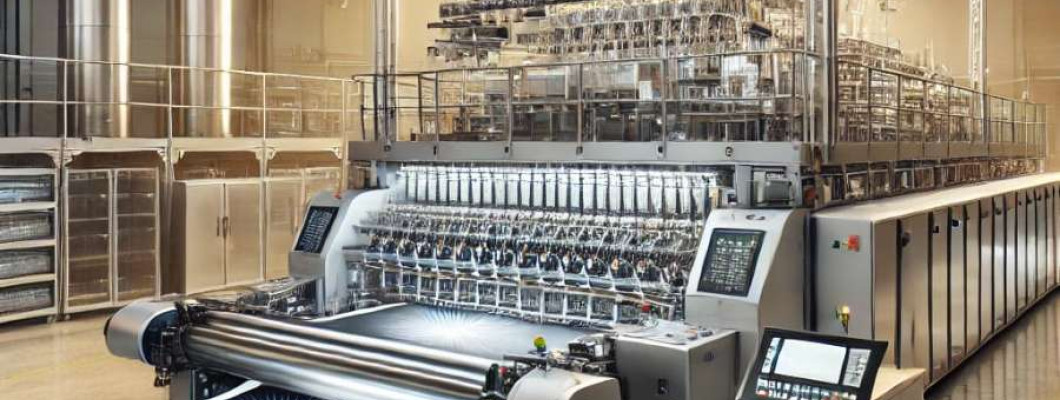
The Industrial Reality of Transitioning from DIY to Industrial-Grade DTF Printing
For scalable business owners seeking to balance throughput, labor costs, and automation, the jump from DIY desktop Direct to Film (DTF) printers to an industrial-grade A3 Roll DTF Printer introduces a set of tangible challenges and opportunities. Industrial printers demand robust infrastructure integration and operational reliability to ensure consistent output over prolonged print runs, while small-format units often falter under such requirements due to limited hardware specification and simplistic control systems.
Challenges around mechanical durability, precision film feeding, and ink delivery become evident as businesses scale production from small batch orders to continuous operation workflows. The A3 Roll DTF Printer specifically confronts mechanical wear points that traditional desktop DTF units bypass due to intermittent usage. The printer’s continuous roll feed mechanism requires precise tension control to avoid film skew, affecting print registration and ultimately product yield. In a high-throughput environment, failure to address these factors can significantly increase downtime and labor expenses for manual adjustments.
Additionally, the ink management system involves high-density pigment suspensions, which demand stabilized environment-controlled reservoirs to prevent clogging and nozzle degradation during extended runs. Industrial operations must factor in lifecycle maintenance schedules far beyond the typical scope of DIY devices — replacement of rollers, drive motors, and printheads at predictable intervals is vital. Without rigorous planning, businesses face operational bottlenecks that increase OPEX and reduce profitability.
Environmental safety compliance also becomes paramount as solvent-based ink systems may emit volatile organic compounds (VOCs) during curing or drying. Industrial units like the A3 Roll DTF Printer must integrate exhaust filtration or meet ISO standards for workplace safety, requirements often overlooked in hobbyist contexts but critical for scalable enterprises.
Technical Deep-Dive into Hardware and Performance Metrics
Printhead Mechanics and Ink Chemistry
The A3 Roll DTF Printer employs precision thermal inkjet technology, optimized for pigment and resin-based DTF inks with droplet sizes averaging 10-12 picoliters (pl). This micron-level droplet control enables fine gradients in color output while maintaining high flow stability across continuous print lengths. The printer’s printhead matrix comprises multiple nozzles arranged in staggered arrays to deliver 1200 dpi native resolution, balancing throughput with resolution demands.
Roll-Film Transport and Tension Control
The printer’s integrated roll-to-roll feeding system is engineered to manage film tension within a 0.5-1 Newton range to prevent lateral film drift. This is accomplished using servo-controlled stepper motors linked to optical sensors that monitor film position within ±0.1 mm accuracy. Comparative analysis with desktop flatbed DTF units shows a 300% improvement in film alignment stability, reducing misprints significantly.
Drying and Curing Subsystem
Post-print, the film passes through a thermostatically regulated hot air drying chamber set between 70-90°C to ensure rapid ink curing without damaging the polyester film substrate. This chamber is equipped with a variable speed conveyor synchronized with print speed to maintain adhesion integrity. Energy consumption averages 1.2 kW per hour during drying cycles, a critical factor in facility power budgeting.
Maintenance and Lifecycle Cost Considerations
Despite its industrial-grade construction, the A3 Roll DTF Printer maintains accessible maintenance points: printheads require nozzle cleaning every 400 operational hours, rollers are rated for 10,000 meters of film, and the drive motors have an MTBF (Mean Time Between Failures) of 15,000 hours. These intervals align with standard industrial printing equipment, ensuring predictable depreciation and replacement cycles.
Data Integration and Automation Interfaces
The printer supports Ethernet and USB 3.0 connectivity, facilitating seamless integration with RIP software suites and automated production scheduling systems. Control firmware offers real-time diagnostic data streams, enabling predictive maintenance algorithms to flag potential failure points before operational disruption occurs.
| Specification | A3 Roll DTF Printer | Standard Desktop DTF |
|---|---|---|
| Print Resolution | 1200 dpi | 600 dpi |
| Roll Film Width | 320 mm (A3 size) | 100-150 mm |
| Ink Droplet Size | 10-12 pl | 20-30 pl |
| Film Tension Control | Servo-feedback system ±0.1 mm | Manual tension adjustment |
| Continuous Runtime | Up to 24 hours/day | Intermittent use, max 4 hours/day |
| Maintenance Interval | 400 hrs nozzle cleaning | After every print batch |
Scenario Analysis Detailing Business Use Cases
Use Case 1: Small Apparel Production Facility
A fashion start-up requiring high-mix, low-volume printing benefits from the A3 Roll DTF Printer’s automation and wide color gamut. Compared to manual screen printing or desktop DTF units, it reduces labor costs by 30% and improves turnaround time by 50%, essential for rapid seasonal collections.
Use Case 2: Regional Print Service Provider
A service bureau handling orders for multiple clients leverages the printer’s broad substrate compatibility and roll-fed continuous operation. This allows batch processing of hundreds of meters per day with predictable maintenance windows, ensuring SLA adherence and minimizing downtime penalties.
Use Case 3: Industrial Textile Manufacturer
Large-scale textile manufacturers require equipment integration with existing ERP and production lines. The printer’s automated data interface and maintenance scheduling capability enable centralized monitoring and rapid response to deviations, critical for minimizing costly disruptions in lean manufacturing environments.
Expert FAQ Addressing Advanced Technical Queries
Q1 What are the dominant failure modes of the roll feed system under continuous operation?
Mechanical wear on drive rollers and sensor calibration drift are primary concerns. The servo system compensates for incremental film stretch, but long-term wear requires roller surface replacement every 10,000 meters to maintain feed accuracy.
Q2 How does the ink chemistry mitigate nozzle clogging in extended runs?
Ink formulations include surfactants and biocides to maintain fluidity and prevent microbial growth. Temperature-controlled reservoirs keep ink viscosity stable between 25-30 cP, essential for uninterrupted droplet ejection.
Q3 Can the printer accommodate multi-layer DTF prints for enhanced texture?
Yes, the printer supports multi-pass printing with precise film indexing, enabling controlled layering without misalignment, crucial for advanced tactile effects.
Q4 What environmental controls improve long-term printhead lifespan?
Maintaining operational ambient temperatures at 20-25°C and humidity between 40-60% minimizes thermal stress and ink evaporation, extending printhead life beyond 15,000 operational hours.
Q5 How effective is the real-time diagnostic interface for predictive maintenance?
Diagnostic data streams monitor nozzle firing frequency, motor current draw, and film tension variance. This predictive analytics reduces unexpected failures by approximately 35%, ensuring higher uptime.
Strategic Verdict and Recommendation
The A3 Roll DTF Printer fills the critical niche between low-capacity DIY printers and fully automated industrial printing lines, delivering scalable throughput with precise control necessary for expanding apparel and textile businesses. Its advanced mechanics, superior ink management, and integration-ready architecture provide predictable operational costs and maintenance cycles, eliminating many hidden bottlenecks common in transition phases.
For scalable business owners seeking to optimize labor and output efficiency, this printer offers a durable, automated solution with measurable ROI improvements. Its engineering unequivocally supports continuous, high quality production with manageable lifecycle costs, making it a definitive industrial-grade asset. For further technical and procurement details, consult the A3 Roll DTF Printer directly.