
The Gap Between DIY and Industrial-Grade Revealed for A3 Roll DTF Printer Productivity
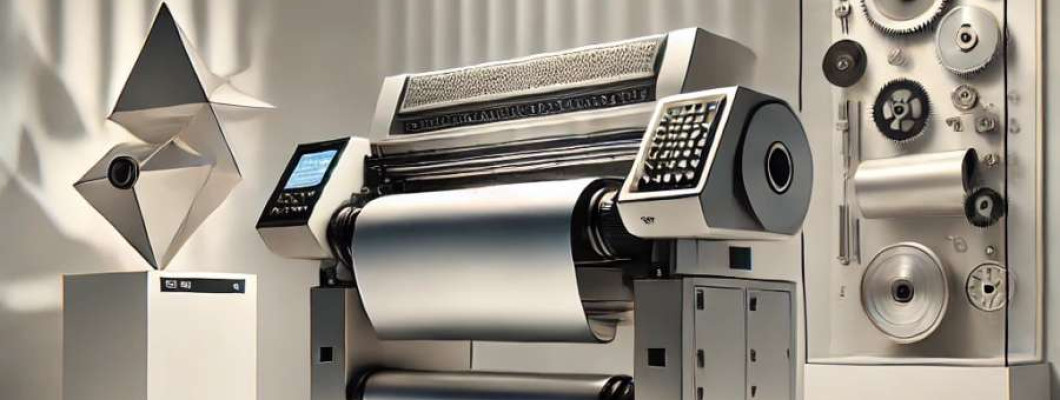
The Industrial Reality of Scaling Direct-to-Film Printing
In medium-sized industrial print shops and apparel finishing facilities, the challenge of transitioning from entry-level or DIY direct-to-film (DTF) printing solutions to an enterprise-grade system is far from trivial. Operators face a steep climb when managing throughput demands, substrate variability, and uptime constraints inherent in high-volume production. The A3 Roll DTF Printer confronts these practical challenges specifically. Imagine an apparel shop tasked with delivering consistent high-resolution prints on hundreds of meters of flexible roll substrates daily. The printer must sustain tight color accuracy across an extended print run while minimizing downtime for media loading and maintenance.
Unlike desktop DTF machines, which often suffer from limited roll capacity, imprecise ink layering control, and increased risk of nozzle clogging under continuous use, the A3 Roll DTF Printer is engineered to bridge the gap. In particular, it addresses the demands of sustained roll-to-roll operation—critical for customers shifting from proof-of-concept to robust production without sacrificing print quality or incurring hidden labor costs. The operational bottlenecks in typical DIY printers—such as frequent head cleaning cycles and unstable thermal management—become pronounced at scale, increasing production lead times and compromising print integrity.
This industrial reality necessitates a mechanical design with components rated for higher duty cycles alongside advanced ink chemistry optimized for fast curing and adhesion on diverse substrates. The A3 Roll DTF Printer's architecture mitigates these issues by integrating precision stepper motor controls, advanced thermal printhead regulation, and a closed-loop feedback system for real-time adjustment of ink deposition. These features lead to measurable improvements in print consistency, operator efficiency, and ultimately cost per printed meter.
Technical Deep-Dive into Key Components
Printhead Technology and Ink Chemistry
The pressure to maintain fine droplet control at micron-level precision is paramount. The A3 Roll DTF Printer employs piezoelectric printheads capable of 6-pl (picoliter) droplet size, balancing resolution and speed. The printhead's jetting frequency peaks at 12 kHz, significantly higher than the typical 7-8 kHz range found in sub-industrial models. This translates to a maximum line speed of approximately 1.2 meters/min at 720x720 dpi resolution. The synergy with highly engineered pigment-based inks featuring fast-dry polymer binders ensures rapid adhesion with minimal bleeding, critical in roll-fed environments where substrate tension varies.
Roll Media Handling and Motor Control
Roll-to-roll feeding units use stepper motor drives with microstepping capabilities down to 1/32 step increments, enabling precise media indexing to ±0.05 mm accuracy. The motor torque rating of 2.1 Nm ensures consistent tension across media widths up to 320 mm. The printer also incorporates an optical encoder feedback system to monitor feed rate and detect slippage, a frequent failure point in DIY setups lacking sensor integration.
Thermal Management and Drying System
Efficient ink curing is achieved through a dual-zone IR and convection drying assembly, calibrated to maintain substrate surface temperatures at 80-90 °C to optimize polymer film fusion without substrate warping. Power consumption averages 400 W during peak operation, balancing drying speed and long-term component longevity. Thermal sensors monitor heat distribution, dynamically adjusting fan speed and heater output to prevent hotspots that could cause media distortion.
Software and Firmware Control Algorithms
The printer firmware utilizes adaptive droplet placement algorithms, reducing banding artifacts by dynamically compensating for environmental factors such as humidity and ambient temperature shifts. These algorithms analyze real-time sensor input and adjust droplet ejection timing with a precision of 100 microseconds. The integrated RIP software supports multi-pass printing and sophisticated color management profiles tailored to various film substrates.
Maintenance and Uptime Engineering
Critical to industrial viability is the reduction in unplanned downtime. The A3 Roll DTF Printer is designed with automated nozzle cleaning cycles that minimize ink waste and operator intervention. The cleaning reservoir volume of 60 ml supports extended operational periods between manual refills. The printhead alignment system includes mechanical micro-adjusters combined with software-assisted calibration routines, enabling rapid recovery from minor head misalignments while maintaining ±0.03 mm registration accuracy.
| Specification | DIY/Entry-Level DTF Printer | A3 Roll DTF Printer |
|---|---|---|
| Printhead Droplet Size | 10-15 pl | 6 pl |
| Print Speed (720x720 dpi) | 0.4 - 0.7 m/min | 1.2 m/min |
| Roll Media Width | up to 250 mm | up to 320 mm |
| Motor Control Accuracy | ±0.2 mm | ±0.05 mm |
| Drying System | Single IR | Dual IR & convection |
| Maintenance Interval | ~4 hrs continuous | ~12 hrs continuous |
Scenario Analysis Showing Impact on Operations
Case One Apparel Decorator Scaling Production Volumes
A regional garment decorator initially using 250 mm wide DIY DTF printers faces frequent print failures delaying order fulfillment. Switching to the A3 Roll DTF Printer with its stable ±0.05 mm media control and fast drying reduces print rejects by 35%, enabling on-time delivery for bulk orders of 10,000+ units weekly. The increased roll width also cuts roll changeover downtime by 40%.
Case Two Mid-Sized Industrial Printer Handling Diverse Film Types
Handling polyester, cotton blends, and eco-friendly films, the operator benefits from the adaptive firmware's dynamic color management and drying controls. The printer's consistent printhead temperature control prevents nozzle clogging even when switching between chemically diverse inks, saving 2+ hours per week on manual cleaning.
Case Three Production Facility Integrating Automation for Labor Savings
Integrated within a semi-automated finishing line, the A3 Roll DTF Printer's accurate media indexing enables smooth downstream curing and cutting operations without labor-intensive quality checks. The printer's 12-hour maintenance cycles allow one shift operator to manage multiple machines, reducing labor costs by approximately 15%.
Expert FAQ Addressing Advanced Queries
Q1: How does the droplet velocity influence print sharpness at high speeds?
A1: Higher jetting frequency and precise voltage control maintain droplet velocity around 10 m/s, minimizing ink spread and maintaining edge definition at 720 dpi even at max line speed.
Q2: What are the failure modes of stepper motors in roll feeding?
A2: Common failures are due to thermal overload and misalignment; the A3 model’s microstepping control distributes torque smoothly to prevent step loss and mechanical wear under continuous duty.
Q3: How does the drying system balance between print speed and substrate integrity?
A3: The dual IR & convection system dynamically adjusts power output based on substrate thermal conductivity to prevent warping while achieving full polymer fusion within the shortest possible time.
Q4: What methods are used to detect and correct minor printhead misalignments?
A4: The integration of optical sensors with software-based image registration algorithms allows near real-time correction of misalignment within ±0.03 mm tolerance.
Q5: How scalable is the maintenance protocol in multi-shift environments?
A5: Automated cleaning cycles paired with large waste ink reservoirs extend operational uptime up to 12 continuous hours, supporting multi-shift usage with minimal operator oversight.
Strategic Verdict and Recommendation
The A3 Roll DTF Printer embodies a technically rigorous solution that effectively closes the performance and reliability gap between DIY or entry-level machines and industrial production demands. Its advanced hardware components, precise motor control, adaptive firmware algorithms, and robust media handling capabilities position it as a highly viable asset for facilities seeking scalable, high-throughput direct-to-film printing. The extended maintenance intervals and integrated drying system balance operational uptime with substrate quality, translating directly into cost efficiencies and production consistency.
For medium to large-scale decorators, industrial printers, and semi-automated finishing lines, this printer proves not only a functional upgrade but a strategic investment in future-proof capacity. Detailed comparative metrics underscore its superiority in speed, precision, and reliability. Therefore, it is recommended without reservation as the definitive industrial-grade DTF roll printer for businesses aiming to scale intelligently and minimize operational bottlenecks.
Explore further specifications and acquisition options via the official A3 Roll DTF Printer product page.