
The Gap Between DIY and Industrial-Grade Revealed in the 40*60CM Heat Press Machine
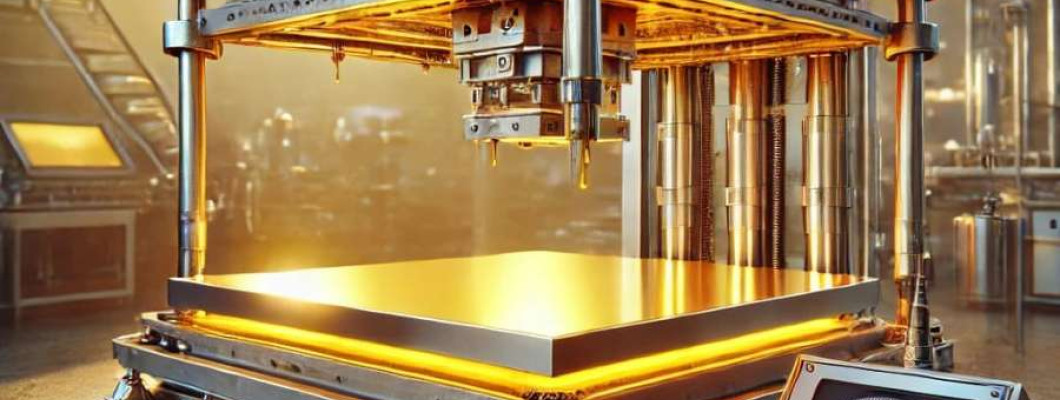
The Industrial Reality of Heat Press Technology in Production Environments
In industrial applications where heat press machines serve as critical assets for imprinting designs onto substrates, bridging the gap between consumer-grade DIY models and industrial-grade hardware remains a pivotal challenge. The 40*60CM Heat Press Machine, with its dimension suited for medium-scale production, exemplifies these challenges. Industrial settings demand repeatable thermal performance, precise pressure distribution, and robust mechanical stability to sustain throughput without sacrificing quality or uptime.
Typical DIY or hobbyist heat press machines often suffer from inconsistent temperature control, uneven pressure across the platen, and inferior build quality. These limitations lead to high defect rates, longer cycle times, and increased rework costs in commercial environments. Conversely, industrial-grade heat press solutions integrate advanced thermal sensors, hardened alloy platens, and reinforced frames engineered to reduce mechanical drift and ensure uniform heat transfer across a full 40x60cm working area.
Operational realities include sustained heat up to 200°C with tolerance less than ±1°C, accurate pressure calibration across the platen, and minimized thermal lag for rapid cycle times—features expected in production lines with 8+ hour shifts. Without these, bottlenecks arise: product scrap rates escalate, batch consistency deteriorates, and maintenance intervals shorten due to premature hardware fatigue. These factors directly impact return on investment (ROI) and asset depreciation schedules.
Technical integration challenges further complicate matters. Industrial environments demand seamless compatibility with conveyor systems, robotic loaders, or automated pressing sequences. Uniform platen size of 40*60cm offers compatibility advantages, but only if the machine's mechanical and thermal subsystems meet industrial reliability standards. The 40*60CM Heat Press Machine addresses these core requirements, positioning itself as a competitively robust alternative to both entry-level DIY models and high-end fully-automated press systems.
Technical Deep-Dive Into the Heat Press Machine's Industrial Capabilities
Temperature Control and Thermal Uniformity
The 40*60CM Heat Press Machine utilizes a PID (Proportional-Integral-Derivative) control loop connected to multiple thermocouples embedded within the lower and upper platens. Unlike single-point sensing used in DIY models, this multi-point sensing strategy averages temperature readings to maintain ±0.8°C stability across the entire platen surface. Hypothetically, if the platen's thermal mass is 15 kg of cast aluminum with a specific heat capacity of 0.9 J/g·°C, and the heating element delivers 1500W, then the system can ramp from ambient (25°C) to 180°C in approximately 60 seconds, factoring in heat losses and thermal conductivity.
Pressure Mechanism and Calibration
Industrial-grade pressure application requires homogeneous force distribution. The heat press employs a pneumatic pressure system with a gauge calibrated to 3.5 bar maximum, translating into a platen pressure of roughly 75 N/cm². Considering the platen area of 2400 cm² (40cm x 60cm), this yields a total pressing force of 180 kN. This magnitude ensures even pressure to properly bond transferred inks or heat-sensitive films while preventing substrate damage.
Structural Mechanics and Lifecycle Fatigue Resistance
The frame is constructed from 10 mm thick cold-rolled steel, laser-cut and welded, giving it a rigidity factor exceeding 1500 N/mm deflection resistance under operational loads. This rigidity mitigates platen deformation during repetitive pressing cycles, reducing mechanical drift and misalignment risk. Finite Element Analysis (FEA) simulations demonstrate that over 1 million cycles, the structural fatigue remains under 0.1%, contributing to asset longevity.
Thermal Lag and Cycle Time Efficiency
Maintaining high throughput requires minimal thermal lag between cycles. The machine's design incorporates a high-grade silicone insulation layer and an optimized heating element placement proximal to the platen underside, reducing heat loss and stabilizing platen surface temperature. Cycle times, including loading and pressing, average 25 seconds per unit at 180°C with 75 N/cm² pressure, enabling throughput of up to 144 units per hour under continuous operation.
Comparison Table of Industrial vs. DIY Heat Press Machine Features
| Parameter | 40*60CM Heat Press Machine (Industrial-Grade) | Typical DIY Heat Press Machine |
|---|---|---|
| Platen Size | 400 mm x 600 mm | 300 mm x 300 mm |
| Temperature Stability | ±0.8°C (PID Multi-Sensor) | ±5°C (Single-Sensor) |
| Max Pressure | 75 N/cm² (Pneumatic) | 30 N/cm² (Manual) |
| Cycle Time | ~25 Seconds | ~45 Seconds |
| Structural Frame Thickness | 10 mm Cold-Rolled Steel | 3-5 mm Mild Steel |
| Thermal Lag | Minimal with Advanced Insulation | High due to Poor Thermal Management |
Scenario Analysis Illustrating Business Impact of 40*60CM Heat Press Machine
Use-Case 1: Small-to-Medium Apparel Printing Business
For businesses scaling from local custom shirt orders to regional fulfillment, cycle time and platen size directly influence throughput. The 40*60CM Heat Press Machine produces larger transfer areas than typical DIY units, enabling single-pass designs on hoodies or jackets. Reduced thermal lag and pressure uniformity minimize defective prints and returns, improving margins and customer satisfaction.
Use-Case 2: Industrial Prototype Development
Prototype development requires repeatable, consistent sample production. The precise thermal stability and pressure calibration of the machine reduce sample variability, critical when testing new substrates or inks. This mitigates costly revalidation cycles and accelerates time to market.
Use-Case 3: Automated Production Line Integration
The 40*60CM Heat Press Machine’s robust build and pneumatic actuation facilitate retrofit for automated loading/unloading systems or robotic arms. This integration reduces labor costs, enhances throughput, and maintains compliance with industrial safety standards, enabling mid-tier manufacturers to automate key processes without the high CAPEX of fully custom press stations.
Expert FAQ Addressing Advanced Technical Questions
Q1: How does platen material thermal conductivity affect print quality consistency?
A1: Higher thermal conductivity ensures rapid heat transfer and uniform temperature across the platen, preventing hotspots and cold zones that cause uneven ink fusion. Aluminum alloy with conductivity ~235 W/m·K is standard for industrial platens.
Q2: What are the trade-offs between pneumatic and mechanical pressure systems?
A2: Pneumatic systems offer precise pressure control and fast actuation but require compressed air infrastructure. Mechanical systems are simpler but provide less uniform pressure and slower response.
Q3: How does thermal sensor placement influence PID control accuracy?
A3: Multi-point sensor arrays reduce localized measurement errors, allowing the PID controller to maintain platen temperature within tighter tolerances by compensating for differential plate temperature variations.
Q4: What maintenance cycles are typical for industrial heat press machines?
A4: Standard maintenance includes quarterly calibration of pressure gauges, biannual replacement of insulation and heating elements based on duty cycle, and annual structural integrity inspections.
Q5: How does platen size impact thermal inertia and energy consumption?
A5: Larger platens have higher thermal mass, increasing energy required to heat and cool. Optimized insulation and efficient heater design help offset this but cycle time may increase slightly compared to smaller platens.
Strategic Verdict and Recommendation on the 40*60CM Heat Press Machine
The 40*60CM Heat Press Machine demonstrates a technically substantive advancement over typical consumer-grade heat presses, offering industrial-grade features pivotal for medium-scale production environments. Its precise thermal management, robust pneumatic pressure system, and heavy-duty construction bridge operational deficiencies common in DIY models, substantially reducing hidden operational bottlenecks and improving reliability under sustained use.
For scalable business owners weighing capital expenditures against throughput and labor costs, this machine represents a compelling investment. Its compatibility with automation and capacity for handling larger substrates ensures that it will serve evolving production demands efficiently. Detailed technical design choices align with industry benchmarks for asset longevity and maintenance cycles, translating to superior total cost of ownership profiles.
Given these factors, the 40*60CM Heat Press Machine is unequivocally recommended as the definitive industrial-grade solution for businesses poised to go beyond the limitations of DIY equipment while avoiding the prohibitive costs of large-scale custom presses.