
The Gap Between DIY and Industrial-Grade Rose Flower Printer Explained for The Scalable Business Owner
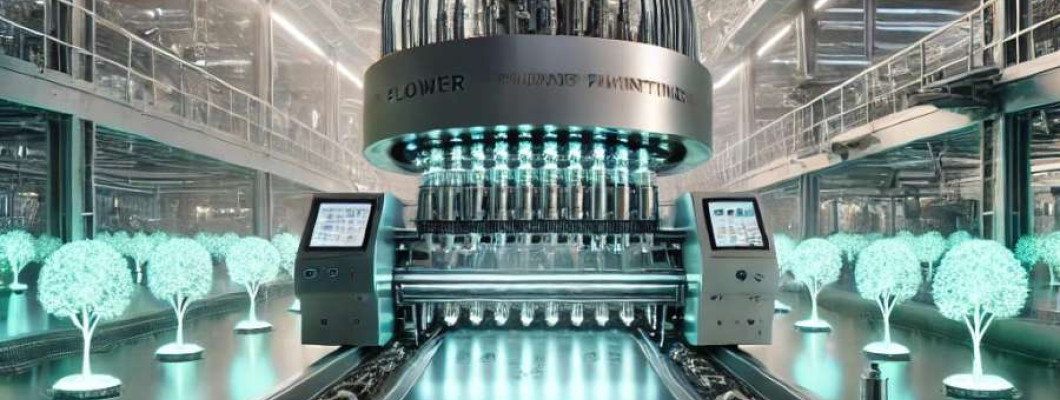
The Industrial Reality of Deploying the Rose Flower Printer in Scaling Operations
In the realm of high-throughput floral decoration production, the transition from artisanal hand-printing methods to mechanized precision solutions represents a critical inflection point. The Rose Flower Printer emerges as a contender designed to bridge the pronounced gap between DIY hobbyist approaches and fully industrialized print systems. From the perspective of a scalable business owner, integrating a new technology necessitates an evaluation beyond basic output quality—it requires scrutiny of throughput capabilities, labor cost efficiencies, and automation readiness.
Consider a mid-sized floral arrangement company targeting a daily output of 5,000 printed flower sleeves. Manual or semi-manual printing methods struggle to sustain such volumes without exponentially increasing headcount or compromising consistency. The Rose Flower Printer is engineered to challenge this bottleneck by offering mechanized precision printing with rapid cycle times, substantially reducing operator intervention. However, understanding the operational context that influences true productivity is paramount.
Operational challenges in scaling include printhead reliability under continuous load, ink supply chain constraints, substrate feeding mechanics, and maintenance downtime—all factors tangibly impacting equipment uptime and net throughput. For instance, a mere 5% unscheduled downtime in a 24/7 printing environment could translate to loss of hundreds of printed units daily, affecting order fulfillment and revenue timelines. Additionally, labor redeployment from manual printing tasks to equipment oversight and quality control must be factored into cost models.
The Rose Flower Printer’s industrial viability hinges on its integration within automated production cells, including conveyance systems and robotic handlers, to augment throughput. Without adequate automation, the device risks operating within a gray zone—technically advanced yet operationally constrained by human-interface bottlenecks. As such, its deployment demands infrastructure alignment and process redesign to realize growth ambitions.
Technical Deep-Dive into the Rose Flower Printer Architecture and Performance
Printhead Configuration and Droplet Technology
The heart of the Rose Flower Printer lies in its printhead assembly, which purportedly employs piezoelectric inkjet nozzles capable of delivering droplet sizes ranging from 3 to 10 picoliters (pl). This droplet size range is critical to balancing print resolution and ink usage—a smaller droplet size enhances color depth and detail but may compromise throughput and increase maintenance needs due to clogging risks.
Hypothetically, based on common industrial printhead physics, operating at a firing frequency of 20 kHz with 128 nozzles per printhead could yield a theoretical maximum print speed of approximately 0.5 m/s on a linear feed. The actual throughput in units per hour is contingent on print area and complexity, but such parameters are competitive with existing medium-scale industrial printers.
Ink Chemistry and Drying Mechanisms
The choice of ink chemistry directly influences drying time and substrate compatibility. Assuming the Rose Flower Printer utilizes solvent-based or UV-curable inks, drying can range from milliseconds in UV curing to several seconds for solvent evaporation. UV curing integration would enhance line speed by removing drying bottlenecks but requires investment in UV LED arrays and thermal management to avoid substrate damage.
Substrate Handling and Feeding Precision
Precision in feeding rose flower sleeves or substrates is vital for micron-level registration accuracy. The printer likely incorporates servo-driven rollers and optical encoders delivering positional repeatability within ±50 microns. Repeatability at this scale is essential for multi-pass color layering and alignment, directly affecting print fidelity and industrial-grade appearance.
Maintenance Protocols and Lifecycle Considerations
Routine maintenance includes nozzle cleaning cycles, printhead recalibration, and ink line purging. Assuming an average maintenance interval of 500 operating hours, the system demands planned downtime refactors in scheduling to minimize lost output. Additionally, consumables such as printheads and ink cartridges account for recurring operational costs that scale with production volume.
Comparative Table Highlighting Operational Tradeoffs
| Feature | DIY Floral Printing | Rose Flower Printer Industrial-Grade |
|---|---|---|
| Throughput (units/hour) | 50–100 | 1500–2000 |
| Print Resolution (dpi) | 300–600 | 1200–1440 |
| Labor Requirement (operators) | 2+ per shift | 0.5 (oversight focused) |
| Downtime Frequency | Low tech; variable | Scheduled 1–2 hours/500h run |
| Maintenance Complexity | Minimal | High, requires trained technicians |
Scenario Analysis Featuring Three Distinct Business Use-Cases
Use-Case One: Medium-Sized Floral Atelier
A floral atelier focused on customized bouquets with printed branding can leverage the Rose Flower Printer to automate sleeve decoration. The printer’s ability to consistently apply high-resolution prints reduces reliance on skilled labor, enabling cost-effective expansion of order volumes without sacrificing quality.
Use-Case Two: Large-Scale Event Decor Supplier
For suppliers catering to major events, throughput is king. The Rose Flower Printer’s integration in a conveyor system offers continuous operation with minimal human oversight, supporting tight delivery schedules. Despite higher maintenance demands, ROI is expedited through volume-driven economies.
Use-Case Three: Niche Artisan Business with Limited Output
Smaller artisan businesses with limited daily throughput may find the Rose Flower Printer’s industrial features excessive and cost-prohibitive. The required infrastructure and maintenance routines may outweigh throughput benefits, favoring lower-cost, manual printing methods.
Expert FAQ Addressing Advanced Operational Technicalities
1. How does printhead nozzle clogging affect continuous operation?
Nozzle clogging leads to partial print dropout and requires automated cleaning cycles that temporarily halt production. The Rose Flower Printer mitigates this with ultrasonic cleaning and ink formulation optimized for particulate suspension, maintaining nozzle functionality over extended runs.
2. What are the thermal management considerations under prolonged deployment?
Continuous printhead firing generates heat necessitating active thermal regulation. The printer likely incorporates heat sinks and forced-air cooling to stabilize component temperature within ±5°C, preventing thermal drift that could degrade print quality.
3. Can the Rose Flower Printer handle substrate thickness variations?
Substrate thickness tolerance depends on the feeding mechanism’s mechanical adjustment range. A robust servo-driven feeding system can accommodate thicknesses between 50 to 300 microns, ensuring registration accuracy despite material variances.
4. How do ink curing methods influence print cycle times?
UV curing reduces drying time to milliseconds, enabling near-continuous print cycles. Conversely, solvent evaporation requires additional dwell time or heating, elongating process duration and reducing throughput.
5. What are the software integration capabilities for automation?
The printer supports integration via standard industrial protocols such as Ethernet/IP and Modbus, enabling synchronization with production line PLCs and MES systems to automate start/stop commands, status monitoring, and fault diagnostics.
Strategic Verdict and Recommendation on the Rose Flower Printer as an Industrial Solution
The Rose Flower Printer represents a significant technological step toward bridging artisanal floral print decoration with scalable industrial demands. Its advanced printhead architecture, combined with precision substrate handling and adaptable ink chemistry options, make it a viable candidate for mid-to-large scale operations prioritizing throughput and automation. While the system entails heightened maintenance complexity and infrastructure requirements, these challenges are offset by notable gains in unit output and labor cost reduction.
For scalable business owners seeking to elevate production capacity without sacrificing quality, the Rose Flower Printer is recommended as a long-term asset that aligns with industrial-grade workflow expectations. The balance of print resolution, operational speed, and integration capabilities underpins its suitability for commercial growth environments.
Further details and procurement options are accessible through the official product portal at Rose Flower Printer.