
The Gap Between DIY and Industrial-Grade Solutions for A3 Edible Food Printing in Scaling Businesses
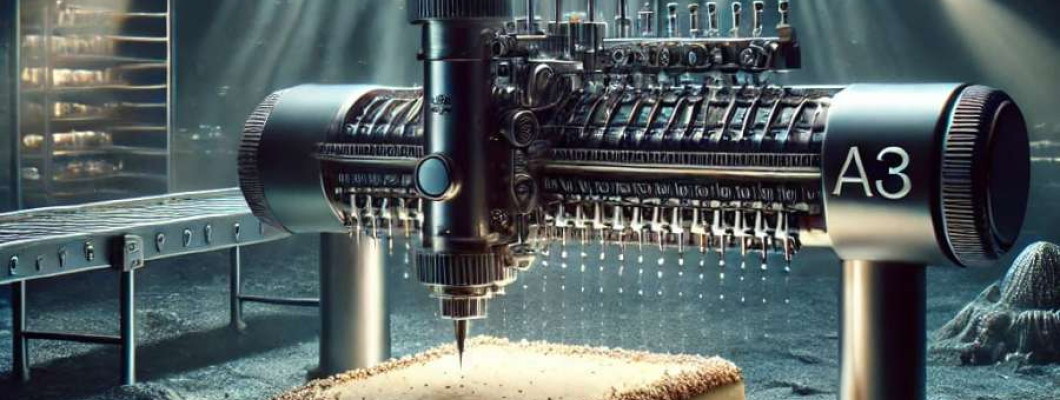
The Industrial Reality of Edible Food Printing at Scale
The edible printing sector has witnessed rapid evolution, particularly with the rise of small bakeries and confectionery businesses aiming to incorporate advanced customization. However, a critical challenge emerges when transitioning from rudimentary DIY setups to truly industrial-grade equipment capable of meeting high-volume demands. This transition is not merely about size or price but involves nuanced technical hurdles such as print precision consistency, substrate adaptability, continuous uptime, and integration into existing production workflows.
Surface irregularities on cakes, cookies, and other confectionery substrates introduce complex engineering requirements. Unlike paper or plastic sheets, edible substrates vary in moisture content, texture, and thermal sensitivity, demanding a printer with adaptive calibration and precise ink deposition. Moreover, ink chemistry in edible printing is constrained by food safety regulations, necessitating specialized formulations with strict viscosity and drying time ranges. These constraints directly impact printhead design and maintenance frequency, which underpin long-term operational stability.
Most small-scale operators rely on modified desktop printers or entry-level devices that cannot sustain high throughput or long print runs without excessive downtime. Consequently, bottlenecks manifest as increased maintenance cycles, printhead clogging, color drift, and substrate damage. Industrial-grade devices engineered for food printing must address these challenges through advanced hardware design, robust automation, and seamless infrastructure integration.
Considering infrastructure, high-precision edible printing equipment requires stable environmental controls—such as humidity and temperature regulation—to maintain ink and substrate integrity. This necessity directly impacts space planning and energy supply parameters in commercial kitchens or production facilities. The jump from a table-top printer to an industrial workstation involves significant capital investment, operational cost modeling, and staff training programs centered on equipment-specific protocols.
Technical Deep Dive into Industrial-Grade A3 Edible Food Printing
Printhead Technology and Physics of Ink Deposition
High-resolution edible printing demands printheads capable of ejecting droplets in the range of 5 to 15 picoliters (pl) with positional accuracy under 20 microns per nozzle. Standard piezoelectric heads adapted for food-grade inks must accommodate higher viscosity to maintain droplet cohesion without sacrificing droplet velocity, which typically ranges from 5 to 10 m/s. This balance affects dot gain and edge sharpness critical to photorealistic edible prints on cakes.
Ink Chemistry and Material Compatibility
Food-safe inks must exhibit non-toxic, allergen-free formulations with pigment particle sizes below 1 micron to prevent nozzle clogging. Viscosity windows between 2 and 10 mPa·s and surface tension around 30–40 mN/m are essential for consistent jetting. Additionally, rapid drying mechanisms, often utilizing infrared or UV food-safe curing, reduce print time and prevent smudging. Compatibility across substrates—ranging from fondant, buttercream, to sugar cookies—requires adaptive ink layering strategies to accommodate absorption and surface roughness variance.
Mechanical Precision and Motion Control
The A3 format demands a carriage and belt system rated for sub-millimeter positional repeatability over lengths exceeding 420mm. Industrial-grade stepper motors or servo systems with feedback loops maintain acceleration profiles minimizing vibration, crucial to maintaining color registration across multiple passes. Print speed optimization must balance throughput with mechanical stress and heat dissipation, keeping operations within optimal thermal envelopes to prevent premature component wear.
Operational Uptime and Maintenance Regimes
Daily print cycles exceeding 8 hours place stringent demands on printhead clog management and ink delivery systems. Automated nozzle check and cleaning cycles integrated into software can reduce downtime by 40%. Consumable replacement intervals for printheads and ink cartridges average between 500 and 1,000 print hours, depending on ink formulations and substrate abrasiveness. Predictive maintenance using sensors to monitor ink viscosity, ambient humidity, and nozzle health enhances overall equipment effectiveness (OEE).
Comparative Table of DIY vs Industrial-Grade Edible Food Printers
| Aspect | DIY/Entry-Level Printer | Industrial-Grade Printer (e.g. A3 Edible Food Printer) |
|---|---|---|
| Print Resolution | 300-600 dpi | 1200-1440 dpi |
| Print Area | Up to A4 (210x297 mm) | A3 (297x420 mm) |
| Ink Formulation | Limited, standard edible inks | Specialized, food-safe, high-viscosity inks |
| Printhead Droplet Size | 20-50 pl | 5-15 pl |
| Operational Uptime | Less than 4 hours/day without clogging | 8+ hours continuous print |
| Substrate Adaptability | Limited, mostly flat surfaces | High, including curved and textured substrates |
| Maintenance Frequency | Multiple times daily | Automated cleaning, once weekly manual check |
| Integration | Standalone devices | Seamless workflow and environmental control integration |
Scenario Analysis of Industrial-Grade Edible Printing Applications
Scenario One: High-Volume Boutique Confectionery
A boutique bakery specializing in corporate event cakes needs to produce up to 100 large cakes per week with highly detailed logos and photographic-quality prints. The A3 Edible Food Printer provides precise color matching and consistent image fidelity across repeat runs. Automated cleaning cycles reduce downtime, while the printer's ability to handle fondant and buttercream surfaces ensures minimal substrate preparation. The result is a reliable ramp-up in throughput with minimal labor overhead.
Scenario Two: Artisan Cookie Production with Custom Prints
An artisan cookie manufacturer offering personalized designs requires micron-level print precision to replicate intricate lacework patterns in food-safe inks on textured cookie surfaces. The fine droplet size of the industrial-grade printhead and multi-pass color layering deliver unmatched sharpness, while thermal management ensures fast drying without substrate warping. This level of precision encourages premium pricing and differentiation in a crowded market.
Scenario Three: Automated Wedding Cake Assembly Line
A large commercial kitchen implementing semi-automated cake assembly integrates the A3 printer into existing conveyor workflows. The printer's footprint aligns with throughput targets, and built-in sensors monitor substrate positioning for real-time registration correction. Operators benefit from remote diagnostics and easy consumable swaps to maximize uptime. This integration improves production velocity and reduces errors compared to manual decoration.
Expert FAQ on Industrial-Grade Edible Food Printers
What is the effect of substrate moisture variance on print quality?
Variations in substrate moisture alter ink absorption rates and drying time, potentially causing color bleeding or uneven edges. Industrial systems compensate through environmental controls and adaptive ink layering algorithms to maintain consistent print fidelity.
How does droplet velocity influence edge sharpness on curves?
Higher droplet velocity reduces droplet spreading upon impact, improving sharpness especially on curved or textured surfaces. However, it must be balanced to avoid misting or satellite droplet formation.
What maintenance protocols minimize printhead clogging with edible inks?
Automated nozzle checks, frequent purging cycles, and maintaining optimal ink viscosity through temperature control prevent clogging. Regular manual cleaning using food-safe solvents complements automated routines.
Can the printer support multi-layer edible inks for textured effects?
Yes. Industrial-grade printers support multi-pass printing with drying phases between layers to create texture and depth, which is tailored through software scripting and precise droplet placement.
What environmental factors most affect long-term calibration?
Ambient humidity and temperature fluctuations cause expansion/contraction in mechanical components and affect ink properties, accelerating calibration drift. Robust thermal and humidity regulation in the printer environment is essential for maintaining dimensional accuracy over time.
Strategic Verdict and Recommendation for Industrial Edible Printing
The A3 Edible Food Printer For Printing Cakes Cookies establishes itself as a definitive industrial-grade solution bridging the critical gap between DIY devices and enterprise-grade performance requirements. Its engineering precisely aligns with the operational demands of commercial bakeries and confectionery manufacturers pursuing high throughput, substrate versatility, and consistent photorealistic output. By addressing the nuanced physics of edible ink deposition, advanced mechanical controls, and intelligent maintenance automation, it mitigates the hidden bottlenecks commonly encountered in scaling setups.
Commercial operators seeking to future-proof their production workflow will find the device's robust printhead technology combined with adaptive ink chemistry invaluable. Its industrial-grade uptime and throughput capabilities resolve compliance requirements and reduce labor overheads, making it an economically viable capital asset.
For those interested in upgrading to proven industrial edible printing hardware, we recommend reviewing the specifications and operational framework available at A3 Edible Food Printer For Printing Cakes Cookies. This investment decisively shifts the operational paradigm towards reliable, high-precision edible food printing that meets contemporary industry standards and scalability demands.