
The Gap Between DIY and Industrial-Grade Solutions for Headstone Photo Printing
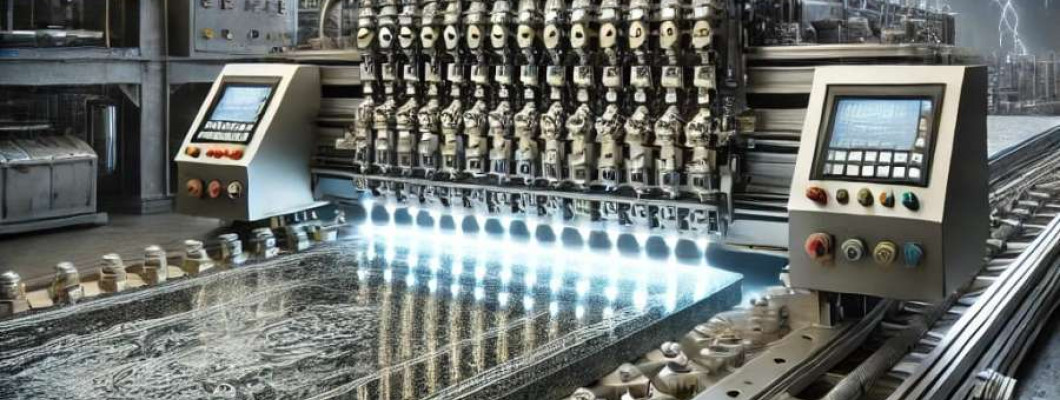
The Industrial Reality of Headstone Photo Printing Challenges
In the highly specialized field of headstone photo printing, the transition from artisan-level or DIY solutions to industrial-grade technology introduces complex technical and operational challenges. The print output must withstand extreme environmental factors such as UV exposure, moisture, and abrasion over decades, requiring not only high-precision image reproduction but also durable substrate bonding and chemical resistance. In typical cemeteries, environmental variability—ranging from freezing temperatures to high humidity—creates substantial operational stress on printing technologies.
Operators tackling this niche are confronted with maintaining consistent micron-level image fidelity on non-standard materials like granite or porcelain tiles, whose thermal expansion coefficients and surface energy significantly diverge from conventional printing substrates. Furthermore, the integration of robust inkjet technology capable of accommodating high-viscosity inorganic inks is indispensable to achieving permanent, high-contrast photographic renderings on highly textured stone surfaces.
Traditional desktop or semi-professional photo printers, while cost-effective, fall short in terms of print longevity and fail proprietary testing standards for headstone imagery, especially in institutional cemeteries where regulatory compliance stipulates precise durability metrics. These operational realities usher a pivot toward industrial print systems explicitly designed for this domain, which possess advanced thermal management, precision motion control, and adaptive printhead calibration for irregular surfaces.
Technical Deep-Dive into Industrial Headstone Photo Printer Architecture
Printhead Technology and Ink Chemistry
Industrial headstone photo printers commonly utilize piezoelectric drop-on-demand printheads with nozzle diameters typically between 20 and 35 micrometers (µm). These smaller nozzles enable droplet volumes as fine as 5 to 10 picoliters (pl), critical to achieve photo-realistic detail and halftone gradations on stone substrates.
The ink formulations are engineered to contain ceramic pigments or metal oxides suspended in UV-curable or solvent-based media, optimized for rapid adhesion and chemical stability on granite or porcelain. Ink viscosity typically ranges from 8 to 15 centipoise (cP) at nozzle operating temperatures of 35–45°C to maintain droplet consistency and reduce clogging risks, factoring into printhead lifespan and maintenance frequency.
Substrate Handling and Motion Control Accuracy
Granite slabs or porcelain plaques present non-planarity challenges with surface roughness measuring approximately 10 to 50 µm Ra (arithmetic mean roughness). The printer incorporates advanced multi-axis servo motors achieving positional repeatability within ±10 µm, with real-time feedback loops adjusting printhead distance via laser displacement sensors. This adaptive control is crucial to maintain consistent droplet placement and prevent ink pooling or misregistration on uneven surfaces.
Thermal Management and Environmental Stability
Industrial units deploy integrated liquid cooling or thermoelectric elements maintaining stable printhead temperature within ±0.5°C. Coupled with enclosure climate control—achieving relative humidity stabilization near 45% and ambient temperature between 22 and 26°C—the system prevents thermal drift and ink viscosity fluctuations that compromise print uniformity.
Operational Throughput and Lifecycle Considerations
A high-end headstone photo printer sustains production rates of approximately 25–30 plaques per hour at 1200 dpi resolution with 8-bit grayscale depth. With predictive maintenance algorithms monitoring printhead voltage and nozzle health, scheduled downtime is minimized to less than 5% annually. Asset depreciation over a 7-year lifecycle factors in consumables usage—ink, printheads, substrates—and labor, significantly reducing overhead compared to refurbishing failed prints or reprinting due to durability failures.
Comparative Hardware Analysis
| Specification | Industrial Headstone Photo Printer | DIY/Semi-Pro Photo Printer |
|---|---|---|
| Printhead Nozzle Diameter | 20–35 µm | 45–60 µm |
| Droplet Volume | 5–10 pl | 15–30 pl |
| Substrate Compatibility | Granite, Porcelain, Stone Tiles | Paper, Vinyl, Thin Plastics |
| Thermal Control | ±0.5°C with liquid cooling | Passive cooling only |
| Throughput | 25–30 units/hour | 5–10 units/hour |
| Maintenance Downtime | <5% annually | 15–25% annually |
Scenario Analysis of Business Use-Cases
Memorial Service Providers Scaling Volume
Providers servicing large cemeteries require repeatable print quality at high throughput to meet contract deadlines. Industrial printers enable 30 plaques per hour with consistent image durability, reducing labor costs by 40% versus manual photo application methods. The printer’s adaptive substrate sensing eliminates print errors on natural stone variance, reducing waste.
Custom Artisan Stone Engravers
High-end artisans benefit from the printer’s sub-10 pl droplet precision for micron-level shading and grayscale depth that traditional engraving cannot match. The thermal management system ensures stable ink viscosity for consistent sharpness across diverse stone types.
Municipal Cemetery Maintenance Departments
Municipalities require reliable compliance with environmental durability standards. The industrial solution’s ink chemistry meets ISO-standard abrasion and UV testing, significantly lowering reprint frequency and long-term maintenance expenditures.
Expert FAQ
How does the ink chemistry adapt to granite porosity variations?
The ceramic pigment-based inks penetrate micro-pores in granite under controlled curing to maximize adhesion without excessive absorption, preserving image clarity and preventing color fading.
What are critical failure points for printheads in this application?
Clogging due to particulate inks and thermal overload are primary failure risks. The printer’s active temperature regulation and ultrasonic nozzle cleaning cycles mitigate these risks.
Can the printer handle non-flat or curved surfaces?
The standard model supports substrate thickness up to 50 mm and surface tilt up to ±2°, with sensor-assisted head height adjustments. Curved or irregular shapes beyond this require custom mounts or specialized units.
What predictive maintenance technologies are integrated?
Embedded voltage sensing on piezo drivers, droplet ejection monitoring, and printhead impedance measurements allow real-time diagnostics and preemptive servicing alerts.
How does environmental control impact print consistency?
Stable humidity and temperature prevent microscopic swelling or shrinking of substrates and ink viscosity shifts, which are crucial to maintaining droplet trajectory and precise color registration.
Strategic Verdict and Recommendation
In view of the operational demands and technical complexities inherent to headstone photo printing, the industrial-grade Headstone Photo Printer Tomb Photos Printer emerges as the definitive solution for professional providers. It offers unmatched print fidelity with superior substrate adaptability, advanced thermal and environmental controls, and lifecycle efficiencies that overshadow semi-professional alternatives. Organizations prioritizing longevity, throughput, and regulatory compliance will find this printer aligns precisely with industrial-scale requirements. The robust design ensures minimized downtime and streamlined maintenance, yielding a strong return on investment over its operational lifespan. This positioning establishes the hardware not as a mere printing device but as an essential industrial asset for headstone photographic reproduction sectors.