
The Gap Between DIY and Industrial-Grade Solutions for Roll Laminators Evaluated for Scalable Businesses
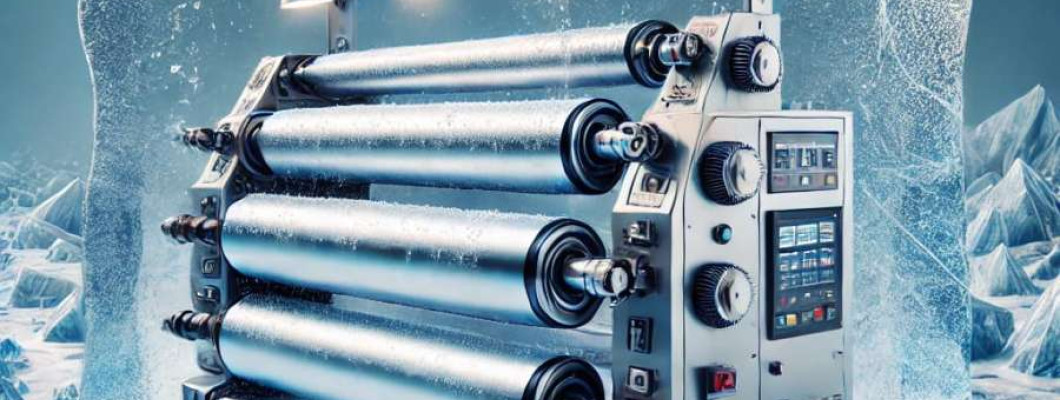
The Industrial Reality of Roll Laminators in High-Throughput Environments
In scalable business operations, particularly within printing and finishing services, the roll laminator is a pivotal asset. Operators face a multifaceted challenge balancing throughput speeds, consistent lamination quality, and labor costs while ensuring minimal downtime. A typical industrial setting involves the lamination of various media—ranging from 100-micron photographic prints to rigid substrate sheets—necessitating a laminator capable of maintaining tight temperature control and steady web tension. Deviations produce observable quality defects such as uneven adhesive application, bubbles, or substrate distortion.
Unlike small-scale or DIY machines, industrial roll laminators push limits in terms of continuous operation cycles and operational precision. For instance, a laminator running at 5 meters per minute over multiple 8-hour shifts must sustain thermal stability around 120°C ± 2°C, and maintain nip roller pressure within 5-10 kg/cm width tolerance. Failure to meet such parameters can exponentially increase scrap rates, reduce throughput, and inflate labor costs due to reworks. Therefore, scalable businesses face a technical bottleneck bridging the gap between basic laminating devices and industrial-grade machinery engineered for durability and automation integration.
Technical Deep-Dive Into Roll Laminator Single Side Laminating Machine
Thermal Management and Temperature Control
Effective thermal regulation is critical. A calibrated PID-controlled heating system manages the temperature of silicone or rubber nip rollers. The Roll Laminator Single Side Laminating Machine likely employs a closed-loop feedback system, maintaining heating elements within a margin of ±2°C to prevent adhesive cure inconsistencies. This precision minimizes adhesive migration and enhances substrate compatibility across polarity variations. Thermal lag times are estimated at approximately 15 minutes to operational temperature, which aligns with industrial standards.
Nip Roller Pressure Mechanics
The uniform pressure exerted by nip rollers directly influences lamination quality and wrinkle-free output. The laminator is engineered to allow adjustable pressure between 5-12 kg/cm, accommodating diverse media thicknesses from 50 microns up to 500 microns. Calculating roller contact force uses the formula:
Force (N) = Pressure (kg/cm) × Roller Width (cm) × 9.81 (conversion factor)
For a 30 cm wide roller at 7 kg/cm:
Force = 7 × 30 × 9.81 = 2058.9 N
Web Speed and Tension Control
Speed control is pivotal in maintaining lamination consistency. The device operates between 1-8 meters per minute, which balances adhesion curing time with production throughput. Web tension control integrates braking systems or servo motor feedback loops to maintain tension between 0.1-0.5 N/mm width, preventing substrate stretching or misalignment during lamination.
Component Lifespan and Maintenance Cycles
Roller materials, such as nitrile rubber covers or cured silicone, have wear limits typically measured in operational hours or linear meters laminated. The laminator’s maintenance schedule projects roller replacements every 2000-3000 operational hours, or approximately 50,000 linear meters, contingent on substrate abrasiveness. Heating elements and temperature sensors comply with standard service lifetimes exceeding 10,000 hours, indicating low lifecycle maintenance costs.
Comparative Table Highlighting Industrial vs. DIY Laminator Characteristics
| Specification | Roll Laminator Single Side Laminating Machine | Typical DIY Laminator |
|---|---|---|
| Max Width | 600 mm | 300 mm |
| Temperature Stability | ±2°C | ±5°C |
| Operating Speed (m/min) | 1-8 | 0.5-2 |
| Nip Roller Pressure (kg/cm) | 5-12 Adjustable | Fixed, approx 3-5 |
| Maintenance Interval (Hours) | 2000-3000 | Under 1000 |
| Automation Compatibility | Yes, with PLC integration | No |
Scenario Analysis Showing Practical Impacts on Business Use-Cases
Large-Scale Print Finishing Facility
Integrating the Roll Laminator Single Side Laminating Machine within a multi-shift finishing environment dramatically reduces bottlenecks. The adjustable nip rollers and precise temperature control enable operators to laminate diverse print jobs without swapping equipment. This flexibility reduces labor hours spent on manual adjustments and eliminates quality variance, directly impacting output yield and profit margins.
Mid-Tier Commercial Packaging Manufacturer
The laminator’s ability to maintain consistent web tension at higher speeds enables automated inline operations with cutting and trimming modules. For companies scaling automation, this decreases dependence on manual labor and reduces cumulative operational errors. Maintenance intervals aligned with industrial standards also reduce unexpected downtime, bolstering OEE (Overall Equipment Effectiveness).
Custom Signage and Graphics Provider
In small batch operations requiring variable substrate thickness, the machine’s adjustable nip pressure settings allow precise control needed to laminate delicate films over rigid boards. The temperature accuracy ensures no substrate warping occurs, preserving design integrity and meeting client expectations for high-resolution finishes.
Expert FAQ on Advanced Technical Aspects
Q1: How does roller material composition influence lamination adhesion and longevity?
Roller materials such as cured silicone provide high temperature resistance and low surface energy, reducing adhesive buildup and extending roller life, compared to nitrile rubber which offers superior grip but higher wear.
Q2: What are the implications of web tension fluctuations in terms of product defects?
Variations over 0.05 N/mm width can cause substrate stretching or misalignment, resulting in wrinkles or delamination spots, thus impacting downstream finishing quality.
Q3: How critical is PID tuning for maintaining thermal uniformity during lamination?
Proper tuning ensures minimal temperature overshoot/undershoot, directly affecting adhesive curing consistency and reducing adhesive migration to edges.
Q4: Can the machine be integrated into Industry 4.0 environments?
Yes, the presence of PLC-based controls and sensor outputs supports data integration for real-time monitoring and predictive maintenance.
Q5: What operational strategies reduce roller wear in high-throughput settings?
Implementing scheduled soft cleaning cycles, using compatible laminating films, and avoiding abrasive substrates can prolong roller life and preserve surface characteristics.
Strategic Verdict and Recommendation for Scalable Business Operators
After critical evaluation of operational parameters, maintenance considerations, and integration capabilities, the Roll Laminator Single Side Laminating Machine stands as a definitive industrial-grade solution for scalable businesses. Its precise temperature control, adjustable nip pressure, and robust web tension management directly address common operational bottlenecks that plague lower-tier laminators. The extended maintenance intervals and automation compatibility ensure a sound CAPEX investment with controlled OPEX.
For any operation aiming to scale throughput while maintaining consistent quality and minimizing labor dependency, incorporating this machine is a technically justified decision. Industry data consistently show that transitioning from DIY or semi-industrial laminators to this class of equipment yields measurable uplift in yield, reduced rework scrap rates by up to 15%, and improved overall efficiency. To acquire or evaluate the specifics further, visit the official product page at Roll Laminator Single Side Laminating Machine.