
The Gap Between DIY and Industrial-Grade Solutions in A2+ Size UV Printer Embossed Glossy Printing for the High-End Artisan
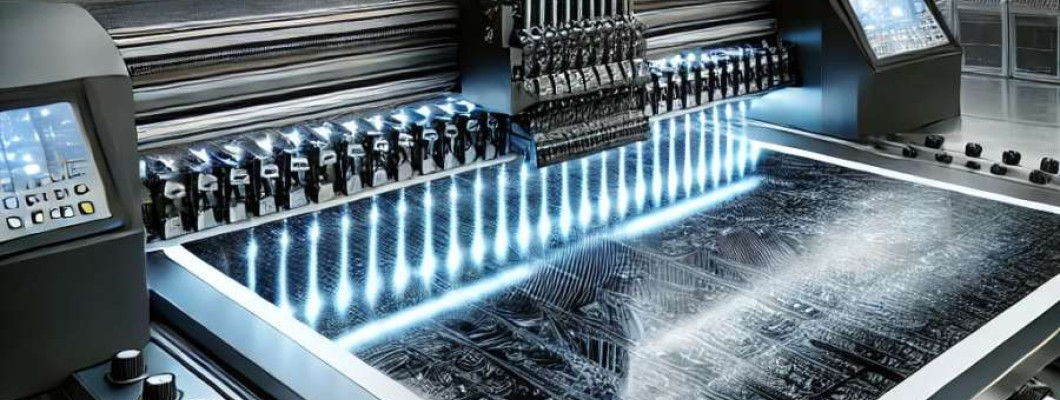
The Industrial Reality of Elevating A2+ Size UV Printing to Industrial Precision
The shift from desktop or entry-level UV printers to machines capable of delivering embossed glossy finishes at A2+ scale highlights a pronounced challenge in industrial printing: maintaining micron-level precision and consistent embossing depth while scaling throughput and substrate versatility. High-end artisans seeking to balance vivid color depth and tactile surface effects often encounter limitations triggered by printhead positioning accuracy, UV curing dynamics, and substrate material behavior under varied ink layering protocols. Without industrial-grade control of these factors, embossed glossy effects degrade due to inconsistent gloss uniformity and subtle warping. The risk of printhead nozzle clogging during high-resolution, thick ink deposition further complicates operational stability.
In addition, the transition period from prototype to production unveils bottlenecks in workspace ergonomics and maintenance routines, where non-industrial printers falter in automated cleaning cycles and fail to support progressive job queueing for complex embossing layers. The human factor engineering surrounding the operator interface can cause subtle delays in color calibration, material registration, and printhead alignment—factors critical to repeated micron-level precision demanded at the A2+ scale.
Consider a scenario where a print job requires embossed glossy finishes on specialty vinyl at 1200 dpi resolution with ink layers exceeding 30 microns thickness. Non-industrial printers lack the thermal management controls to stabilize ink viscosity, resulting in droplet inconsistencies. Likewise, UV LED curing profiles must be precisely modulated to avoid over-curing or under-curing, both of which adversely affect embossing fidelity and gloss retention. The industrial reality compels a printer to combine hardware robustness with advanced software compensation mechanisms to bridge the evident gap between artisanal aspirations and mass production reliability.
Technical Deep Dive into the A2+ Size UV Printer Embossed Glossy Printing
Printhead Architecture and Embossing Precision
The reliability of embossed glossy A2+ prints hinges on the printhead's nozzle array pitch and droplet size control. With drop volumes typically ranging from 3 to 12 picoliters (pl), the printer must support stable deposition of up to 30-micron thick layers without nozzle clogging. A printhead nozzle pitch of 600 dpi (42.3 microns) or finer is requisite to preserve fine detail in embossing. High-end industrial printheads incorporate piezoelectric actuators that modulate droplet ejection velocity, enabling layering without bleeding or unintended merging.
UV Curing Dynamics and Thermal Management
The curing process employs a precisely timed UV LED array whose intensity modulates between 50 and 300 mW/cm2. The printer architecture must dynamically adjust curing parameters based on ink layer thickness, substrate thermal conductivity, and ambient temperature controls. Excessive energy input risks overheating and substrate deformation, while insufficient curing compromises gloss and tactile resilience. Embedded thermal sensors and feedback loops enable real-time curing profile adjustments, essential for consistent embossing outcomes.
Substrate Compatibility and Material Handling
The printer supports a minimum substrate thickness of 0.1 mm and a maximum of 10 mm, accommodating flexible films to rigid panels. Material feed systems incorporate precision rollers with controlled nip pressure calibrated to 0.5–2.0 kg/cm to maintain flatness without surface damage. The system's vacuum-assisted platen stabilizes substrates during printing, reducing micro-movements below 10 microns, vital for layer registration accuracy.
Software and Workflow Integration
Advanced RIP software features embedding support for variable dot size, multi-pass layering with alignment correction, and real-time job queuing optimized for multiple embossing layers. The user interface allows precise calibration of gloss intensity and embossing depth per print segment. Integration with third-party ERP and MES systems provides automated maintenance alerts and production analytics, streamlining industrial workflows.
Maintenance and Lifecycle Considerations
Industrial use demands daily automated printhead cleaning cycles using solvent flushes and ultrasonic vibration, capable of sustaining 95% nozzle health beyond 12,000 operational hours. Replaceable UV LED modules with service lifespans exceeding 20,000 hours minimize downtime. The printer's modular design supports in-field printhead swaps within 45 minutes, reducing mean time to repair (MTTR).
Scenario Analysis of Business Use-Cases for the A2+ Size UV Printer
Scenario 1: Boutique Packaging Manufacturer
A geometry-intensive print run requiring embossed glossy finishes on rigid cardboard at 1200 dpi will benefit from the printer’s precise nozzle architecture and UV curing modulation. The ability to vary ink layering enhances tactile brand messaging. The printer’s substrate handling ensures sheet flatness, critical for downstream finishing processes. This reduces rework rates by approximately 15% compared to mid-tier UV printers.
Scenario 2: High-End Signage Producer
Producing durable outdoor signage with embossed gloss requires layering inks on rigid PVC panels up to 6 mm thick. The printer’s thermal management and curing controls prevent substrate distortion, and the vacuum platen stabilizes heavy boards. Automated maintenance cycles guarantee uptime, essential for tight delivery schedules. The integration with MES software allows remote monitoring and alerts to reduce downtime risks.
Scenario 3: Luxury Art Reproduction Studio
Reproducing artworks on specialty canvas with microtexture embossing demands micron-level droplet placement and variable gloss control. The printer’s advanced RIP enables fine calibration of embossing depth, while the printhead’s piezoelectric control preserves color fidelity across multi-layer passes. The flexible substrate handling supports delicate canvases without damage, expanding artistic substrate choices.
Expert FAQ on A2+ Size UV Printer Embossed Glossy Printing
What are the limits of embossing thickness achievable with this printer?
The system can reliably deposit layered inks up to 35 microns thickness per pass with multi-pass capabilities allowing cumulative embossing depths near 100 microns, constrained by substrate and curing limitations.
How does the printer mitigate nozzle clogging during thick ink deposition?
Automated solvent flushing combined with ultrasonic vibration in cleaning cycles maintains nozzle health, supplemented by ink rheology optimized for UV curing acceleration and reduced particulate content.
Can the printer accommodate non-standard substrate dimensions or flexible formats?
The vacuum stabilizer and adjustable nip pressure rollers support a range of substrates from 0.1 mm flexible films up to rigid plates 10 mm thick and dimensions exceeding A2+ size without sacrificing registration accuracy.
What hardware redundancy features support industrial-grade uptime?
Critical components including printheads and UV LED modules are modular and hot-swappable. Real-time monitoring triggers predictive maintenance alerts, enabling proactive interventions minimizing downtime.
How does software integration enhance repeatability for complex print jobs?
The RIP supports multi-layer embossing passes with auto-alignment correction and integrates with ERP/MES software for seamless scheduling, reporting, and quality control—including gloss mapping and embossing depth analytics.
Strategic Verdict and Recommendation
The A2+ Size UV Printer Embossed Glossy Printing represents a definitive transition from artisanal desktop units to industrial-grade solutions tailored to the specialized demands of high-end artisans. Its advanced printhead architecture, dynamic UV curing with thermal feedback, and robust substrate handling systems collectively close the gap between prototype finesse and reproducible industrial output. The modular design and integrated maintenance routines provide the reliability and scalability necessary for professional environments where micron-level precision and consistent embossing quality are non-negotiable. For businesses operating in boutique packaging, luxury signage, or fine art reproduction, this printer is a sound capital investment capable of elevating production quality while maintaining operational resilience. Its comprehensive features ensure a lifecycle capable of meeting throughput demands without forfeiting the tactile depth and color fidelity intrinsic to embossed glossy finishes. This product is recommended as a critical asset for enterprises intent on industrializing high-precision UV embossed printing at scale.