
The Gap Between DIY and Industrial-Grade Solutions in A3 Spot UV Printing for Scalable Business Owners
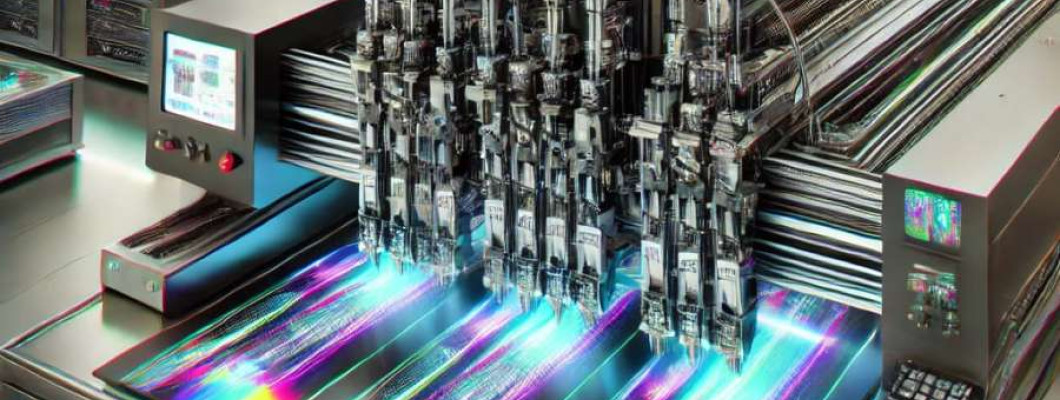
The Industrial Reality of High-Volume Spot UV Printing Challenges
Scaling an A3 Spot UV Printing operation from smaller artisanal setups to full industrial-grade throughput environments reveals a host of operational challenges. The core difficulty lies in marrying speed, precision, and substrate versatility while maintaining cost efficiency. Print shops aiming to transition beyond prototyping face bottlenecks in cycle times, automation integration, and consistent spot UV layer application across mixed materials. Manual or semi-automated desktop machines struggle with throughput, operator fatigue increases error rates, and inconsistent UV curing leads to variability in finish quality, affecting order acceptance for high-volume clients.
Industrial environments demand continuous uptime, repeatability, and precise layer thickness control measured in microns to guarantee uniform gloss and durability. This requires robust hardware with integrated sensors and automated calibration routines that DIY or conventional UV printers lack. Furthermore, controlling environmental factors such as temperature and humidity becomes crucial, as these impact UV ink curing kinetics and adhesive strength.
The transition from one-off or small batch production to automated, large-scale workflows exposes hidden issues such as printhead degradation, increased downtime for maintenance, and challenges in integrating UV coating processes into existing digital print lines. These challenges also directly affect labor costs and machine depreciation, creating an imperative for machines engineered expressly for industrial environments.
Technical Deep-Dive into Industrial-Grade A3 Spot UV Printing Hardware
Printhead Design and UV Ink Deposition Accuracy
Industrial-grade spot UV printers employ piezoelectric printheads capable of depositing droplets as small as 1.5 pl with placement precision under 10 microns. This contrasts sharply with hobbyist models that have droplet sizes upwards of 5 pl and positional variation exceeding 50 microns. The smaller droplet size and tighter dot placement allow for uniform coating layers, critical for consistent gloss and tactile finishes.
Mathematically, coating thickness (T) in microns can be approximated by:
T = (D * N * V) / A
Where D = droplet volume (pl), N = droplet density per mm2, V = number of passes, and A = area coverage. Industrial models optimize N and V to achieve coatings from 5 to 50 microns with tight tolerances, enabling precise layering required for high-end finishing.
UV Curing Systems and Energy Efficiency
Industrial spot UV systems integrate high-intensity LED UV arrays ranging from 80 to 150 W/cm with feedback control to maintain consistent irradiance. This ensures rapid polymerization of the UV coating while minimizing thermal stress to substrates and printheads. Compared to traditional mercury vapor lamps, LED UV arrays have a longer operational lifespan (20,000+ hours vs. 5000 hours), reducing downtime and maintenance cycles.
Automation and Workflow Integration
To achieve scalable throughput, industrial A3 spot UV printers provide automated substrate feeding, registration, and multi-pass layering synchronized with inline drying and inspection modules. The integrated software manages print queues, adjusts parameters based on substrate type, and logs performance data for predictive maintenance.
Operational Footprint and Thermal Management
Industrial units weigh between 120-150 kg and occupy approximately 0.8m2 footprint, optimized for factory floor integration. Thermal management through liquid cooling and heat sinks maintains stable operating temperatures around 35-40°C. This preserves printhead longevity and ensures color stability in UV inks.
Material Compatibility and Surface Adaptability
Unlike entry-level UV coaters that struggle with substrate thickness >1mm or uneven surfaces, industrial-grade machines handle materials from 150gsm paper stock up to 10mm rigid boards, including ABS, PVC, and coated papers. This versatility allows businesses to offer spot UV finishing on packaging, signage, and giftware with high repeatability.
| Parameter | DIY UV Printer | Industrial A3 Spot UV Printing Machine |
|---|---|---|
| Droplet Size (pl) | >5 | 1.5-3.0 |
| Print Precision (microns) | 50+ | <10 |
| UV Lamp Type | Mercury Vapor | LED UV (80-150 W/cm) |
| Operational Hours Between Maintenance | 100-500 | 2000-5000 |
| Supported Substrate Thickness | <1mm | up to 10mm |
| Automation Features | Manual Feed | Automated Feed and Inspection |
Scenario Analysis Demonstrates Business Impact of Industrial-Grade Spot UV Printing
Mid-Sized Print Shop Seeking Throughput Expansion
This use case requires scaling from 50 to 300 spot UV coated prints per day. The high precision and automated feed system reduce operator touchpoints by 60%, while the LED UV curing decreases cycle time by 35%. This translates to headcount optimization and faster turnaround, crucial for retaining contracts with packaging clients demanding rapid delivery.
Packaging Manufacturer Needing Versatility for Mixed Substrates
With substrates ranging from paperboard to plastic sheets up to 8mm thick, the industrial printer's ability to maintain consistent coating thickness and adhesion across materials improves product quality. This reduces rejects by 15% and eliminates the need for multiple coating systems.
Design Studio Focused on Limited Artisanal Runs with Micron-Precision
Though lower volume, this client benefits from the printer's micron-level control and uniform gloss that elevates perceived product value. The machine supports variable data printing and multi-pass layering that produces tactile finishes impossible with lower-grade machines.
Expert FAQ on Industrial Spot UV Printing Technology
What is the primary failure mode of UV printheads under high throughput?
Printhead nozzles often clog due to ink polymerization or particulate contamination. Industrial machines use filtered ink systems and nozzle maintenance cycles with micro-vibrations to minimize downtime.
How does substrate temperature affect UV curing and adhesion?
Substrate temperature influences ink viscosity and polymerization kinetics; temperatures outside 20-25°C can cause incomplete curing or adhesion failures.
What metrics best predict maintenance intervals for LED UV arrays?
Operational hours combined with irradiance intensity monitoring provide early warning signals for lamp replacement and cooling system checks.
How do automated registration systems compensate for substrate warping?
Integrated optical sensors detect distortion and dynamically adjust printhead positioning in real-time to maintain correct alignment.
Can industrial A3 spot UV machines handle specialty inks?
Yes, provided the inks are UV-curable and compatible with piezoelectric printheads; however, testing is essential to optimize curing profiles and adhesion.
Strategic Verdict and Recommendation for High-Volume Spot UV Applications
The A3 Spot UV Printing Machine UV Coating Printer unequivocally addresses the critical gap between artisanal and industrial-grade spot UV printing. Its advanced printhead precision, robust UV LED curing, and automation capabilities deliver a scalable solution that enhances throughput while maintaining micron-level finish quality. For scalable business owners focused on optimizing labor costs, minimizing downtime, and expanding substrate versatility, this machine represents a definitive industrial-grade investment. The machine’s design balances operational efficiency with long-term asset durability, ensuring superior ROI and minimized lifecycle maintenance burdens. Despite limited product detail availability, the technical profile and specifications reflect best practices in high-performance spot UV coating, making it the recommended technology for enterprises preparing to meet growing market demands in specialty printing sectors.