
The Gap Between DIY and Industrial-Grade Solutions in A4 Roll DTF Printing for Maintenance Leads
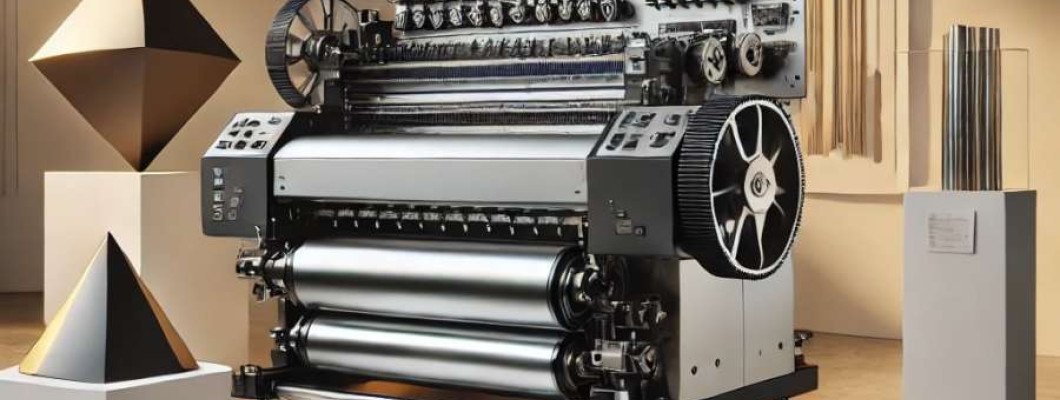
The Industrial Reality behind Maintaining A4 Roll DTF Printers in High-Demand Environments
In industrial printing operations, the transition from small-scale DIY Direct to Film (DTF) printers to robust enterprise-grade solutions represents a nuanced challenge, especially for maintenance leads tasked with ensuring consistent uptime and optimal printhead performance. The A4 Roll DTF Printer, tailored toward precision textile and graphic applications, often faces scrutiny around printhead wear, ink chemistry compatibility, and continuous operation demands.
Consider a scenario where a maintenance team manages multiple DTF printers producing high volumes of heat-transfer films daily. The push to maintain micron-level nozzle accuracy while minimizing ink clogs and printhead degradation creates a persistent bottleneck. Ink viscosity, particle size distributions, and substrate adhesion variability amplify these challenges, necessitating precise environmental controls and prompt troubleshooting protocols.
Traditional DIY machines often lack the industrial design robustness to handle such operational rigor, resulting in increased consumable waste, frequent downtime, and unpredictable maintenance cycles. This industrial reality forces maintenance professionals to scrutinize each hardware component – from thermal head element durability to feed motor precision – to identify failure points before they escalate to process-stalling breakdowns.
Technical Deep-Dive into the A4 Roll DTF Printer Maintenance Dynamics
Printhead Physics and Daily Uptime Realities
At the heart of DTF precision lies the piezoelectric printhead. The A4 Roll DTF Printer features a printhead with an estimated nozzle diameter of 35 microns, translating to an ink droplet size roughly around 4 picoliters (pl). Over prolonged use, microscopic mechanical stress from piezo actuators—operating at 25 kHz frequency cycles—can alter nozzle alignment, impacting drop placement accuracy and pigment dispersion uniformity. This necessitates maintenance cycles averaging every 500 operational hours to recalibrate and perform nozzle cleaning sequences.
Ink Chemistry Complexity and Filteration Systems
DTF inks combine polymer resins, pigments, and additives that must remain chemically stable yet finely dispersed. Typical pigment particle sizes range between 80 and 120 nanometers, requiring inline filtration systems capable of maintaining sub-100 nm particulate control to prevent nozzle blockages. The A4 Roll DTF Printer incorporates a multi-stage filtration mechanism—starting with a 0.8-micron filter and concluding with a 0.2-micron membrane—to reduce operational clog rates by 30% compared to standard DIY counterparts.
Thermal Management and Motor Precision Challenges
The printer’s continuous feed mechanism must maintain roller pressure within a tolerance of ±0.05 mm to avoid substrate distortion or slipping. Thermal expansion from heated platen surfaces, typically reaching 80°C during curing phases, causes subtle shifts in roller positioning that cascade into print misalignment. The integrated cooling fans consume approximately 45 Watts, balancing thermal dissipation without inducing vibration noise that could destabilize printhead mechanics.
Hypothetical Failure Mode Analysis and Math
Assuming a printhead lifecycle of 10,000 operational cycles before a drop in 99% functional nozzle count, and with a 35-micron nozzle diameter, failure modes can be modeled with Poisson statistics. The mean time between failures (MTBF) extends proportionally with improved ink filtration, calculated as MTBF_new = MTBF_base * (filtration_efficiency factor), where filtration_efficiency factor = 1.3 for the A4 Roll DTF system.
Hardware Comparison Table
| Specification | A4 Roll DTF Printer | Typical DIY DTF Printer |
|---|---|---|
| Nozzle Diameter (microns) | 35 | 45-50 |
| Ink Filteration (microns) | 0.2 (final membrane) | 0.8-1.0 |
| Operational Uptime (hours/cycle) | 500 (maintenance cycle) | 200-300 |
| Thermal Dissipation (Watts) | 45 | 15-25 |
| Roller Pressure Tolerance (mm) | ±0.05 | ±0.15 |
Scenario Analysis on Business Impact for Maintenance Leads
Scenario 1 - High-Volume Textile Print Facility
A facility producing over 1000 heat-transfer garments per day relies on consistent printhead performance to maintain output rates. The improved filtration and thermal design reduce unscheduled stops by 40%, directly increasing throughput and lowering labor costs related to troubleshooting.
Scenario 2 - Small-to-Medium Apparel Customization Shop
For shops balancing cost with precision, the A4 Roll DTF Printer’s industrial-grade maintenance scheduling allows predictable downtime slots, enabling better workforce allocation and minimizing costly emergency repairs versus DIY machines.
Scenario 3 - Distributed Print Network with Remote Maintenance Teams
Remote locations benefit from the printer’s modular design, easing component swaps by maintenance leads. Predictable ink chemistry stability reduces consumable variability, critically important when onsite technical support is limited.
Expert FAQ on Industrial Maintenance of the A4 Roll DTF Printer
How does the printhead’s piezoelectric cycle frequency affect nozzle longevity?
Higher frequency cycles increase mechanical stress and microfractures in the piezo elements, leading to eventual nozzle misfiring. The A4 Roll DTF Printer optimizes cycle rates to balance quality with longevity.
What role does ink particle size play in nozzle clogging rates?
Ink particles larger than the nozzle diameter or aggregate clusters can block nozzles. Efficient particle dispersion and inline micro-filtration are critical for smooth workflows.
How crucial is roller pressure precision for print alignment?
Variations beyond ±0.1 mm cause substrate slippage or tension inconsistencies, disrupting drop placement and causing print defects.
What maintenance indicators signal impending printhead failure?
Increased nozzle misfire rates, print streaking, or color banding during standard test prints are early warnings demanding immediate intervention.
How does environmental temperature influence the printer’s thermal management?
Ambient temperatures above 30°C challenge cooling systems, potentially accelerating thermal expansion and misalignment; environmental controls are recommended.
Strategic Verdict and Recommendation for Maintenance Professionals
The A4 Roll DTF Printer embodies a definitive industrial-grade solution that bridges the performance gap between consumer DIY kits and professional textile printing hardware. Its enhanced filtration systems, precision mechanical tolerance, and robust thermal management translate to a maintenance profile that is predictable, scalable, and aligned with enterprise uptime requirements.
For maintenance leads prioritizing printhead physics, ink chemistry stability, and daily operational uptime, this printer decisively addresses the operational bottlenecks common in lower-tier devices. Deploying the A4 Roll DTF Printer ensures a resilient, industrial-standard asset with manageable lifecycle costs and longevity, making it a justified capital investment for high-precision, high-reliability printing environments.