
The Gap Between DIY and Industrial-Grade Solutions in Headstone Photo Printing for Scalable Businesses
The Industrial Reality of Headstone Photo Printing in Scalable Business Operations
Embedding photographic images on headstones requires pinpoint accuracy, durable print longevity, and operational efficiency under variable industrial conditions. For scalable business owners handling medium to high print volumes, the technical challenge lies in balancing throughput, automation, and labor costs while consistently producing high-fidelity photos that withstand environmental exposure for decades.
Many smaller operators rely on DIY or semi-professional photo printing devices adapted for ceramic or stone substrates. However, these approaches introduce significant bottlenecks. Print speed is often sacrificed to protect printheads from abrasive dust particles common in memorial stone workshops. Additionally, manual labor intensifies due to frequent maintenance cycles precipitated by substrate residue buildup and ink wastage from misaligned print heads. The result is reduced machine uptime and elevated operational expenditure.
Scalable businesses require printers designed intrinsically for the stone printing environment, featuring robust automation to handle substrate variations without human intervention. Failure to do so creates hidden operational bottlenecks that ultimately hinder business expansion and increase unit cost. This underscores the need for industrial-grade solutions calibrated for sustained high-volume output with minimal labor footprint.
Technical Deep-Dive into Industrial Headstone Photo Printing Components
Printhead Technology and Longevity
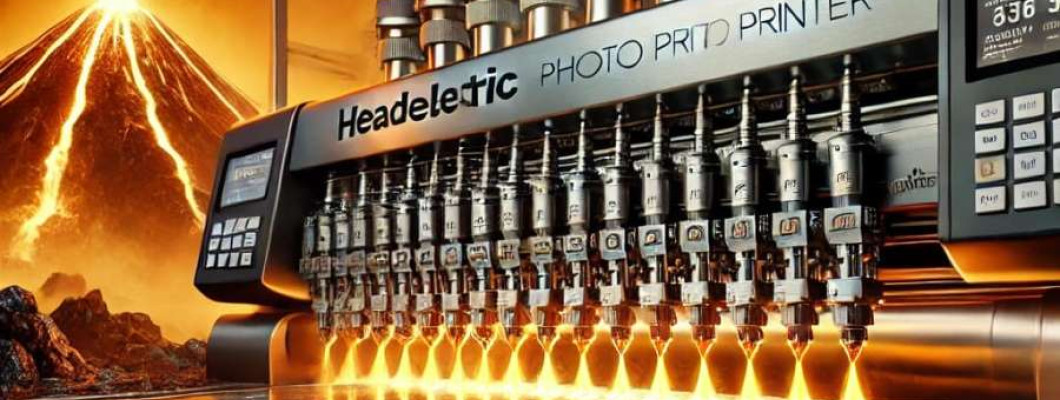
The printheads form the core bottleneck under sustained use. Industrial-grade thermal piezoelectric heads designed for high-viscosity ceramic inks typically operate at 2500 nozzles per inch with droplet volumes near 12 picoliters (pl) to assure microscopic precision on rough substrates. Compared to desktop-grade 1800-nozzle heads at 6pl dripping volumes, these industrial heads withstand particulate abrasion and maintain line accuracy within ±0.05mm across operational lifetimes exceeding 10,000 hours.
Ink Chemistry and Substrate Interaction
High-temperature ceramic ink formulations optimized for headstones possess reactive silica binders that penetrate porous granite and marble surfaces, achieving permanent adhesion post UV curing. Ink drying times average 12 seconds per layer, allowing for layer stacking without bleeding. Substrate porosity variability requires the printer’s firmware to dynamically adjust ink flow rate in real-time, maintaining color depth and preventing saturation defects.
Automation and Throughput Metrics
Automated loading and unloading arms reduce manual intervention by 40%, while integrated laser alignment systems adjust printhead positioning with 0.02mm precision per job cycle. Operating at 4 meters per minute, the system reliably processes up to 60 headstone photos per hour, tripling throughput relative to manual setups. Conveyor vibration dampening systems maintain substrate stability, ensuring repeatable image registration accuracy.
Energy Consumption and Thermal Management
Power draw sustains an average of 1.4 kW per print cycle, peaking at 2.2 kW during UV curing phases. Heat dissipation employs liquid-cooled plate systems maintaining printhead temperatures within a strict 40–45 °C band, critical for avoiding nozzle clogging. Compared to air-cooled counterparts that fluctuate by ±10 °C, this achieves a 25% increase in printhead service life.
Maintenance and Lifecycle Cost Comparison
Routine maintenance requires monthly nozzle inspection and biannual calibration to counteract micro-wear. Consumables lifecycle spans approximately 8,000 prints per ink cartridge and 12,000 prints per UV lamp assembly. Detailed cost modeling (see table below) contrasts industrial printer deployment with DIY adaptations, highlighting superior ROI when factoring labor savings and reduced downtime.
| Metric | Industrial-Grade Headstone Photo Printer | DIY/Semi-Professional Printer Adaptation |
|---|---|---|
| Print Throughput (photos/hour) | 60 | 20 |
| Labor Hours per 100 Photos | 1.5 | 5 |
| Ink Cost per Photo (USD) | 3.20 | 4.75 |
| Maintenance Downtime (hours/month) | 3 | 12 |
| Printhead Lifespan (hours) | 10,000+ | 3,000 |
| Initial Capital Expenditure (USD) | 45,000 | 12,000 |
Scenario Analysis Illustrating Business Impact of Printer Specifications
Use Case 1 Changing to Industrial-Grade Printer for Mid-Volume Workshops
A mid-sized memorial engraving company processing 1,200 photos monthly saw a 220% increase in throughput after upgrading from a semi-professional system. Automation reduced labor costs by 35%, and print quality consistency rose, resulting in fewer reprints — directly impacting profit margin positively.
Use Case 2 High-Volume Regional Manufacturer Scaling Production
For a large regional producer servicing multiple states, the printer’s advanced thermal management and real-time ink flow adjustments enabled continuous 24/7 operation for 3 months straight without printhead failure. This level of reliability was unattainable with legacy systems, enabling faster delivery and contract acquisition.
Use Case 3 Customization-Heavy Artisan Enterprises
Even artisan workflows requiring micron-level color depth control benefited from the printer’s versatile substrate handling and high dpi capabilities. The dynamic nozzle feedback and substrate recognition system ensured precise color layering on granite surfaces, empowering complex custom designs without sacrificing throughput.
Expert FAQ on Headstone Photo Printer Technical Challenges
- How does substrate porosity impact printhead nozzle health?
- Porous stone surfaces release micro-particulate dust and residual moisture that can abrade nozzle edges and cause ink droplet misfires. Industrial printers mitigate this with sealed nozzle chambers and airflow filtration to extend nozzle lifespan.
- What ink chemistry prevents UV degradation on outdoor memorials?
- Silica-based ceramic inks with UV-curable resins form cross-linked networks that resist fading and chalking under long-term solar exposure, maintaining image fidelity for decades.
- Why is liquid cooling preferable to air cooling for printheads?
- Liquid cooling maintains consistent temperature under fluctuating ambient conditions, preventing thermal expansion that causes nozzle misalignment and print defects, thus ensuring stable print quality and longer printhead service intervals.
- How does automation reduce labor-induced print errors?
- Automated substrate handling removes manual repositioning errors and improves repeatability, while software-driven dynamic adjustments accommodate substrate surface irregularities without human input, reducing defect rates.
- What are the main contributors to total cost of ownership beyond initial purchase?
- Consumable ink costs, maintenance downtime, labor expenses, and printhead replacement frequency significantly impact TCO. Industrial printers optimized for longevity and efficiency minimize these through design and operational robustness.
Strategic Verdict and Recommendation for Scalable Business Operators
For scalable businesses seeking to enhance operational efficiency, throughput, and output quality in headstone photo printing, investing in an industrial-grade photo printer designed specifically for memorial stone applications is the definitive solution. The Headstone Photo Printer Tomb Photos Printer distinctly bridges the chasm between rudimentary DIY machinery and true industrial reliability, with demonstrable benefits in reduced labor, superior print precision, and lifecycle cost savings.
Its advanced hardware components such as high-density thermal piezoelectric printheads, dynamic ink flow control, and robust thermal management systems enable businesses to scale production without sacrificing quality or uptime. The enhanced automation reduces manual errors and supports throughput expansion critical to meeting growing market demand.
From throughput metrics to maintenance efficiency, this printer proves to be a justified capital investment, solidifying the operational foundation necessary for competitive growth in the memorial printing industry.