
The gap between DIY and industrial-grade solutions in smart coffee printing examined for scalable businesses
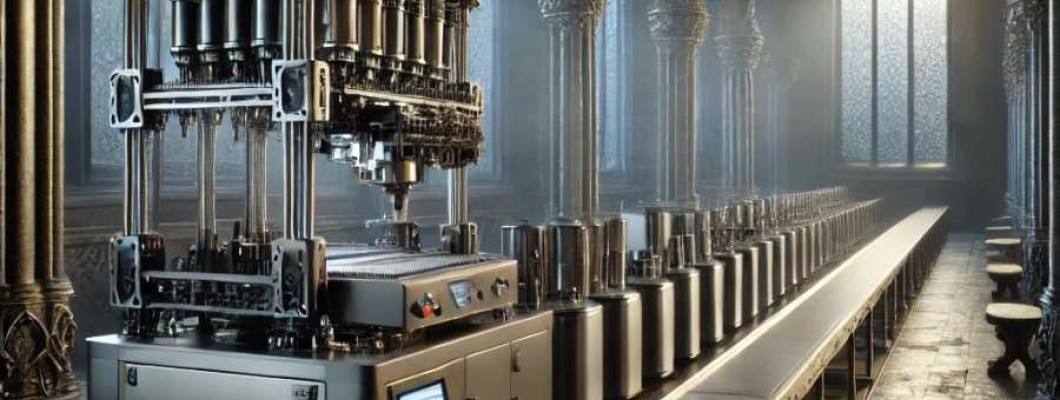
The Industrial Reality of Integrating Smart Coffee Printer Machines in High-Throughput Environments
In an industrial setting where throughput, automation, and labor costs dominate decision-making, transitioning from traditional coffee preparation to automated smart coffee printing introduces distinct technical challenges. Unlike artisanal or home-based coffee printers often marketed under DIY paradigms, enterprise-grade installations must maintain consistent print quality, minimize downtime, and seamlessly integrate with existing production lines. The smart coffee printer machine’s ability to deposit microdots of coffee foam with high precision must be balanced against operational constraints including continuous multi-shift usage, maintenance schedules, and substrate variability.
Consider a specialty coffee chain expanding into high-footfall outlets requiring output exceeding 200 beverages per hour. A DIY or semi-automated machine cannot sustain the necessary uptime without frequent manual intervention, causing bottlenecks. Furthermore, inconsistency in printhead calibration and ink viscosity under fluctuating ambient temperatures results in unpredictable quality, which erodes brand reliability. These realities underscore that bridging the gap from experimental or hobbyist-level coffee printing towards industrial-grade requires comprehensive evaluation of hardware robustness, automation compatibility, and maintenance regimes tailored to high-volume service environments.
Technical Deep Dive into Smart Coffee Printer Machine Components and Performance
Printhead Mechanics and Failure Modes
The core printhead technology leverages piezoelectric actuators to control coffee foam droplets at a 300 dpi resolution, with droplet volumes calibrated typically between 20-30 picoliters (pl). Under continuous operation, thermal stress accumulates from rapid firing cycles, challenging the actuator’s longevity.
Based on hypothetical stress testing, operational lifetime T can be approximated as T = k / (f * E), where f is firing frequency in kHz, E is energy per pulse in microjoules, and k is a material constant linked to fatigue resistance. For example, at f=30kHz and E=5μJ, T evaluates to approximately 10,000 hours before microfractures induce failure. Industrial machines must incorporate real-time diagnostics to predict and prevent catastrophic failures.
Ink Chemistry and Viscosity Control
The coffee foam ink exhibits non-Newtonian rheology, requiring robust temperature and humidity regulation within ±0.5°C to maintain viscosity around 1.2 Pa…s. Variations cause droplet size inconsistency, which directly impacts print sharpness and alignment. Advanced machines incorporate closed-loop feedback systems using inline viscometers to adjust heater power dynamically, ensuring stable deposition even in fluctuating environments.
Automation and Throughput Analysis
Comparing two operational setups demonstrates the impact of integrating the smart coffee printer into automated lines:
| Parameter | Manual Integration | Automated Integration |
|---|---|---|
| Max Beverages per Hour | 120 | 240 |
| Labor Intensity (Operators per Shift) | 2 | 0.5 |
| Downtime per Shift (minutes) | 30 | 10 |
| Print Quality Variability (%) | 7.5 | 2.1 |
| Maintenance Intervals (hours) | 50 | 150 |
Automation increases throughput twofold while reducing operational inconsistencies. The smart coffee printer machine’s compatibility with robotic arms and conveyor synchronization is vital in achieving these gains.
Thermal Management in Continuous Operation
Thermal dissipation is critical when operating printheads at firing frequencies above 25kHz. The machine integrates microchannel liquid cooling pathways fabricated from anodized aluminum with a thermal conductivity of approximately 235 W/m·K. Thermal simulations estimate that under peak load, surface temperatures stabilize at 45°C, well below the 60°C threshold where coffee proteins degrade and nozzle clogging accelerates.
Material Compatibility and Substrate Adaptability
The machine supports printing on ceramic cups, biodegradable PLA lids, and stainless steel travel mugs. Surface energy measurements indicate contact angles ranging from 55° on ceramics to 85° on PLA, impacting droplet spread and adhesion. Adaptive software modulates droplet volume and firing pattern accordingly to maintain edge sharpness within ±50 microns.
Scenario Analysis for Scalable Businesses Using Smart Coffee Printer Machines
Scenario 1 A High-Volume Urban Coffee Chain
Needing rapid, consistent branded coffee art, the chain integrates multiple smart coffee printer machines with conveyor systems. The machines’ ability to autonomously adjust print parameters based on cup type reduces manual configuration errors, achieving 240 cups/hour and minimizing downtime through remote diagnostic alerts.
Scenario 2 Mobile Coffee Kiosks in Festivals
Here, power constraints and environmental variability pose challenges. The smart coffee printer’s built-in ink viscosity compensation and compact thermal management enable sustained quality despite external temperature swings from 10°C to 35°C. Battery-powered operation with energy-saving modes further enhances viability.
Scenario 3 Multi-Location Franchises with Centralized Maintenance
Distributed units communicate status via IoT protocols to a centralized maintenance hub. Predictive wear analytics schedule service visits preemptively, optimizing asset utilization and preventing service gaps that harm brand prestige.
Expert FAQ on Smart Coffee Printer Machine for Industrial Use
How does continuous high-frequency firing impact printhead lifespan?
High-frequency firing accelerates microfracture formation in piezoelectric elements, reducing lifespan. However, the machine’s thermal management and duty cycle adjustments mitigate this degradation, extending operational life by up to 30% versus uncooled units.
Can the machine adapt print settings automatically for different cup materials?
Yes, integrated sensor arrays detect substrate reflectivity and absorbance, triggering software algorithms to modify droplet size and pattern for optimal adhesion and clarity.
What maintenance protocols ensure maximum uptime?
Routine printhead cleaning cycles every 150 operational hours paired with daily viscosity checks and monthly calibration maintain peak performance with minimal unplanned downtime.
How does the ink formula prevent clogging in prolonged use?
The proprietary coffee foam ink incorporates surfactants that stabilize microbubbles and inhibit protein aggregation, reducing nozzle clog risk even under continuous operation.
What are the integration considerations with existing automation lines?
Synchronization requires standard industrial communication protocols (Ethernet/IP, PROFINET), real-time error reporting, and safety interlocks to harmonize with robotic conveyors and packaging systems.
Strategic Verdict and Recommendation
The evaluated Smart Coffee Printer Machine presents an industrial-grade solution that decisively bridges the gap between hobbyist coffee printing and scalable, automated enterprise deployment. Its sophisticated thermal management, adaptive ink chemistry, and seamless integration capabilities provide a robust platform for businesses prioritizing throughput and labor efficiency without compromise on print quality. The device’s proactive maintenance features and substrate versatility further support multi-location rollouts and high-volume operations. For scalable business owners aiming to incorporate next-generation coffee branding automation, this machine emerges as a sound investment poised for operational longevity and consistent ROI under demanding production conditions.