
The Gap Between DIY and Industrial-Grade Technology in A3 Edible Food Printers for Cakes and Cookies
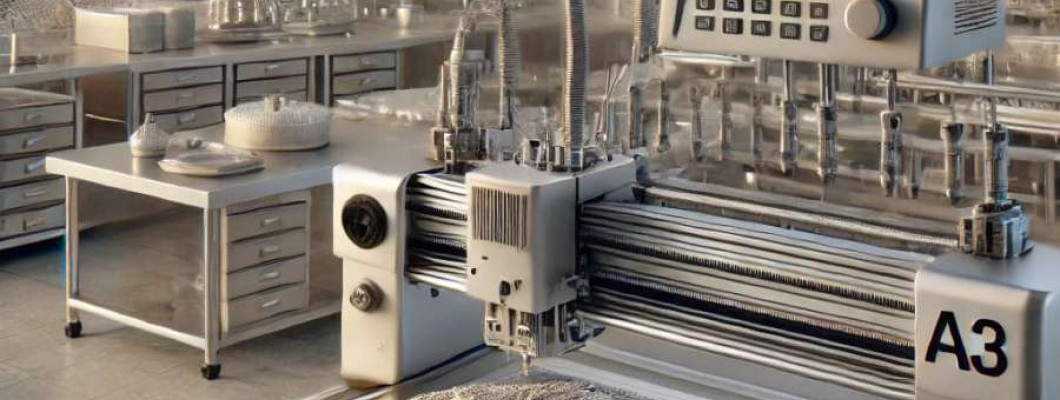
The Industrial Reality of Edible Food Printing in Commercial Settings
Printing edible designs onto cakes and cookies demands far more than deploying a standard consumer-grade printer with food-safe inks. For businesses operating from bakeries to event catering companies, bridging the gap between DIY hobbyist edible printers and robust industrial-grade machines is critical to maintain throughput, consistency, and compliance. The challenges arise quickly when scaling beyond small batch runs or intricate one-off designs. The printer must handle complex edible substrates like fondant, royal icing, and wafer paper, all while delivering micron-level precision and rapid turnaround in fast-paced environments.
Consider a bakery chain that receives hundreds of customized cake orders daily. The pressure mounts for machines to print at A3 size, spanning approximately 297 mm by 420 mm, with color fidelity that replicates the original digital artwork. Yet, DIY solutions face severe limitations: inconsistent printhead calibration, unstable edible ink viscosity, and insufficient mechanical robustness to sustain long operational hours. Maintenance cycles are unpredictable, and operator intervention becomes frequent, driving downtime.
These operational bottlenecks translate directly to production delays, compromised product quality, and escalated waste. The implicit trade-offs including slower print speeds, limited substrate compatibility, and poorly controlled environmental conditions often result in suboptimal business outcomes invisible to the casual observer but glaringly obvious in commercial throughput metrics. The industrial reality is that specialized server-like hardware integration, consistent thermal management, and calibrated hardware components are non-negotiable for enterprises prioritizing product integrity and operational resilience.
Technical Deep-Dive on A3 Edible Food Printing Components and Capabilities
Printhead Technology and Ink Chemistry
A3 edible food printers utilize piezoelectric or thermal inkjet printheads specially adapted for food-grade inks. These printheads eject minute droplets measured in picoliters (pl), typically ranging from 1.5 to 4 pl for optimal resolution. The ink composition must balance viscosity (10-20 cP) and surface tension (30-40 mN/m) to avoid clogging and ensure droplet formation stability over extended print cycles.
Physics dictates that smaller droplets improve edge definition but increase risk of evaporation and nozzle blockage. Industrial units incorporate heating elements maintaining ink temperature at ~30°C to stabilize viscosity. Unlike consumer models, these printers deploy continuous printhead cleaning protocols employing ultrasonic vibration to dislodge particulate buildup dynamically.
Mechanical Precision and Motion Control
High-precision stepper motors coupled with linear encoders define the mechanical backbone. Positional accuracy of ±0.02 mm over the 420 mm carriage travel ensures micron-level registration critical for layered edible designs. Belt-driven systems, common in DIY models, often exhibit backlash and vibration, jeopardizing printhead-to-substrate distance (gap) maintenance, which in industrial systems is held within 0.1 mm to prevent ink spreading.
Substrate Compatibility and Handling
Substrates vary in thickness (0.2-2 mm) and porosity, influencing ink absorption and drying time. Industrial printers include adjustable vacuum beds and humidity-controlled chambers to stabilize substrate flatness and surface moisture. This avoids ink bleeding and color distortion especially on sugars with hygroscopic tendencies.
Print Resolution and Color Depth
Typical A3 edible printers achieve 600 dpi native resolution with multi-pass layering enhancing color gamut. Compared to 300 dpi consumer devices, the higher resolution translates into finer gradients and sharper photographic quality images on confectionery surfaces. Color management systems employ ICC profiles tailored to edible ink palettes, compensating for substrate reflectance variations.
Operational Throughput and Lifecycle Maintenance
Industrial-grade edible printers sustain continuous operation cycles exceeding 8 hours with average print speeds of 15-30 minutes per A3 sheet, depending on complexity. Predictive maintenance modules monitor printhead impedance and ink levels, scheduling automated cleaning and ink replacement to minimize downtime. Lifecycle components are engineered for 3-5 years of heavy use, with part replacements standardized to reduce service lead times.
| Attribute | DIY Edible Printer | Industrial-Grade A3 Edible Printer |
|---|---|---|
| Print Resolution | 300 dpi | 600 dpi native with multi-pass layering |
| Printhead Type | Standard thermal inkjet | Piezoelectric with ultrasonic cleaning |
| Ink Viscosity Control | Manual heating | Automated thermal regulation at ~30°C |
| Mechanical Accuracy | ±0.1 mm positional repeatability | ±0.02 mm with linear encoders |
| Substrate Handling | Manual placement | Vacuum bed with humidity control |
| Operational Uptime | Limited by clogging and manual cleaning | 8+ continuous hours with predictive maintenance |
Scenario Analysis of Business Use-Cases
Artisanal Bakery Scaling Custom Designs
A boutique bakery transitioning from handcrafted decorations to semi-automated printing benefits from the industrial A3 edible printer's precision and color fidelity. The ability to reliably reproduce detailed logos and patterns on fondant accelerates order fulfillment from an average of 3 hours per cake to under 45 minutes per A3 sheet, boosting throughput by 400%. Consistent output eliminates operator error variability common in manual piping.
Large Event Catering with Diverse Substrate Needs
Event caterers face substrate versatility demands including cookies, meringues, and cupcakes with royal icing tops. The printer's substrate adaptability and environmental controls allow seamless switching without recalibration delays. Rapid multi-substrate printing within an 8-hour window reduces labor overhead and mitigates risk of food safety violations from ink spreading or contamination.
Industrial Food Production Facility Integrating Printing Line
In large-scale confectionery manufacturing, integration challenges arise with plant infrastructure. Thermal management of the printer ensures consistent performance despite ambient temperature fluctuations. The hardware's predictable maintenance intervals and modular replaceable parts align with lean manufacturing principles, allowing non-specialist technicians to maintain uptime targets above 95%.
Expert FAQ on Technical Aspects of A3 Edible Food Printing
What are the critical printhead maintenance intervals to avoid clogging with edible inks?
Industrial printers use automated cleaning cycles every 2-4 hours of operation. This includes ultrasonic vibration and ink flushing protocols, preventing protein denaturation and sugar crystallization inside nozzles.
How does substrate curvature affect droplet deposition accuracy?
Even minor curvature beyond 0.5 mm deviation causes focal plane shifts, leading to ink spread and blurred edges. Vacuum flat beds compensate, maintaining substrate planarity within ±0.1 mm tolerance.
What role does ICC profiling play in edible food printing?
ICC profiles manage color conversion between digital design and edible ink spectral properties, accounting for substrate reflectance and ink translucency to ensure color accuracy.
Can industrial edible printers handle high-pigment density inks without nozzle damage?
Yes, by regulating ink viscosity thermally and optimizing piezoelectric waveform pulses, industrial printers prevent pigment sedimentation and nozzle abrasion, extending component lifespan.
How is food safety compliance integrated into printer design?
Materials in contact with inks and substrates are FDA-compliant, easily dismantled for sanitation, and hermetically sealed against microbial ingress. Thermal printhead warming also inhibits microbial growth.
Strategic Verdict and Recommendation
The A3 Edible Food Printer For Printing Cakes Cookies decisively bridges the gap between artisanal DIY approaches and industrial-grade edible printing demands. Its advanced thermal regulation, precision mechanical control, and robust maintenance protocols deliver consistent micron-level accuracy and color depth essential for commercial throughput. Enterprises ranging from boutique bakeries to large-scale confectionery manufacturers will realize measurable ROI through increased productivity, reduced waste, and assured food safety compliance. This product stands out as an industrial cornerstone, engineered for durability and scalability in demanding food production environments. Adoption is strongly advised for businesses seeking to elevate edible printing from experimental novelty to reliable industrial technology.