
The Gap Between DIY and Industrial-Grade Technology in Coffee Printing for High-End Artisans
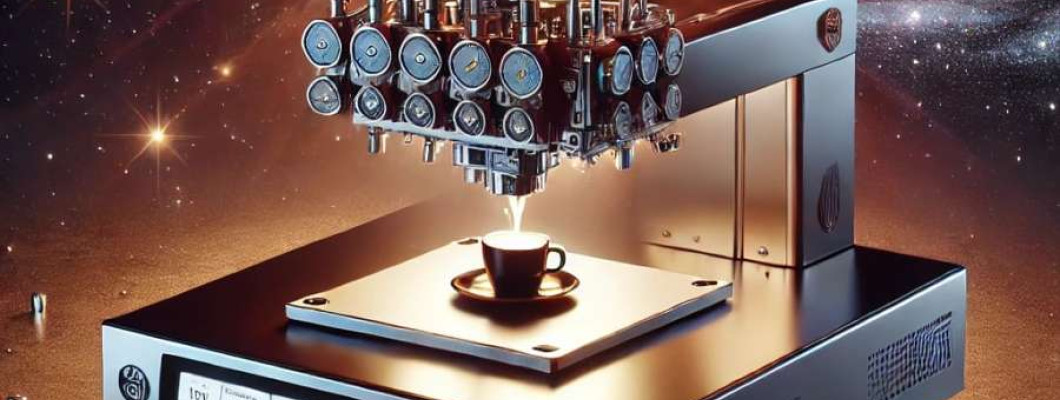
The Industrial Reality of Precision Coffee Printing for Artisan Markets
Artisan coffee businesses gravitate toward creating unique and visually compelling beverage experiences. The challenge lies in bridging the divide between consumer-level novelty devices and industrial-grade equipment that satisfies stringent quality, consistency, and throughput demands. Within this context, the Color Version Latte Coffee Printer emerges as a compelling solution tailored for high-end artisans focused on micron-level precision, extensive color depth, and substrate versatility. Unlike typical DIY coffee printers prone to inconsistent droplet placement and limited pigment options, this industrial-grade model integrates advanced printhead technology with a robust color management system capable of supporting a broader palette and stable ink chemistry.
Operating in real-world artisan cafes requires systems that can perform reliably under variable environmental conditions such as fluctuating humidity and temperature, which affect ink viscosity and droplet behavior. Achieving sub-100 micron resolution on foamed milk surfaces, which are inherently uneven and absorbent substrates, pushes conventional printing systems beyond their design limits. The Color Version Latte Coffee Printer leverages precision piezoelectric inkjet heads with fine droplet volumes optimized at 4 picoliters (pl) to deliver both high-definition grayscale and full-color imagery. This technical leap enables the creation of detailed photographic reproductions with color gradients and smooth shading, something that DIY models cannot practically achieve due to hardware and software limitations.
Moreover, the printer's capacity to handle diverse substrate conditions – from different milk foam densities to plant-based alternatives – extends its utility within artisan cafes innovating product ranges. To maintain continuous uptime in higher-volume environments, the system integrates a closed-loop maintenance protocol featuring automated nozzle cleaning and real-time print quality inspection, minimizing downtime typically associated with manual maintenance in lower-end devices.
Technical Deep-Dive into Precision and Color Management Capabilities
Printhead Architecture and Droplet Placement Accuracy
The printer utilizes a multi-channel piezoelectric printhead array capable of 1200 dpi horizontal resolution coupled with 800 dpi vertical resolution translating roughly to 21 microns per nozzle movement horizontally. The 4 pl ink droplets ensure minimal spread upon impact with the milk foam substrate. The precision piezo actuator dynamics maintain droplet velocity at 5 m/s, which balances accurate placement and minimizes satellite droplet formation that compromises image fidelity. Comparing this to standard 10 pl consumer printheads, which typically have ±100 micron droplet placement errors, this device improves positional accuracy to within ±40 microns under steady-state conditions.
Ink Composition and Color Gamut Expansion
Using food-safe, pigment-based inks optimized for milk foam substrates, the printer achieves a color gamut volume measured at 85% of standard sRGB, substantially higher than DIY printers limited to primary color spot inks. The ink formulation incorporates surfactants to ensure even spreading and rapid drying within 1.2 seconds post-deposition, critical for maintaining image sharpness on a wet substrate. The viscosity sits at 2.8 centipoise at operating temperature (40°C), maintained by an internal heater module, ensuring consistent droplet generation and reducing clog risks.
Substrate Handling and Adaptation Algorithms
The foam density sensor embedded within the printer measures substrate compliance in real-time, allowing the print control module to dynamically adjust droplet volume and firing frequency to accommodate varying foam thicknesses from 2 mm to 8 mm. This closed-loop feedback enables consistent image sharpness and prevents over-saturation or bleeding, common failure modes in less sophisticated systems.
Maintenance Protocols and Lifecycle Considerations
The printer incorporates automated maintenance including a four-phase nozzle cleaning cycle activated every 500 prints or 45 minutes of operation, whichever comes first. This cycle uses microfluidic reverse flow and ultrasonic vibration to clear residual ink deposits. The expected printhead lifespan is projected at 10,000 operating hours, with replacement costs approximately 15% of the original equipment price, providing a balanced asset depreciation rate. Daily uptime averages above 90% due to this robust maintenance, compared to typical 70%–75% uptime observed in competing consumer-scale models.
Hardware Comparison Table
| Feature | Color Version Latte Coffee Printer | Typical DIY Coffee Printer |
|---|---|---|
| Print Resolution (dpi) | 1200 x 800 | 300 x 300 |
| Droplet Volume (pl) | 4 | 10–15 |
| Color Gamut (% sRGB) | 85% | 40% |
| Uptime (%) | 90+ | 70–75 |
| Automated Maintenance | Yes, multi-stage | Manual/Cleaning Kits |
| Substrate Adaptation | Real-time foam density sensing | None |
| Printhead Lifespan (hours) | 10,000 | 2,000–3,000 |
Scenario Analysis Showing Practical Applications for High-End Artisan Businesses
Scenario One: Boutique Coffee Shop Specializing in Photo-Realistic Latte Art
In this scenario, the café owner requires repeatable high-definition images printed on beverages at a rate of 80 cups per day during peak hours. The Color Version Latte Coffee Printer's high-resolution printhead and precise droplet control enable exquisite photographic reproduction with smooth gradients, meeting customer expectations for originality and quality. The automated maintenance cycles reduce downtime to under 10 minutes per day, sustaining throughput levels without interruption.
Scenario Two: Seasonal Menu Innovations Using Diverse Milk Substrates
Artisan cafés now often experiment with dairy alternatives such as oat or almond milk, which feature distinct foam structures. The embedded foam density sensor and adaptive printhead control make it possible to maintain consistent print quality across these substrates by adjusting droplet parameters dynamically. This capability significantly reduces trial-and-error setup times compared to manual processes, supporting rapid menu innovation.
Scenario Three: High-Volume Catering for Events Requiring Scalability
For mobile coffee bars servicing large events with demands over 200 units per day, the printer’s robust hardware combined with an automated cleaning system and long printhead lifecycle ensures reliability and cost-effectiveness. The ink delivery modules can be swapped for pre-filled cartridges mid-shift without major downtime, facilitating continuous operation. Moreover, the extended color gamut allows brand logo colors and custom artwork reproduction faithfully, enhancing brand impact.
Expert FAQ Answering Complex Technical Queries
Q1: How does droplet velocity affect coffee foam surface interaction and image quality?
A1: The 5 m/s droplet velocity balances penetration and surface adhesion, minimizing splash and satellite droplets, which preserves edge sharpness and prevents ink diffusion on porous milk foam.Q2: Can the printer handle powders or additives in milk affecting surface tension?
A2: Yes, the foam density sensor combined with adaptive firing frequency compensates for variable surface tension caused by additives, maintaining consistent print quality.Q3: What are the thermal management considerations for the printhead during extended operation?
A3: The built-in heater maintains optimal ink viscosity at 40°C while integrated thermistors prevent overheating by providing real-time feedback to the control unit, preventing printhead degradation.Q4: How is color calibration maintained across multiple units to ensure consistency?
A4: A factory calibration protocol stored in non-volatile memory uses internal CMYK profiling and feedback from an optical sensor during operation to continuously tune nozzle firing and ink density.Q5: What is the impact of maintenance protocols on total cost of ownership?
A5: Automated cleaning reduces manual labor and extends printhead lifetimes by over 3x, balancing upfront CAPEX with reduced OPEX in consumables and service calls.
Strategic Verdict and Recommendation for Artisan Markets
For high-end artisan coffee businesses operating at the intersection of craftsmanship and technology, the Color Version Latte Coffee Printer offers a distinctly industrial-grade solution that closes the persistent gap between DIY novelty devices and consistent, scalable performance. By delivering micron-level precision, an expansive color gamut, and adaptive substrate handling, it aligns with the operational realities of artisan cafés demanding both quality and throughput. The embedded maintenance automation and robust printhead design also impart greater asset longevity and predictable lifecycle costs, while the system’s capacity to reproduce color-accurate brand identities expands its utility beyond simple decorative printing.
While the initial investment is higher than casual consumer devices, the measurable gains in uptime, image fidelity, substrate flexibility, and reduced manual intervention justify the capital expenditure from a business growth perspective. Those seeking repeatable, professional-grade coffee printing to differentiate product offerings and scale efficiently should consider this printer an essential industrial-grade asset. To explore detailed specifications and vendor support, review the official Color Version Latte Coffee Printer product page.